Author: kalyanrm

  • Superscoring the SAT

    Superscoring the SAT

    What is Superscoring?

    Think about your favorite artist/musician. What are the chances that all of their music is good? Probably zero. Maybe one song has a really good beat but terrible lyrics. Can we conclude that that artist can’t write lyrics and should hire a ghost writer? No, because maybe another one of their other songs has good lyrics and a bad beat. Colleges that superscore have the same mindset in that just because you score poorly on the Math section one time you take the SAT, doesn’t mean you are bad at math. Superscoring is about seeing the potential in you so even if you haven’t made a complete song yet, we know you have the talent to create one.

    Superscoring is when colleges take your highest scores from all SAT scores that you submit and use those scores to create one “superscored” composite score. Colleges realize how stressful the SAT is and want to see the positives in you so they created superscoring in order to see the greatness in you! The superscoring process creates the highest possible composite score for you so you can portray the best you!

    Example: The first time you take the SAT you get a 700 on the Math and a 500 on the Reading for a total score of 1200. The second time you take the SAT you get a 600 on the Math and a 600 on the Reading for a total score of 1200. Colleges that superscore will take the 700 on the Math from your first test and the 600 on the Reading from your second test so you’ll end up with a superscore of 1300 as opposed to the previous total scores of 1200.

    advice

    Using Superscoring to Your Advantage

    When submitting your standardized test scores, the responsibility of superscoring falls on both the colleges you are applying to and yourself. Now, you aren’t directly involved in the process of superscoring – it’s not like there’s an honor code and you can just input your scores. You still have to submit your scores through the SAT website – but you yourself can superscore.

    By this I mean if after the first time you take the SAT you are satisfied with your Reading score, then you could prep intensively for the math section for the next time you take the SAT. With this strategy, you are concentrating on building your highest “superscore” composite score rather than trying to achieve your highest composite score on a single test.

    There are some cons to superscoring: you have to pay the SAT registration fee ($50 without writing and $65 with writing) and you have to sit through the whole SAT (you can’t choose to only take the Reading or Math section). These cons are why I recommend trying your hardest to get as high of a composite score as possible the first time you take the SAT rather than prepping intensively for just one section each time you take the SAT.

    Obviously, there’s the chance that you don’t perform well on either section, and you have to retake the SAT at least another 2 times to get a good superscore, but there’s also the chance that you crush the SAT and won’t have to take it again!

    strategy

    If you plan on superscoring, you should plan on taking the SAT early enough, maybe spring of your sophomore year, where you’ll have enough SAT test dates to take and build up your superscore. If you’re not getting satisfactory results, don’t worry about taking the SAT too many times, as long as you don’t exceed around six times.

    However, be conscious of your actions. If you get a 500 on the Reading and a 700 on the Math the first time you take the SAT and get a 600 on the Reading and a 200 on the Math the second time you take the SAT because you didn’t bother answering any questions on the Math section, then colleges will probably think the 700 on the Math you got the first time was a fluke. You don’t necessarily have to prep intensively for the Math section if you are satisfied with your score, but it’d look a lot better to colleges if you got a 600 on the Math the second time rather than a 200.

    Every College That Superscores the SAT

    Now that we know about how awesome superscoring is, it’s important to realize which colleges superscore. It’d be pretty awkward if you tried some of the strategies above, and you ended up applying to a college that didn’t superscore. Imagine you tried the scenario above. On the bright side, you got a superscore of 1300! On the down side, you applied to a school that didn’t superscore so you still have a composite score of 1200. Oof, back to square one.

    Here’s a list of colleges that superscore. Since it is a long list, if you want to search for whether a specific college is on the list, press crtl + F for Windows or command + F for Mac and then type the specific school of interest.

           
    Abilene Christian University Adelphi University AIB College of Business Alamance Community College
    Alaska Bible College Albany State University Albion College Alfed University New York State College Ceramics
    Algoma University College Allegheny Wesleyan College Allen County Community College Ambrose University College
    American College of the Building Arts American International College American Musical and Dramatic Academy American University DC
    American University of Puerto Rico American University of Sharjah American University Rome Amherst College
    Anderson Univeristy (SC) Andrew College Anne Arundel Community College Antietam Bible College
    Aquinas College (TN) Argosy University Twin Cities Arizona State University Tempe Arkansas State University
    Arkansas State University Beebe Armstrong Atlantic State University The Art Institute of Ohio Cincinnati Assumption College
    Atlanta Christian College Augsburg College Augustana College South Dakota Austin College
    Austin Peay State University Ave Maria University Latin American Campus Azusa Pacfic University Babson College
    Brainbridge College Baker University Baldwin-Wallace College Ball State University
    Baltimore International College Baptist Bible College and Seminary Barbados Community College Barclay College
    Barton College Bates College Baylor University Beacon University
    Belhaven College Bellarmine University Belmont Abbey College Belmont University
    Beloit College Bemidji State University Benjamin Franklin Institute of Technology Bentley College
    Berea College Berks Technical Institute Bethany Lutheran College Bethel College Indiana
    Biola University Bloomfield College Blue Ridge Commmunity College Blue River Community College
    Bluefield College Boise State University Boston College Boston University
    Bowdoin College Bowie State University Bowling Green State University Brandeis University
    Brevard Community College Brewton-Parker College Bridgewater State College Brookdale Community College
    Broward Community College Hollywood Brown University Bryan College BryanLGH College of Health and Sciences
    Bryant and Stratton Eastlake Campus Bryant University Bryn Athyn College Bryn Mawr College
    Bucknell University Butler County Community College Kansas Butler University Cabarrus College of Health and Sciences
    California College of the Arts California Maritime Academy California Polytechnic State University San Luis Obispo (CalPoly) California Polytechnic State University Pomona
    California State University Bakersfield California State University Channel Islands California State University Chico California State University Dominguez Hills
    California State Universty East Bay California State University Fresno California State University Fullerton California State University Long Beach
    California State University Los Angeles California State University Mentor California State University Monterey California State University Northridge
    California State University Sacramento California State University San Bernardino California State University San Marcos California State University Stanislaus
    Calvary Baptist College Calvin College Canadian Mennonite University Canisius College
    Cape Breton University Cape Fear Community College Cardiac & Vascular Technology Carleton College
    Carlow University Carroll College Montana Carroll University Carson-Newman College
    Carthage College Case Western Reserve University Casper College Catawba Valley Community College
    Catholic University of America Cathy McMorris Cayuga County Community College Cedar Crest College
    Cedarville University Center for American Education Central Alabama Community College Alexander City Central Alabama Community College Childersburg
    Central Carolina Technical College Central Connecticut State University Central Wyoming College Centre College
    Charleston Southern University Chattahoochee Valley Community College Chippewa Valley Technical College Christendom College
    Chirstopher Newport University Chukalongkorn BBA City Vision College Claremont McKenna College
    Clarendon College Clark University Clarkson Unversity Clearwater Christian College
    Clemson University Coastal Carolina University Coe College Cogswell Polytechnical College
    Coker College Colby College College of Charleston College of Coastal Georgia
    College of Eastern Utah College of Mount Saint Joseph College of Mount Saint Vincent College of New Rochelle
    College of Office Technology College of Saint Benedict/Saint John’s University College of Saint Mary College of Saint Scholastica
    College of Santa Fe College of Southern Maryland College of Southern Nevada College of the Atlantic
    College of the Mainland College of the Ozark’s College of Westchester College of William and Mary
    College of Wooster Colorado Christian University Coloardo College Coloardo State University Ft Collins
    Columbia Union College Columbia University Columbia-Greene Community College Community and Technical College West Virginia University
    Community Christian College Concordia College Concordia College New York Concordia University (Ann Arbor, MI)
    Concordia University Wisconsin Contra Costa College Cornell University Cottey College
    County College of Morris Craven Community College Creighton University Crossroads College
    Crown College (TN) Danville Regional Medical Center School of Health Professionals Dartmouth College Carton College
    Davidson College Davison County Community College Dawson Community College Daytona State College
    Delta State University Denver Academy of Court Reporting DePauw University DeSales University
    DeVry University DeVry University Alpharetta DeVry University CA DeVry University Centers
    DeVry University Houston DeVry University Long Beach CA DeVry University Missouri DeVry University Texas
    Dickinson College Digipen Institute of Technology Divine Word College Dominican College of Baluvelt
    Dominican University of California Dowling College Drake University Drexel University
    Duke University Dunwoody College of Technology Durham Technical Community College Earlham College and Earlham School of Religion
    East Carolina University East Los Angeles College Eastern Connecticut State University Eastern Illinois University
    Eastern Kentucky University Eastern Main Community College Eastern Oregon University Eastern University
    Edinboro University of Pennsylvania Edison State College EDP College San Sebastian El Centro College
    Elizabethtown College Elmira College Elon Univery Emerson College
    Emmanuel College Georgia Emory University Erie Business Center Main Campus Erie Business Center South New Castle
    Escuela de Artes Plasticas Puerto Rico Essex Community College European College of Liberal Arts Berlin Fachhochschule Aachen Abteilung Juelich
    Fairfield University Fairhaven Baptist College Fairleigh Dickinson University Vancouver Campus Faith Baptist Bible College
    Fashion Institute of Design and Merchandising Fashion Institute of Design and Merchandising San Fransisco Feather River Community College Ferris State University
    Ferrum College Fitchburg State University Flagler College Florida Atlantic University
    Flordia College Flordia Gulf Coast University Flordia Institute of Technology Flordia International University
    Florida State University Flordia Technical College, Jacksonville Fordham University Frankford Hospital School of Nursing
    Franklin and Marshall College Franklin College Franklin Pierce University Free Will Baptist Bible College
    Frostburg State University Furman University Gainesville State College Gannon University
    Gardner-Webb University George Mason University Georgetown College Georgia Institute of Technology
    Georgia Perimeter College Georgia Southern Univerrsity Georgia Southwestern State University Gettysburg College
    God’s Bible School and College Gogebic Community College Goldey-Beacom College Grayson County College
    Great Basin College Griffith College Dublin Grinnell College Grove City College
    Guilford Technical Community-College Gwynedd-Mercy College Hagerstown Community College Hamilton College (IA)
    Hamilton College (NY) Hampden-Sydney College Hanover College Harding University
    Hardin-Simmons University Harford Community College Hariri Canadian Academy of Science and Technology Harris-Stowe State University
    Hartwick College Haverford College Hawaii Pacific University Heidelberg College
    Helene Fuld School of Nursin Camden Henry Ford Community College Herbet W Armstrong College Heriot-Watt University
    Heritage Baptist University Herzing College Orlando Hesston College Hillsdale College
    Hinds Community College Hodges University Hofstra University Hogeschool Universiteit Brussel
    Holmes Community College Holy Family University Horry-Georgetown Technical College Houghton College
    Houston Community College Hudson County Community College Humboldt State University Huntington University
    Husson University Illinois College Illinois Eastern Community College Frontier Illinois Eastern Community College Olney
    Illinois Wesleyan University Indiana State University Indiana University Bloomington Indiana University East
    Indiana University Kokomo Indiana University of Pennsylvania Academy of Culinary Arts Indiana University Purdue University Fort Wayne Indiana University Purdue University Indianapolis
    Instituto Tec y de Estudios Superior de Monterrey Internationa Christian University Japan International School University of Hofstra International Universty in Germany
    Inver Hills Community College Iona College Iowa Lakes Community College Island Drafting and Technical Institute
    Ithaca College ITT Technical Institute Tucson Ivy Tech Community College Evansville Jacksonville College
    James Madison University JNA Institute of Culinary Arts John Carroll Unviersity John Paul the Great Catholic University
    John Hopkins University Johnson C Smith University Johnson College Jones College
    Kalamazoo College Keene State College Keiser College Kendall Kenai Peninsula College
    Kennesaw State University Kent State University Kentucky Wesleyan College Kenyon College
    Keuka College King College Kings College Pennsylvania Kings University College
    Knox College Kutztown University of Pennsylvania Kuyper College Kwansei Gakuin University
    La Salle University Lafayette College LaGrange College Lake Area Technical Institute
    Lake Forest College Lake Superior State University Lakeland College Lancaster Bible College
    Landmark Baptist College Latter Day Saints Business College Lehigh University Lenoir Community College
    Lenoir-Rhyne University Lesley University Lester L Cox College of Nursing and Health Science Lewis-Clark State College
    Lexington College Liberty University Lincoln College Lincoln Technical Institute Allentown
    Lincoln Technical Institute Columbia Living University Lon Morris College Lone Star College System
    Longy School of Music of Bard College Louisburg College Louisiana State University Baton Rouge Louisiana Tech University
    Louisville Technical Institute Loyola Marymouth University Lubbock Christian University Luther College
    Lyme Academy College of Fine Arts Lynchburg College Lyon College Manatee Community College
    Manhattan School of Music Mansfield University of Pennsylvania Marian College Marist College
    Marlboro College Marquette University Marhsall Community Technical College Marshall University
    Mary Baldwin College Maryland Institute College of Art Marymount Manhattan College Maryville University Saint Louis
    Massachusetts College of Pharmacy and Allied Health Massachusetts Institute of Technology (MIT) Master’s College and Seminary Matanuska-Susitna Community College
    Mayo School of Health and Sciences McNally Smith College of Music MedCentral College of Nursing Mercy College Dobbs Ferry
    Mercy School of Nursing (PA) Mercy School of Nursing (NC) Mercyhurst College Messenger College
    Messiah College Miami Dade College Miami University Middle Georgia College
    Middle Tennessee State University Middlebury College Midreshet Lindenbaum Mid-South Community College
    Midwester Baptist Theological Seminary Millersville University of Pennsylvania Milligan College Minnesota State University Moorhead
    Misericodira University Mississippi Delta Community College Missouri Baptist University Missour State University Springfield
    Missouri Western State College Monmouth University Monroe College Montana State University
    Montana State University Northern Montana State University Tech Greater Falls Montclair State University Moravian College
    Morehouse College Mount Allison University Mount Holyoke College Mount Mary College
    Mount Saint Mary’s College Mount Saint Vincent University Mount Vernon Nazarene University Muhlenberg College
    Muskingum College Nash Community College National Polytechnic College of Science National University
    Nazareth College of Rochester Nebraska Christian College Nebrasks Methodist College Neosho County Community College
    New College of Flordia New England Institute of Technology New Jersey Institute of Technology New River Community College
    New World School of the Arts New York Conservatory for Dramatic Arts New York Institute of Technology Newberry College
    Niagara County Community College Nichols College Nihon University North Carolina Agricultural Tech State University
    North Carolina Central University North Carolina State University Raleigh North Central College Noth Dakota State University Fargo
    North Georgie College and State University Northeastern Technical College Northeastern University Northern Arizon University
    Northern Illinois University Northern Maine Community College Norther Marianas College Northern Michigan University
    Northwest Christian University Northwest Missouri State University Northwest University Norhwestern Technical College
    Northwestern University Northwood University Texas Northwestern Polytechnic University Oak Valley College
    Oakland University Oberlin College Occidental College Ocean County College
    Ogeechee Technical College Ohio Bible College Ohio Business College Ohio Dominican University
    Ohio State University Columbus Ohio University Athens Ohio Valley University Ohio Wesleyan University
    Okefenokee Technical College Oklahoma Panhandle State University Olin College of Engineering Omore College of Design
    Onondaga Community College Oral Roberts University Oregon State University Otero Junior College
    Otis College of Art and Design Otterbein College Our Lady of Corpus Christi Oxford College
    Ozark Christian College Pacfic Union College Paris Junior College Park University
    Parsons Paris School of Design Patrick Henry College Paul Quinn College Peabody Conservatory of Music
    Penn View Bible Institute Pennsylvania College of Technology Penn State University Park Pepperdine University
    Peru State College Pfeiffer University Philadelphia Biblical University Philadelphia University
    Philips Beth Israel School of Nursing Phoenix College Pidemont College Piedmont Community College
    Piedmont Technical College Pitt Community College Pittsburg State University Pitzer College
    Platt College Colorado Plattsburgh State University Plymouth State University Post University
    Potomac State College Presentation College Prince Georges Community College Princeton University
    Purdue University West Lafayette Queens University Ramapo College of New Jersey Randolph-Macon College
    Raphael Recanati International School Rasmussen Business College Eagan Redlands Community College Reed College
    Regent University Rensselaer Polytechnic Institute Rets College Rhode Island College
    Rhodes College Rich Mountain Community College Richard Bland College Richmond Community College
    Ripon College Rochester College Rochester Institute of Technology Rock Valley College
    Rockingham Community College Rocky Mountain College Roger Williams University Rollins College Winter Park
    Rose-Hulman Institute of Technology Rosemont College Rowan University Rutgers University
    Sage College Albany Sagina Valley State University Saint Andrews Presbyterian College Saint Anselm College
    Saint Bonaventure University Saint Charles Community College Saint Clares Saint Cloud State University
    Saint Elizabeth School of Nursing Saint John Fisher College Saint John Vianney College and Seminary Saint Johns River Community College
    Saint Johns University Staten Island Saint Joseph’s College Saint Joseph’s College, ME Saint Joseph’s College Patchogue
    Saint Joseph’s University Saint Lawrence University Saint Leo University Saint Louis College of Pharmacy
    Saint Louis University Madrid Campus Saint Margaret School of Nursing Saint Martin’s University Saint Mary’s College (IN)
    Saint Mary’s College (MD) Saint Mary’s Seminary and University Saint Mary’s University of Minnesota Saint Mary’s University of Texas
    Saint Michael’s College Vermont Saint Olaf College Saint Peter’s College Saint Thomas Aquinas College
    Saint Thomas University Saint Vincent College Salem State College Salisbury University
    Salve Regina University Sam Houston State University San Diego State University San Fransisco Art Institute
    San Fransisco State University San Jose State University Sandhills Community College Santa Clara University
    Snata Fe Community College Savannah College of Art and Design SBS Swiss Business School Schuylkill Health School of Nursing
    Seattle Pacific University Seattle University Sewickley Valley Hospital Shawnee State University
    Simmons College Sinclair Community College Singapore Polytechnic Skidmore College
    Smith College Somerset Christian College Somerset Community College Sonoma State University
    South Carolina State University South Piedmont Community College Southeast Technical Institute Southeastern Bible College
    Southeastern Free Will Baptist College Southeastern Oklahoma State University Southeastern Technical College Southern Arkansas University Tech Branch
    Southern California Institute of Architecture Souther Catholic College Southern Connecticut State University Southern Illinois University Edwardsville
    Southern Methodist University Southern University Agricultural and Mechnical College Southern Utah Univerity Southern Vermont College
    Southern Virginia University Southside Regional Medical Center School of Nursing Southwestern Christian University Southwestern University
    Spartanburg College of Aeronautics Spartanburg Methodist College Springfield College St John’s University Jamaica
    St Joseph’s College of Nursing State University of New York College at Brockport State University of New York College of Agriculture andNatural Resources State University of New York Binghamtom
    State University of New York Albany State University of New York Buffalo State University of New York Fredonia State University of New York Geneseo
    State University of New York at New Paltz State University of New York at Oneonta State University of New York at Oswego State University of New York at Potsdam
    Stephens College Sterline College (KS) Stevenson University Stockbridge School
    Stonehill College Stony Brook University State University New York Suffolk University Suffolk University Madrid
    Sul Ross State University Swarthmore College Sweet Briar College Tama University
    Taylor University Upland Campus Texas Christian University Texas Tech University Texas Womans University
    Thammasat University The King’s College Three Rivers Community College (Poplar Bluff, MO) Tomball College
    Towson University Trenholm State Technical College Trine University Trinity College
    Trinity International University College of Liberia Truett-McConnell College Union Bible College Union College New York
    US Air Force Academy US Marine Corps Syracuse US Military Academy US Naval Academy
    University of Edinburgh University Central Florida University Georgia Athens University of Alabama Birmingham
    University of Arkansas Community College at Batesville University of Arkansas Fayetteville University of Arkansas Monticello University of Calgary
    University of Charleston University of Chicago University of Cincinatti University of Colorado Boulder
    University of Connecticut University of Dallas University of Dayton University of Delaware
    University of Findlay University of Florida University of Hartford University of Hawaii at Manoa
    University of Houston Main Campus University of Idaho University of Illinois Chicago University of Illinois Urbana-Champaign
    University of Indianapolis University of Iowa University of La Verne University of Maine Orono
    University of Mary Hradin-Baylor University of Mary Washington University of Maryland Baltimore County University of Massachusetts Amherst
    University of Massachusetts Boston University of Massachusetts Dartmouth University of Miami University of Michigan Ann Arbor
    University of Michigan Dearborn University of Minnesota Crookston University of Minnesota Morris University of Minnesota Twin Cities
    University of Montevallo University of Nebraska Lincoln University of Nevada Las Vegas University of New Hampshire Durham
    University of North Carolina Chapel Hill University of North Carolina Greensboro University of North Carolina Pembroke University of North Dakota Grand Forks
    University of North Texas University of Northern Iowa University of Notre Dame University of Oregon
    University of Pennsylvania University of Pittsburgh Pittsburgh University of Pittsburgh Titusville University of Portland
    University of Prince Edward Island University of Puget Sound University of Rhode Island University of Richmond
    University of Rochester University of Saint Thomas University of San Diego University of San Fransisco
    University of Scranton University of Sioux Falls University of South Carolina Aiken University of South Carolina Upstate
    University of South Flordia University of Southern California University of Southern Maine University of Tampa
    University of Tennessee Knoxville University of Texas Arlington University of the Arts University of the Cumberlands
    University of the Incarnate Word University of the Ozarks University of the Southwest University of Toledo
    University of Tulsa University of Utah University of Vermont University of Virginia
    University of Virginia’s College at Wise University of Washington Bothell University of Windsor University of Wisconsin Eau Claire
    University of Wisconsin Fond Du Lac University of Wisconsin Green Bay University of Wisconsin Madison University of Wisconsin Marshfield
    University of Wisconsin Osh Kosh University of Wisconsin Stevens Point University of Wisconsin Stout Menomonie University of Wisconsin Whitewater
    University Tokyo PEAK University of Wisconsin Colleges University of Wisconsin Richland Center University of Wyoming
    Ursinus College Ursuline College Valdosta State University Valley College of Technology
    Valparaiso University Vance-Granville Community College Vanderbilt University Vassar College
    Vealius College Villanova University Virginia Polytechnic Institute State University (Virginia Tech) Waldorf College
    Walla Walla University Warner Pacific College Warren County Community College Wartburg College
    Washington and Jefferson College Washington and Lee University Washington Bible College Washington Hospital School of Nursing
    Washington University Washington University Watkins College of Art and Design Waukesha County Technical College
    Wayne State University Waynesburg University Weatherford College Webb Institute
    Webber International University Weber State University Wellesley College Wentworth Institute of Technology
    Wesleyan University West Chester Univeristy of Pennsylvania West Shore Community College West Virginia University Hospitals Radiologic Tech
    West Virginia University Morgantown Wesern Career College Stockton Western Carolina University Western International University-Online
    Western Michigan University Western Nevada Community College Western New England College Western Washington University
    Westfield State College Westminister College Pennsylvania Westwood College-DuPage Wheelock College
    Whitman College Widener University Willamette University William Jessup University
    William Paterson University of New Jersey William Penn University William Woods University Williams College
    Wilson College Wilson Community College Winthrop University Wisconsin Indianhead Technical College
    Wofford College Worcester Polytechnic Institute Worcester State College Word of Life Bible Institute
    Wright State University Dayton Xavier University Xavier University Louisiana Yellowstone Baptist College
    York College of Pennsylvania York St John York Technical College Young Harris College

    Note: Colleges are constantly changing their admissions policy so if you don’t see a college you’re interested in on this list, then look at their admissions website or call them to ask about their policy. This list was created by Prepscholars.

    Next Steps

    Superscoring is an important and useful tool in aiding students during the college process, but ultimately, your standardized test scores will be determined by your preparation. Unless you have a perfect score in one section, you should give it your all in preparing for both sections everytime you take the SAT.

    Even if you have a high score in one section and plan on superscoring, you never know whether you can beat that score or not. Maybe the questions on the next SAT suit your strengths, maybe you’re feeling it that day, or maybe you used Prepmedians to help you in your SAT prep and you feel much more empowered to crush the test even more.

    When you are using superscoring to your advantage, you are placing more emphasis on one subject while preparing, but you should always aim to do well on both sections. Always strive to do better and never be complacent with your scores. The higher your scores are; the stronger of a candidate you look to colleges. And once you’re done the college process, you’ll be glad and relieved you got as high of an SAT score as possible to get into your dream school and set you up for some of the best 4 years of your life!
  • Need to Know Math Formulas for ACT

    Need to Know Math Formulas for ACT

    Pre-Algebra / Elementary Algebra

    1. Average = Sum of values / Number of values

    Used to calculate the mean value of a given set of numbers.
    For example: (10 + 12 + 14 + 16) / 4 = 13

    2. Probability = Target outcomes / Total outcomes

    Used to calculate the chances of something occurring from a set of possible outcomes.
    For example: A jar contains five blue marbles, five red marbles, and ten white marbles. What is the probability of picking a red marble at random?
    5 / 20 = .25 or 25%

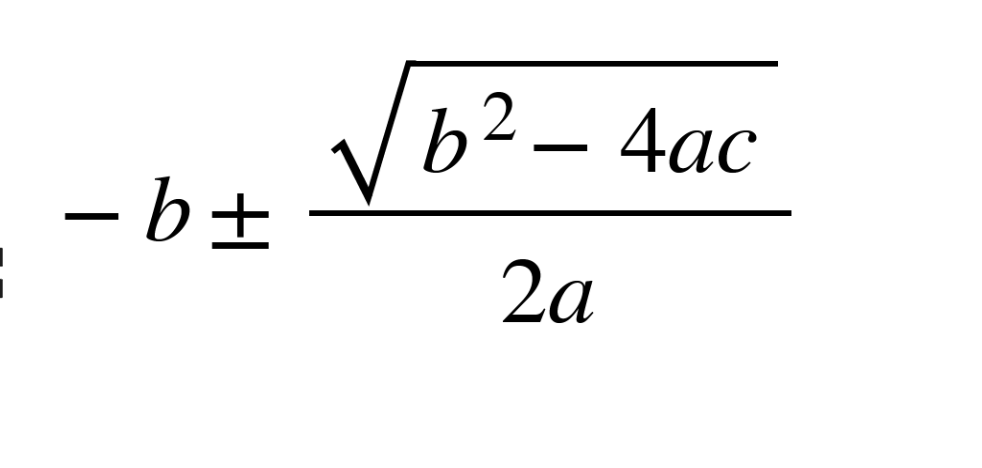
    3. Quadratic Formula:

    Screen Shot 2019-08-23 at 3.49.12 PM

    Used for determining the x-intercepts of a quadratic (parabolic) equation.

    Intermediate Algebra / Coordinate Geometry

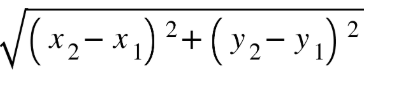
    4. Distance Formula:

    Screen Shot 2019-08-23 at 3.55.27 PM

    Used to calculate the distance between two points on a coordinate plane.
    For example: Find the distance between points (6, 6) and (2, 3)
    d=√(6 – 2)² + (6 – 3)²
    d=√(4)² + (3)²
    d=√16 + 3
    d=√25
    d = 5

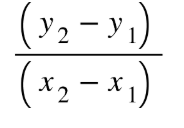
    5. Slope Formula: Slope =

    Screen Shot 2019-08-23 at 3.56.17 PM

    Used to calculate the slope (angle) of a line that connects two points on a plane.
    For example: Coordinates = (-2, -1) (4, 3)
    s = 3 – (-1) / 4 – (-2)
    s = 4 / 6
    s = 2 / 3

    6. Slope Intercept: y=mx+b

    Formula that defines a line on a plane, given a known slope and y-intercept.
    For example: Slope = 2, Intercept point (0,3)
    y = 2x+3

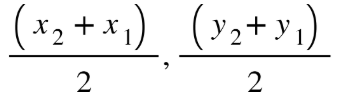
    7. Midpoint Formula:

    Screen Shot 2019-08-23 at 3.56.49 PM

    Used to calculate the midpoint between two points on a plane.
    For example: Find the midpoint between (-1, 2) and (3, -6)
    (-1 + 3) / 2, (2 + -6) / 2
    2 / 2, -4 / 2
    Midpoint (1, -2)

    Plane Geometry

    8. Area of Triangle: area = (1/2) (base) (height)

    Used to calculate the total area within a triangle based on the lengths of the sides.
    For example: Base = 5, Height = 8
    a = 1/2 (5)(8)
    a = 1/2 (40)
    a = 20

    9. Pythagorean Theorem: a²+b²=c²

    Used to calculate the length of an unknown side of a right triangle, given two sides are known.
    For example: a = 3, b = 4
    c² = 3² + 4²
    c² = 9 + 16
    c² = 25
    c = √25
    c = 5

    10. Area of Rectangle: area = length x width

    Used to calculate the total area within a rectangle shape.
    For example: length = 5, width = 2
    a = 5 x 2
    a = 10

    11. Area of Parallelogram: area = base x height

    Used to calculate the total area within a parallelogram.
    For example: base = 6, height = 12
    a = 6 x 12
    a = 72

    12. Area of Circle: π * r²

    Used to calculate the total area within a circle.
    For example: radius = 4
    a = π x 4²
    a = π x 16
    a = 50.24

    13. Circumference of Circle: circumference = 2π * r

    Used to calculate the length of the outline of a circle.
    For example: radius = 7
    c = 2π x 7
    c = 43.98

    Trigonometry

    14. Sine (SOH): Sine = opposite / hypotenuse

    For example: opposite = 2.8, hypotenuse = 4.9
    s = 2.8 / 4.9
    s = 0.57

    15. Cosine (CAH): Cosine = adjacent / hypotenuse

    For example: adjacent = 11, hypotenuse = 13
    c = 11 / 13
    c = 0.85

    16. Tangent (TOA): Tangent = opposite / adjacent

    For example: opposite = 15, adjacent = 8
    t = 15 / 8
    t = 1.87

  • Sleep Deprivation in College

    Sleep Deprivation in College

    Causes of Sleep Deprivation

    Roommates

    Your college roommate can either become your best friend for life or your worst nightmare, and one determinant is your sleeping schedule compatibility with your college roommate. Some people are early birds, and others are night owls. You might find that your roommate snores too loudly, plays loud music, keeps the lights on, or invites friends over late at night. Even if you think you can handle your college roommate’s sleeping habits because y’all are friends, living with others is often not conducive to sleeping.

    Busy Schedules

    Some college students deal with 6 a.m. lifts/practices and meetings throughout the day. Others deal with part-time jobs. And even those that don’t do either, the normal college course load is plenty enough to keep college students busy. It’s common knowledge that many college students pull off all-nighters or late night study sessions to catch up on their work, and this is one determinant in sleep deprivation.

    Social Life

    Fear of Missing Out (FOMO) is real. Maybe you hear there’s a party going on. Or maybe your friends are hanging out and watching a movie in another friend’s room. Or maybe something happens as small as you overhear a conversation going on in the hallway. You don’t want to be the one to miss out on something fun and only see what happened the next morning on someone’s Snapchat or Instagram story. College is a place to learn, but it’s also a place to make lasting friendships. Unfortunately, too much socializing can get in the way of someone’s sleep.

    Alcohol

    Many people think alcohol is good for sleep. Even though alcohol does help you fall asleep more quickly, the resulting sleep will be restless and less effective than the sleep you would have gotten.

    No Curfew or Bedtime

    For students who are living on their own for the first time, the freedom of college often leads to staying up just because you can. Even if you don’t have anything pressing to do, you might end up staying up just to browse your social media, or you might start your 3rd rerun of your favorite sitcom. Although you might have thought you could live on our own when you were with your parents, poor self-care and daily schedules of college students often result in sleep deprivation.

    Consequences of Sleep Deprivation

    ### Sleep Deprivation Affects your Grades
    That one all-nighter before your midterm won’t largely impact your grades, but if sleep deprivation is a consistent thing in your college life, your grades will be affected. If you’re tired every day, you’re not going to retain information as effectively or write notes as well. You also might get to the point where you start falling asleep in classes or skipping classes to sleep.

    Sleep Deprivation Affects You Physically

    Sleep deprivation could negatively impact your immune system, resulting in making you more susceptible to common colds or the flu. And in turn, this results in you becoming even more sleep deprived since you will have a harder time falling asleep.

    Additionally, if you are a student-athlete, sleep deprivation can affect your athletic performance. There’s a children’s animated movie called Meet the Robinsons where (spoiler alert) the whole conflict is a result of an orphan’s roommate keeping him up late at night, so during the following day when he has a baseball game, he is unable to make the game-winning catch because he falls asleep from his sleep deprivation.

    Sleep Deprivation Affects Your Mood

    Not getting enough sleep will increase stress. A sleepless night can result in a greater risk at developing mental disorders like depression or anxiety. One may also feel irritable after a sleepless night. Just think of the annoyance you feel when your alarm rings in the morning but extend that annoyance through the day. Sleep deprivation can negatively impact your mood.

    Suggestions to Improve Sleep in College

    ### Free Up More Time for Yourself
    I know FOMO is real, and you want to do everything readily available in college, but if your social interactions start interrupting your sleeping schedule, it’s time to start considering prioritizing things. You don’t have to hang out in your friend’s room every night. Something that I do is no matter what, if I have class the next day, I go to my room by 11 p.m. and go to sleep by midnight.

    In addition, it’s important to realize how much free time you have on weekends and whether it’s worth allocating some time to study during the weekends.

    Compromise with Your Roommates

    Some of us are blessed to have compatible roommates, while others have to deal with that roommate who has 10 alarms in the morning. Perhaps you could set an alarm and wake your roommate up (not the most enticing compromise) or perhaps your roommate can start sleeping earlier so they won’t need 10 alarms in the morning. You won’t find the perfect solution immediately, but generally college roommates are willing to work together to make the living situation as comfortable for both parties as possible.

    Deal with Your Neighbors

    There are multiple ways to deal with your dorm. Perhaps listening to white noise while you sleep or wearing an eye mask may help you deal with your loud neighbors. You could also talk with your resident adviser or landlord, if living in an apartment, about how to best deal with the situation.

    The best way to deal with your neighbors is to talk to them directly. If it’s during quiet hours or late at night, if you politely ask your neighbors to “turn it down,” chances are that they’ll be understanding and compliant. You don’t want to contact security, authority, or any person in a position of power without first talking with your neighbors.

    Fix Your Sleeping Habits

    If you leave plenty of time to sleep during the night but can’t fall asleep, it might be time to look at your sleeping habits. Do you work or watch TV shows/movies in your bed? Do you consume caffeine, sugar, or spicy food at night? Are you distracted by your phone while attempting to sleep?

    I like to completely finish my studying for the day before I go back to my room at night. In addition, I like to put my phone under my pillow so I’m unable to see, feel, or hear the vibrations whenever I get a notification. Small lifestyle changes like these can make a huge impact on your sleep quality.

    Next Steps

    Ultimately, no matter what your schedule is, it is important and possible to sleep well in college. It may take some time and dedication, but you can achieve good sleep in college without sacrificing your grades or social life. You have to take charge and keep yourself accountable of your daily life and sleep schedule.

    Are you in high school and not getting enough sleep during the college application process? Check out Prepmedians. We teach SAT/ACT test prep through sketch comedy and music so even in such a busy and stressful time like the college application process, you’ll be able to laugh. We also divide our lessons into 15-20 minute blocks so it’s easier to schedule test prep time.

  • Building Social Skills

    Building Social Skills

    Social Skills to Build Up

    As an incoming freshman, you’ll face a number of challenges including managing your schedule and living far from home. For some, meeting new people is exciting and a walk in the park, but, for others, social anxiety proves its existence. Below you will find the skills needed to succeed in college and the working world:

    Face-to-Face Communication

    Sure, modern technology has made the discovery of multi-functional devices possible, but it has also prioritized itself as a necessary means of communication. Most of our generation’s interactions take place on our smartphones and computers, so we struggle to exercise face-to-face communication. Some college courses will have hundreds of students in a lecture hall, so your grade isn’t dependent upon vocal participation. However, other courses that are seminars or discussions rely on prompted, active discussion between students. Take these opportunities to practice talking and listening in-person; try to focus all your attention on the speaker and avoid distractions from your phone or laptop.

    Say Your Piece

    Active-listening is huge when engaging with others, but a smart conversationalist also knows when and how to be assertive. Successful conversationalists…

    • Express their views in class discussions (Check out Chris’ article How to Choose Your College Courses if you need help doing so)
    • Defend their viewpoints and ideas
    • Avoid succumbing to negative peer pressure

    These skills will find themselves helpful once you enter the workforce after college and you need to go through interviews, negotiate salary and pay raises, or share thoughts in meetings.

    Ask for Help

    Asking for help is honestly something that I still struggle with. If you’re anything like me, you try to do everything in your own strength just to prove that you are capable. Well, you are more than capable. Continuing your education in college means experiencing situations that can be overwhelming. Similar to using Prepmedians to help ace your standardized tests in high school, don’t be afraid to ask the help of others more experienced than you. Put yourself out there by demonstrating your need for understanding in the classroom, library, or dining hall table.

    How To Improve Social Skills

    You need more than the knowledge of the skills above to succeed in having some shot at a social life in college. Put these words into action by finding ways to master these skills.
    ## Team Activities
    Start a conversation with others that are like-minded or enjoy the same activities as you. This way you feel more comfortable doing something you enjoy. You will find yourself developing meaningful relationships and connections with your fellow peers because of the commonality you all share. You know what this means? Less pressure to come up with a conversation. Hallelujah! Now, you can actually enjoy the activity without worrying about the perfect thing to say.

    If you’re a risk-seeking or risk-taking person, get comfortable with moving outside your comfort zone. Maybe that’s joining the debate team or trying out for the school play. Either way, stepping outside of your comfort zone is a great way to overcome your fear.
    ## Writing
    Writing is a great pre-exercise for a conversation; it helps you work through your thoughts and ideas before venturing off. Blog or journal your thoughts so that you have decided your stance on a certain issue before talking with others. Think of it as processing the activity beforehand and express yourself without the stress of an audience.
    ## That One Friend…
    We all have that one outgoing friend. Maybe it’s you, but if that were the case, you probably would not be reading this article. Try tagging along with that friend a couple times to feel more comfortable in social settings. And who knows, maybe one day you’ll be surprised that over time you became that one outgoing friend for someone else!

    Remember…

    You’re not the only student suffering from a little bit of social anxiety. However, with these tips, you’ll conquer that anxiety and find a group of friends you can rely on. If you need to, tell yourself: “You got this!” as motivation. Always believe in yourself because we at Prepmedians certainly do!

  • How to Revise an Essay

    How to Revise an Essay

    Food for Thought

    I remember my freshman English class vividly. It was called “Food for Thought,” and the texts we read for the class were about food. But what really stood out to me about the class was the system we had in place: we divided the class into groups of 4, and for each essay, we would have a rough draft we would present to our group, create another rough draft from the feedback of our group to present to our teacher, and then a final essay created from the feedback of our teacher. Obviously, not every class will have this built-in structure, but I found that this structure is the most conducive during the revision process.

    Here are some not-so-obvious aspects of this structure that will help during the revision process:
    # Read and Consider all Feedback
    For my scenario, I would almost always get better feedback from my teacher than from my peers. I mean, chances are, my peers are as bad in writing as I am so what’s the point of considering their feedback? But you might find that your peers may be able to give you constructive feedback that your teacher wouldn’t have given you because they have a different perspective. When revising, getting as many different perspectives to look over your text and provide you feedback will give you a lot to work off of.

    Another useful tip is reading other people’s essays and giving feedback. In my writing groups, I would often use some of the feedback I gave to my peers in my own essay. For instance, if I found my peer’s essay to not be cohesive and connect the ideas together, I would look to see if my essay had any of the same problems I saw in my peers’ essays.

    Feedback Guides, not Directs

    For one of my essays, the only feedback I got back from my teacher was to fix a few grammar mistakes. I fixed the mistakes, handed my essay in, and got back an A-. Just because you follow your teacher’s feedback or your peers’ feedback does not mean you are guaranteed an A on your paper. Feedback is supposed to guide you in potential improvements to your essay. You may find that you might not apply any of the feedback at all. You should look to see why your teacher or peer gave you feedback and how that feedback improves your essay. Obviously, you want to consider their feedback during the revision process, but you should also think of other potential changes based on the improvements of your essay.

    Next Steps

    Feeling stressed about upcoming essay due dates or exams? Check out our guide on how to deal with stress.

    Struggling with prepping for the SAT or ACT? Check out Prepmedians. We teach SAT/ACT test prep through sketch comedy and music so even during an arduous process like the SAT or ACT, you’ll be able to laugh. We also divide our lessons into 15-20 minute blocks so it’s easier to schedule test prep time.

  • GPA… What Does It Mean?

    GPA… What Does It Mean?

    Your grade point average, GPA, is essentially a measurement of your academic performance. Your unweighted GPA is an average of your earned grades regardless of course rigor. On the other hand, your weighted GPA accounts for such rigor (honors or AP designations) and grants you more credit for taking those challenging courses

    GPA Scales

    I’m sure you know this by now, but let’s get into it anyways. A 4.0 scale is the most commonly used GPA scale. An overall 4.0 is a perfect GPA, where a 4.0 represents an A or A+. Each of the following letter grades are a full point lower: B=3.0, C=2.0, D=1.0.

    Unweighted GPA Conversion Chart

    Letter Grade Percent Grade 4.0 Scale GPA
    A+ 97-100 4.0
    A 93-96 4.0
    A- 90-92 3.7
    B+ 87-89 3.3
    B 83-86 3.0
    B- 80-82 2.7
    C+ 77-79 2.3
    C 73-76 2.0
    C- 70-72 1.7
    D+ 67-69 1.3
    D 65-66 1.0
    F Below 65 0.0

    Weighted GPA Conversion Chart

    Letter Grade Percent Grade Honors GPA AP/IB GPA
    A+ 97-100 4.5 5.0
    A 93-96 4.5 5.0
    A- 90-92 4.2 4.7
    B+ 87-89 3.8 4.3
    B 83-86 3.5 4.0
    B- 80-82 3.2 3.7
    C+ 77-79 2.8 3.3
    C 73-76 2.5 3.0
    C- 70-72 2.2 2.7
    D+ 67-69 1.8 2.3
    D 65-66 1.5 2.0
    F Below 65 0.0 0.0

    As you can see, this scale differs from the unweighted GPA scale in that it differentiates between courses with various degrees of difficulty by adding 0.5 to Honors and 1.0 to AP/IB grades.

    What do Colleges Look at?

    Don’t be fooled, colleges look at and consider both your unweighted and weighted GPAs even though they gain more information from weighted GPAs. Admissions officers are well aware of these two different GPA calculation systems. Therefore, they will review your course curriculum to see how well you performed in the types of classes you took. Also, admissions officers will evaluate your class rank relative to the number of seniors in your graduating class. If you feel like you have a low GPA, show admissions officers your academic abilities and intellectual aptitude by scoring in the 99th percentile on the ACT/SAT. Make the journey easier and more enjoyable by joining Prepmedians!

    When you’re in college, your GPA is calculated on an unweighted, 4.0 scale. If you’re interested in going to graduate school, it’s in your best interest to get the highest GPA you possibly can, especially in your major field of study. However, don’t put too much pressure on yourself by studying 24/7. Learn how to study efficiently and effectively by reading Chris’ article “6 Ways to Improve Studying.”

  • First Day of Classes: College Edition

    First Day of Classes: College Edition

    IMG-5351

    Okay Prepster, you aren’t in high school anymore! No one is there 24/7 to coddle you or hold your hand and guide you through every decision you must make. Studying for exams isn’t as easy as subscribing to Prepmedians and watching videos with all the content you need to know on the exam. Your professors have expectations and if you don’t meet them, well, that’s on you.🤷

    Professors expect you to be more responsible and independent than your high school teachers presumed. Therefore, follow these tips to ensure that you perform at your optimal level and make the most of your classes and professors.

    Promptness and Punctuality

    Make a good first impression by not strolling in late to class. Pleeaaasssseeee do yourself a favor and make the effort to be punctual for the first day of class. Set three, six, nine, etc. alarms if that’s what it takes to get you out of bed, especially if you have an early morning class which unfortunately, are sometimes unavoidable. Therefore, make sure you are getting enough sleep. Check out Chris’ article “Sleep Deprivation in College” to learn the causes and consequences of sleep deprivation.

    Try to head to class early with at least ten minutes to spare. This way you can guarantee that you’ll have a seat in case other students had the same idea. At my school, students that aren’t even enrolled in a class still show because they want to get in if someone intends on dropping the course. If you’re too early, occupy yourself by reading or grabbing a quick cup of coffee. However, being late draws attention to you as you enter and I would not recommend making an enemy of your professor on the first day. My parents have always told me that if you’re early you’re on time, if you’re on time you’re late, and if you’re late you’re not needed anymore. So, be prompt and arrive early!

    Seating

    I’m not going to lie, seating yourself depends on several external factors…
    1. Do you fall asleep easily? If the answer is yes, then you should probably sit in the front of the class. This will hopefully push you to stay awake so you don’t knock out in front of your professor… Yikes!
    2. Are you talkative with friends? If the answer is yes, then you should probably sit near someone you don’t know or sit in a row by yourself. As hard as it may be, you should be paying attention in class anyways. No tea, no shade, just facts!
    3. Is your sight or hearing limited? If so, then sitting towards the front of the class should help.
    4. What does your schedule look like? If you have another class right after one ends, it’s best you sit near the door so that it is easier for you to exit the building.

    Preparation

    When it comes to school supplies, just bring the basics for the first day of classes. This includes: pens, pencils, binder or folder, loose-leaf paper or a notebook, and highlighters. On the first day, you should be receiving a syllabus for each class. This is why it’s necessary to have a folder or binder to put your syllabus and handouts in.

    However, just because the first day of class is typically “Syllabus Day”, does not mean that it is not important. And stating so could not be further from the truth. Use the first day to feel out the professor as they go through an overview of the course and the course policies. This information is vital, so make it a point to be prepared in class to make your first day count!


    Besides your exam days, the first day of class is one of the most important days of the course. So, be prepared, focused, and most importantly, present.

  • How to Stop Procrastinating

    How to Stop Procrastinating

    1. Work in Time Blocks

    Few are able to do work for extensive periods of time. That’s why on the SAT or ACT, the testmakers give you breaks in the middle to help clear your mind so you can focus on the upcoming task. Working in time blocks adopts a similar mentality. Set a timer for an amount of time that allows you to accomplish tasks while still being bearable. When doing homework or studying, I like to take a small 5-10 minute break where I’ll go on social media or talk with friends every hour to an hour and a half as a refresher and to help focus on the next time block.

    2. Listen to Music

    Putting on headphones can help you focus and drown out the surrounding noises and distractions. You don’t necessarily have to listen to anything – just the act of having headphones on can put you in your own world and sends a message to people who see you to not disturb you. I like to listen to music while studying because the song oftentimes helps me retain information since I associate the information with the song I’m listening to. Check out our suggestions on some music to listen to while studying. Note that not all music is helpful when studying and can oftentimes result in less efficient studying.

    3. Make Sure You’re Getting Enough Sleep

    One of the most common excuses of procrastination is that you’re too tired. You stay in bed all day instead of doing anything productive. This is in large part because you didn’t get enough sleep and aren’t energized to get anything done. Make sure you’re getting the amount of sleep you need and that you’re sleeping environment is conducive to a good night’s sleep – lights are off, a quiet environment, electronics off, etc.

    4. Take a 20 Minute Nap

    This can oftentimes be an excuse to procrastinate but taking a short nap can help improve your mood and increase your productivity. At Google, they have napping pods in their offices to help their employees feel energized – a testament to how effective napping can be to one’s productivity. Obviously, you can’t go overboard with napping, but a short 20 minute nap is the perfect balance between feeling energized and not feeling too groggy.

    5. Exercise and Do Other Commitments Earlier in the Day

    Exercising or errands can oftentimes be a nice refresher from doing work, but generally, people use these as excuses for procrastination. “I can’t study now because I have to go workout.” Once you’ve done your workout, you’re going to need to shower, and even then, you might feel too tired to study. Exercising early in the day gets your blood pumping and introduces endorphins, or happy hormones. This will help you feel more motivated later on the day when you’re studying or doing any other task.

    6. Figure Out Why You’re Procrastinating

    Everyone procrastinates for a different reason but figuring out why you do and overcoming it is extremely helpful. For me, a common reason is that I’ll notice that the due date isn’t for a while, or I have plenty of time to accomplish a task so I’ll leave things to the last minute. But if you think about it, spending a couple of hours on a project the week before it’s due isn’t a big deal, but those couple of hours saved on the project can be the difference between an all-nighter or a good night’s sleep the night before the project is due.

    Next Steps

    Everyone procrastinates to some capacity but limiting how much you procrastinate is the difference between getting your work done or not. Limiting procrastination only requires small lifestyle changes, but these small lifestyle changes can make a big difference.

    Are you in high school and procrastinating on test prep for the SAT/ACT? Check out Prepmedians. We teach SAT/ACT test prep through sketch comedy and music so you’ll look forward to prepping for the SAT or ACT instead of dreading it. We also divide our lessons into 15-20 minute blocks so it’s easier to schedule test prep time.

  • Open Admission (4-year) Colleges

    Open Admission (4-year) Colleges

    Open admission colleges are public or private [independent, liberal arts, religious, etc.] that offer admission to all students provided that they have a high school diploma or GED. Yes, that means they have a 100% acceptance rate. However, many open admission colleges still require placement tests, so study for the ACT and SAT using Prepmedians because learning is worth laughing for!

    Benefits

    With lower admission requirements, it is probably easier to display proficiency (through GPA) in more demanding subjects. Why? Because you’re not competing against as many gifted students as you would be at a selective school. This means that you’ll be able to maintain a higher GPA, and we all know that a higher college GPA increases your chances of getting admitted to professional or graduate schools and jobs after graduation.

    Furthermore, the overall face-value cost of open admission colleges are significantly lower than those of more selective institutions. I’m serious, look it up if you’re skeptical because I’m trying to keep this article short. So, if finances seem to be an issue for you to continue your education, consider an open admission college. Unless you’re planning to attend a selective college that has really good financial aid. And I mean REALLY good!

    Open admission colleges offer a more diverse pool of students. For example, there are older students that decided to go back to school and pursue a degree, and part-time students (with a full-time job or a family they’re providing for). If there’s anything I learned from college so far, it’s that part of my education from this experience is outside of the classroom. I am constantly learning from people of various backgrounds and perspectives on life. Check out my article “Building Social Skills” to learn the tips and tricks needed to succeed in interacting socially with others.

    List of Open Admission (4-year) Colleges

    State City School Public or Private
    AL Orange Beach Columbia Southern University Private
    AL Florence Heritage Christian University Private
    CA San Francisco Academy of Art University Private
    CA San Diego Coleman University Private
    CA San Dimas Life Pacific College Private
    CA La Jolla National University Private
    CA Fremont Northwestern Polytechnic University Private
    CT Cromwell Holy Apostles College and Seminary Private
    DC Washington University of the Potomac Private
    ID Boise Boise Bible College Private
    ID Lewiston Lewis-Clark State College Public
    KY Pikeville University of Pikeville Private
    MA Boston Boston Architectural College Private
    MD Adelphi University of Maryland University College Public
    MI Auburn Hills Baker College of Auburn Hills Private
    MI Cadillac Baker College of Cadillac Private
    MI Clinton Township Baker College of Clinton Township Private
    MI Flint Baker College of Flint Private
    MI Jackson Baker College of Jackson Private
    MI Muskegon Baker College of Muskegon Private
    MI Owosso Baker of College of Owosso Private
    MI Port Huron Baker of College of Port Huron Private
    MN St. Paul Metropolitan State University Public
    MO St. Joseph Missouri Western State University Public
    MO St. Louis Harris-Stowe State University Public
    NE Wayne Wayne State College Public
    NH Concord Granite State College Public
    NM Las Vegas New Mexico Highlands University Public
    NM Santa Fe Santa Fe University of Art and Design Private
    NM Silver City Western New Mexico University Public
    NY Brooklyn Medgar Evers College Public
    OH Ironton Ohio University Southern Public
    OK Lawton Cameron University Public
    OK Goodwell Oklahoma Panhandle State University Public
    TX Arlington Arlington Baptist College Private
    TX Fort Worth Fisher More College Private
    TX El Paso University of Texas at El Paso Public
    TX Hawkins Jarvis Christian College Private
    UT St. George Dixie State College Public
    UT Orem Utah Valley University Public
    UT Ogden Weber State University Public
    WA Bellevue City University of Seattle Private

    Remember…

    Research the colleges to make sure you attend the college that is best for you because at the end of the day, you’re the one attending the school.

  • Expectations vs. Reality of College Admissions

    Expectations vs. Reality of College Admissions

    As you begin to consider your college application process, you are going to be hearing a lot of details from those who have gone before you, and gathering a lot of information from various sources. Some of this information will not be accurate or helpful to you as you map out your plan for your admissions journey. You may have some preconceived notions about what the college admissions process is going to be like, and it’s important to understand the difference between your expectations of getting into a top college and the reality.

    Expectation:

    Good grades and high test scores are all that matters to get into a top college.

    Reality:

    Good grades and high test scores are certainly important. They identify you as a serious scholar and as someone who can handle the workload of a rigorous academic schedule. However, your extracurricular activities and personal interests are also of critical importance when applying to college. It is these activities that will set you apart from other applicants, and demonstrate that you have been able to achieve a balance between your academic workload and the other interests you want to pursue in life.

    Expectation:

    It is important to be involved in as many extracurricular activities as possible in order to stand out as a top candidate to get into the college of my choice.

    Reality:

    It is true that extracurricular activities are an important part of your high school experience and will be considered seriously by college admissions officers, but quantity does not measure up to quality when it comes to your life outside the classroom. Admissions officers will not be looking simply at the number of clubs, teams and societies you joined. They will be considering if you made an impact. It’s important to show a record of achievement, not just participation. Consider your interests and spend your time where your passions lie. Love music? Audition for a county or state level ensemble. Love computers and video games? Consider leading a game building or coding club. If you go where your interests take you, you will enjoy yourself and find success in those areas. And leadership outside the classroom will make you stand out to a college admissions officer.

    Expectation:

    There is only one college that is right for me, and if I don’t get accepted there, I would never find a college that fits me.

    Reality:

    There are literally hundreds of great colleges and universities to choose from, and many of them would be thrilled to have you as their student. All you need to do is be made aware of what is out there, and choose a small group that would be right for you, based on your achievements, abilities and budget. All these colleges have their own mix of characteristics and stand out in their own way. You will be able to find the right set of colleges by researching about all colleges and not just the ones you have been familiar with. Who knows? You might end up finding a college that is a hidden treasure you’ve never seen before.

    Expectation:

    Studying for test prep has to be hard and boring.

    Reality:

    Prepmedians teaches ACT/SAT content through sketch comedy and music. Using an entertaining means of studying and reviewing for standardized tests would make the process way less boring and hard. Instead it would allow you to enjoy and laugh through the preparation process.