
Heads up: the SAT has been fully digital and adaptive since 2024. There is no longer a separate Reading section and Writing and Language section. Both live inside one Reading and Writing section made of two 32-minute modules of 27 questions each, and every question has its own short passage. The tips below have been updated for that format.
SAT Reading and Writing Tips
Tip 1: Pay Attention to Connotation and Context
Look for words that indicate positive or negative connotation in the part of the passage that the question refers to. This will help you to eliminate at least a couple of choices even if you are not sure about the remaining answer choices.
Context is also very important! Don’t just analyze the referred sentence in the question — look at the sentences above and below it too. Watch out for the contrast words! You should also pay attention to strong adjectives that might help you to determine connotation.
Tip 2: Work the Short Passages One at a Time
On the digital SAT, every Reading and Writing question comes with its own passage, usually a single paragraph, and that passage serves only that one question. The old paired “which choice provides the best evidence” questions are gone, and so is the habit of flipping back and forth across a long passage hunting for line references.
Treat each question as a self-contained puzzle. Read the short passage once, decide in your own words what the answer should be before you look at the choices, and then find the choice that matches. Because the passages are so short, re-reading one costs you seconds, not minutes, so do not guess when a second read would settle it.
One more thing the short-passage format gives you: questions inside each module are roughly grouped by type, moving from Craft and Structure and Information and Ideas into Standard English Conventions and Expression of Ideas. Once you notice you have crossed into grammar territory, you can switch into grammar mode and stay there.
Tip 2.5: Respect Module 1
The SAT is adaptive. How you do on the first module of Reading and Writing decides whether the second module is the harder version or the easier version, and that sets the ceiling on your section score. Module 1 is worth your best focus. Do not sandbag it planning to “lock in” later.
SAT Math Tips
Tip 3: Underline Key Parts of the Question
Underline what you need to find in the question so you don’t get confused during the calculation process.
Many students accidentally pick the trick answer choice because they lose track of the value that they were originally supposed to find. You can avoid this by underlining relevant parts of the question to maintain your focus.
Tip 4: Memorize Formulas
The SAT gives you a reference sheet of formulas that you can pull up on screen at any point during Math, but you will lose time and flow if you keep opening it. It is best to have the common formulas memorized beforehand and save the reference sheet for the ones you genuinely rarely use. This is a good reference from Khan Academy for some of the important formulas covered on the SAT.!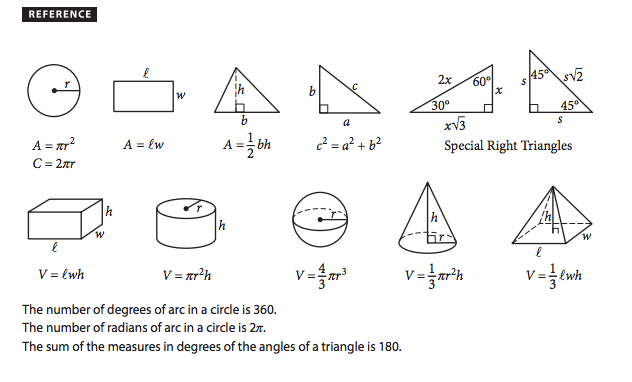
SAT Grammar and Expression Tips
Tip 5: Memorize Grammar Rules
The grammar questions on the SAT, officially the Standard English Conventions questions, take a specific standardized approach, so it is useful to memorize the rules to reduce confusion. It’s always safer to know the exact rules than to just go by what “looks right” or “sounds right” to you. If you’re not used to some of the more archaic grammar rules tested on the SAT, you should memorize them. On the digital test there is no “NO CHANGE” option any more; you are given four complete versions of the underlined portion and you pick the one that works. That makes knowing the actual rule more important, not less, because you can no longer fall back on “the original sounded fine.” At prepmedians.com, we have a Need-to-Knows list of grammar rules with all of the grammar content you need to know to ace the section!
Tip 6: Skim the Paragraph Before Answering Rhetorical Questions
Expression of Ideas questions ask about purpose, transitions, and how ideas fit together rather than about a single grammar rule. They come at the end of each module, after the conventions questions.
Two of them are worth naming. Transition questions give you a blank between two sentences and four connecting words. Do not pick by ear. Decide first what the relationship is (same direction, opposite direction, cause, example) and then choose the word that does that job. Rhetorical synthesis questions give you a bulleted list of notes and a stated goal, something like “emphasize a difference between the two studies.” The trap is that several choices are factually true; only one accomplishes the stated goal. Read the goal twice, then treat every choice as right-or-wrong against that goal alone.
These tips are just to get your feet wet, but there are many more strategies that you can find at prepmedians.com where all the content and strategies are baked into our HD entertaining videos featuring Broadway singer-actors and sketch comedians.
Leave a Reply