Tag: SAT

  • SAT vs ACT: Which One Should You Take?

    SAT vs ACT: Which One Should You Take?

    SAT or ACT?

    Parents and students start the college process by comparing the SAT and ACT tests. The SAT and ACT cover generally the same topics, and both scores are used for college admissions decisions and the awarding of merit based scholarships.

    In the past, schools on the coasts generally gravitated towards the SAT while those in the midwest preferred the ACT. Now, however, the college application landscape has changed and schools have become increasingly flexible; both tests are now widely accepted across all US colleges.

    Don’t let the question of SAT or ACT keep you up at night! Know the basics about each test, your strengths and weaknesses as a test taker, and focus on!

    Comparing the SAT and ACT:

    The ACT has a Science section and the SAT does not, but on the ACT Science is now optional.

    The SAT is fully digital and adaptive. You take it in the Bluebook app, and a calculator is allowed on every math question.

    Aspect SAT ACT
    Why Take It Colleges use SAT scores for admissions and merit-based scholarships. Colleges use ACT scores for admissions and merit-based scholarships.
    How You Take It Fully digital. You test in College Board’s Bluebook app on a laptop or tablet, at a test center. Paper or online at the test center, depending on the date and the site.
    Test Structure Reading and Writing, then Math. Each section is split into two modules. English, Math, Reading, then optional Science. Optional Writing comes last.
    Length 2 hours, 14 minutes plus a 10-minute break 2 hours, 5 minutes for the three core sections. 2 hours, 45 minutes if you add Science. Writing adds another 40 minutes.
    Adaptive? Yes. How you do on the first module of a section decides whether the second module is harder or easier. No. Every student sees the same questions in the same order.
    Reading Short passages, usually a paragraph, with one question each, mixed in with the grammar questions. 36 questions across four passage sets.
    Science None as its own section, though charts and data show up inside Reading and Writing and Math. Optional since 2025. 40 questions in 40 minutes, testing how you read experiments, charts and tables rather than science you memorized.
    Math Algebra, advanced math, problem solving and data analysis, plus a smaller slice of geometry and trigonometry. Algebra, geometry, trigonometry, probability and statistics.
    Calculator Policy Allowed on every math question. Bluebook has a Desmos graphing calculator built in, or you can bring your own approved one. Allowed on every math question.
    Formula Sheet Provided, and you can pull it up on screen at any point during Math. Not provided. You memorize your formulas.
    Essay None. College Board discontinued the SAT Essay in 2021. Optional Writing test, scored 2 to 12. It does not count toward your composite.
    How It’s Scored Scored on a scale of 400 to 1600, with each of the two sections worth 200 to 800. Composite of 1 to 36, which is the average of English, Math and Reading only. Science is reported separately and pairs with Math for a STEM score.

    compiled from current College Board and ACT test specifications

    Here’s an interesting analogy comparing the two tests:

    The ACT is like lifting a 5 pound weight ten times while the SAT feels like lifting 25 pound weights twice. Both are quite draining, but in different ways. The ACT is extremely fast paced while the SAT requires you to think more and deeply.

    Important note: Be sure to look carefully at admission preferences and requirements to double check which of the tests your prospective college accepts.

    According to the College Board, while both tests measure what you learned in high school, the SAT is a better indicator of skills you will actually need to succeed in college and beyond. Instead of focusing on how well you can recall information, the SAT emphasizes one’s ability to apply it in real world scenarios. This is why the SAT provides everyday math formulas while the ACT expects you to memorize them.

    Test Format

    Structure and Timing SAT ACT
    Testing time 2 hours, 14 minutes 2 hours, 5 minutes core. 2 hours, 45 minutes with Science. Add 40 minutes for optional Writing.
    Structure 2 sections, 2 modules each 3 core sections, plus optional Science and optional Writing
    Number of questions 98 131 core, or 171 with Science
    Time per question About 1 minute, 22 seconds on average About 57 seconds on average
    Score range Composite 400 to 1600, with Reading and Writing and Math each 200 to 800 Composite 1 to 36 from English, Math and Reading. Science and STEM scores reported separately. Writing domain scores 2 to 12.
    Section length and timing Reading and Writing: two 32-minute modules of 27 questions each, so 54 questions in 64 minutes. Math: two 35-minute modules of 22 questions each, so 44 questions in 70 minutes. English: 50 questions in 35 minutes. Math: 45 questions in 50 minutes. Reading: 36 questions in 40 minutes. Science (optional): 40 questions in 40 minutes.

    compiled from current College Board and ACT test specifications

    Test Timing

    The SAT gives you 98 questions and the ACT gives you 131 in its three core sections, so timing is one of the most important things to weigh when you pick a test. You get roughly 1 minute and 22 seconds per question on the SAT and roughly 57 seconds per question on the ACT. The gap used to be wider, because the shorter ACT introduced in 2025 cut the question count without cutting the time by as much. Reading in particular went from about 53 seconds per question to about 67.

    One more thing worth knowing before you choose: the SAT is adaptive, so the second module of each section adjusts to how you did on the first. The ACT is not. If you like the idea of a test that meets you where you are, that is a point for the SAT. If you would rather see a fixed test you can practice against exactly, that is a point for the ACT.

    A little bit stressed out?

    I feel you. Test taking is honestly one of the worst things about the college process in my experience. We love spending summertime huddled over practice tests and test prep books and watching everybody else have fun. Are you feeling this FOMO? Do you find yourself “reading” through grammar rules only to realize that you’ve actually just been looking at the words and not processing anything? It happens to the best of us. Want to crush the ACT or SAT in the next few weeks? We got you. Prepmedians teaches ACT and SAT test prep through entertaining and engaging ways with sketch comedy, music, rap, and more. We’ll get you through those boring summer study days in no time. Check us out today!

  • SAT Math vs. ACT Math: The Ins and the Outs

    SAT Math vs. ACT Math: The Ins and the Outs

    What’s in this guide?

    Which is easier? Which is faster? Which one am I more likely to score higher in?

    This guide will help pilot you in your search for which test to take, but ultimately, it comes down to which math section is right for you?

    In this guide, we’re going to break down the similarities and the differences between the SAT Math section and the ACT math section and help you decide which standardized test best suits you.

    Organization

    Before diving into the specifics, let’s first look at each math section from an aerial view and see how it’s structured.

    SAT Math Organization

    The SAT is fully digital. You take it in College Board’s Bluebook app at a test center, and it has two sections that always appear in the same order: Reading and Writing first, then Math. The whole test runs 2 hours and 14 minutes, with a 10-minute break between the two sections, and Math takes up 70 minutes of that. Once a module is over you cannot go back to it. Time management is key.

    Here’s an overview of the SAT Math section:

    SAT Math Order of Appearance on Test # of Questions Total Time Time per Question
    Module 1 3rd (after both Reading and Writing modules) 22 35 minutes 95 seconds
    Module 2 4th 22 35 minutes 95 seconds

    Note: The Time per Question column is only a general guideline. On average you get about 95 seconds per question in each module, but you should spend more on some and less on others.

    The big thing to understand about the digital SAT is that it is adaptive. Math module 1 is a mix of easy, medium and hard questions. How you do on it decides whether module 2 is the harder version or the easier version, and that in turn sets the ceiling on your Math score. In practice this means module 1 matters more than it looks like it should. Do not burn all your time on one stubborn question early.

    A calculator is allowed on every single math question. Bluebook has a Desmos graphing calculator built in, and you can also bring your own approved calculator. The no-calculator section that older prep books talk about no longer exists; College Board retired it when the test went digital in 2024.

    You also get more time per question on SAT Math than on ACT Math, which is worth weighing if checking your work is what saves you (we’ll come back to this later in the guide).

    ACT Math Organization

    The ACT has three core sections that always appear in the same order: English, Math, Reading. Science is now optional and comes fourth if you take it, and optional Writing comes last. The three core sections take 2 hours and 5 minutes, or 2 hours and 45 minutes if you add Science. Like the SAT, once a section is over you cannot go back to it. Time management is key.

    Here’s an overview of the ACT Math section:

    ACT Section Order of Appearance # of Questions Total Time Time Per Question
    Math 2nd (after English) 45 50 minutes 67 seconds

    Note: The Time per Question column is only a general guideline. On average you get about 67 seconds per question on ACT Math.

    These numbers changed with the shorter ACT that rolled out in 2025. Math went from 60 questions in 60 minutes to 45 questions in 50 minutes, so you actually get a little more time per question than students did on the old test, and answer choices dropped from five to four. That second change matters more than it sounds: a blind guess is now a 1-in-4 shot instead of 1-in-5, and crossing out even one wrong choice pays off faster. ACT also cut back on long word problems. If your prep book says 60 questions in 60 minutes with five choices, it is out of date.

    The ACT Math section runs straight through with no break inside it, and it still appears right after English and right before Reading.

    Design-wise, everyone has their own preferences, so the “better” test design is the one that best works for you. If you want more time per question to solve problems and check your work, the SAT is better for you. If you would rather see a fixed, predictable test that does not change difficulty on you mid-section, the ACT is better for you.

    Question Types

    Although many of the topics covered in the SAT Math section and ACT Math section are similar, the way they are presented are drastically different. The following section will hopefully provide clarity on what to expect in the math sections when taking the SAT or ACT

    SAT Question Types

    The SAT math section is fairly straightforward that cover a broad range of topics, specifically focusing on algebra.
    In general, the SAT math tests fewer concepts/topics than the ACT math, specifically, less than 10% of SAT questions are on geometry and the SAT has fewer trigonometry questions than the ACT. However, the SAT math does have an emphasis on word problems and data analysis. Many parts of the SAT math include several questions off of one scenario.

    For example:
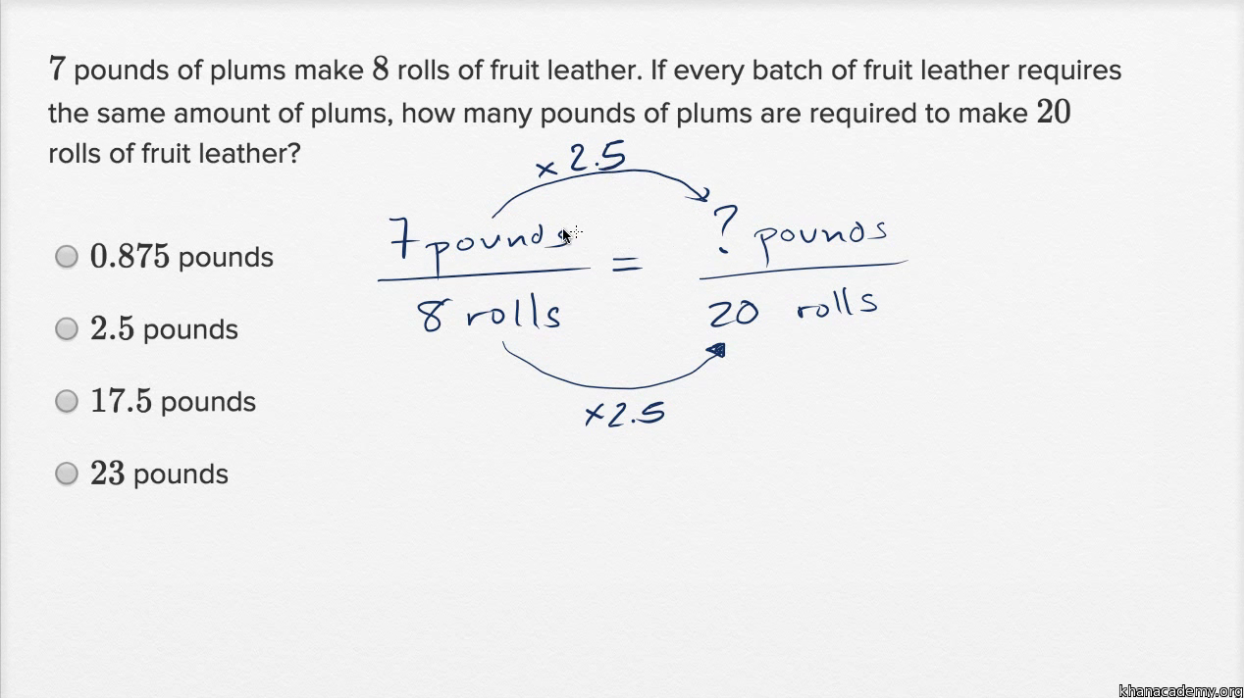
    The following is an example SAT algebra problem is from Khan Academy.
    Screen Shot 2019-07-08 at 2.12.27 PM

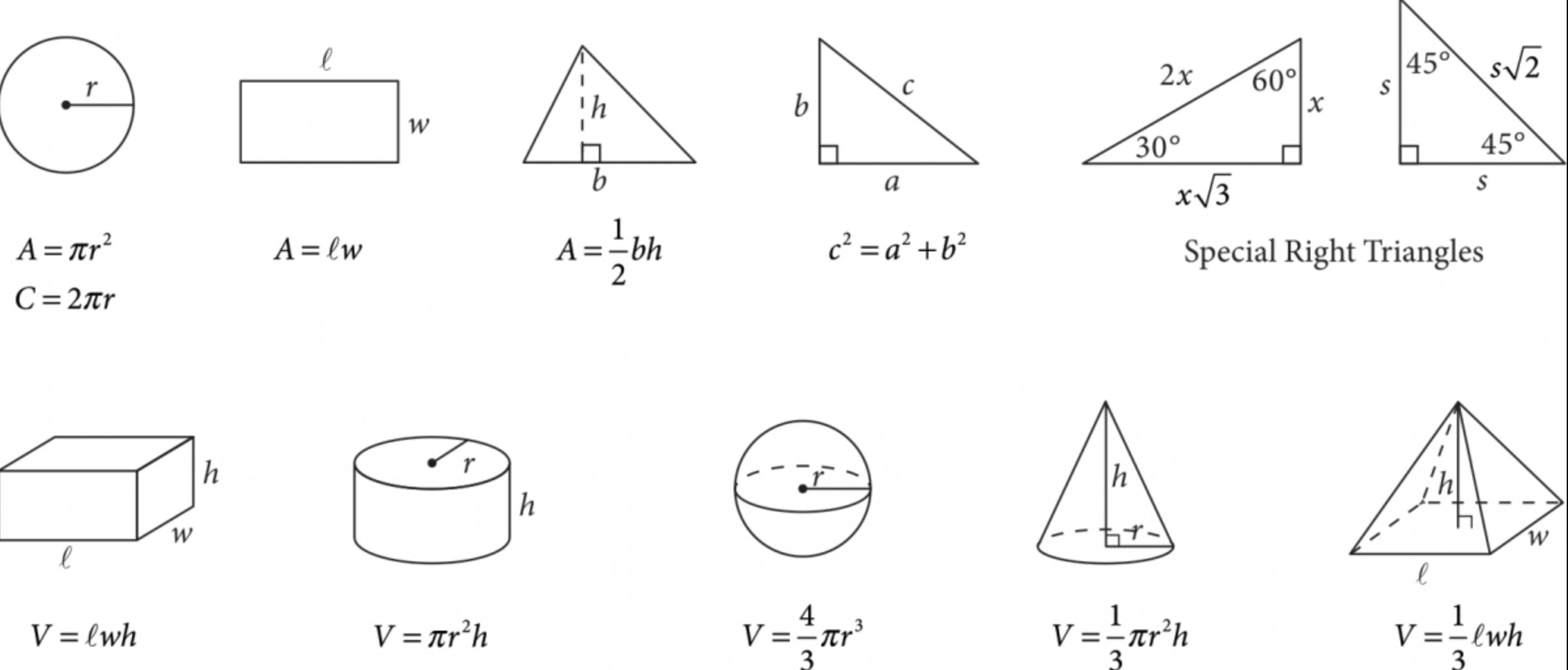
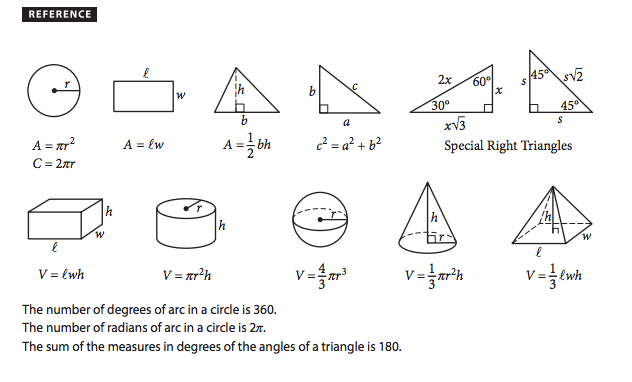
    The SAT gives you a reference sheet of formulas that you can pull up on screen at any point during Math, but we still suggest memorizing the common formulas in order to maximize time spent on solving the problems and checking your answers. The following image from the College Board shows some important formulas to remember:
    Screen Shot 2019-07-08 at 2.15.32 PM

    One unique thing about the SAT compared to the ACT is student-produced response questions, better known as grid-ins. They are about 25% of SAT Math, roughly 11 of the 44 questions. Unlike the multiple choice, you can’t really guess on these. You have to come up with an answer to the problem.

    ACT Question Types

    Like the SAT, the ACT math is also fairly straightforward. Generally, they aren’t as wordy as some SAT math questions. However, as noted earlier, there is a heavier emphasis on geometry and trigonometry on the ACT math than on the SAT math. Also, the ACT math covers a wider range of topics than the SAT math like trigonometry, matrices, and logarithms.

    For example:
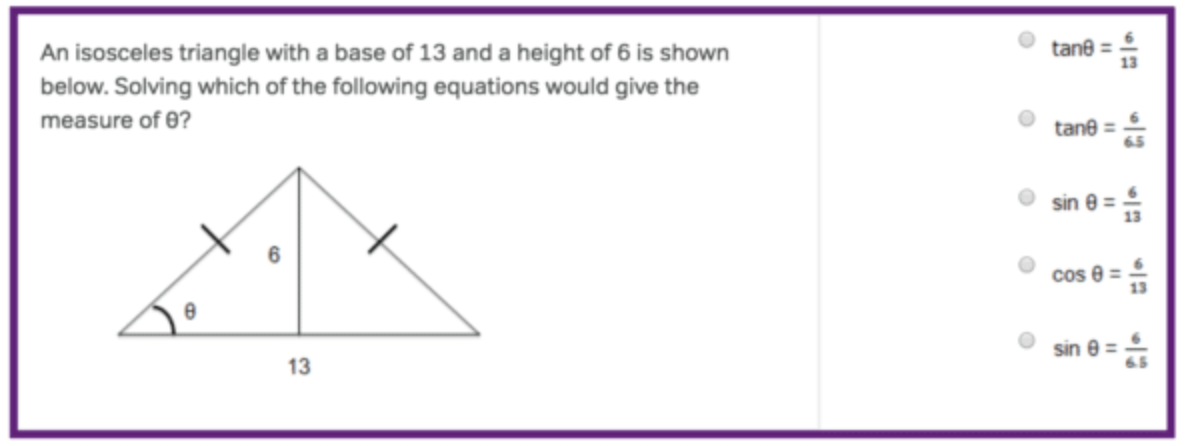
    The following is an example ACT trigonometry problem is from Magoosh.
    Screen Shot 2019-07-08 at 2.22.56 PM

    Unlike the SAT, you will not be given a reference sheet, so you have to memorize all the necessary formulas before test day. That did not change with the shorter ACT.

    The trade-off between the SAT and ACT is that the ACT covers a wider range of topics but covers each topic less extensively than the SAT. Topically, if you’re strong in geometry or trigonometry, the ACT might be better suited for you. If you can’t remember formulas and need to rely on given formulas, the SAT might be better suited for you.

    Scoring

    Imagine this. It’s the fourth quarter. It’s a tied game, and there’s one second left on the clock. Your coach calls a play, and the ball gets inbounded to you. What do you do? You chuck it up. Really. What’s there to lose? You miss, and you might get chirped a little bit, but if you hit, you’ll be the hero.

    This analogy may seem weird, but it is an applicable testing strategy to maximize your score in both the SAT and the ACT. Both the SAT and the ACT combine the correct and incorrect answers to give you a raw score which is then converted into a scaled score. This section in this guide will break down the scoring processes of both the SAT and the ACT.

    SAT Scoring

    As explained earlier, the SAT Math section is broken down into multiple-choice questions and grid-in questions. For each question, you will receive the following on your raw score:
    – +1 for each correct answer
    – +0 for each incorrect answer

    Note: there is no penalty for incorrect or blank answers on the SAT. That’s why on the multiple-choice questions, when the shot clock is running down and you’re unsure about a question, you should just chuck it up and guess one of the answers. Hitting on one of these guesses won’t make you a hero but at least you’ll get a higher SAT score!

    The total raw score on the SAT Math section converts to a scaled score between 200-800. With the scaled scores, you don’t have to get every question right in order to achieve a perfect score on the math section. They’re scaled. The scaled score will then give you your percentile ranking which is basically how you stack-up compared to the rest of the people that took the SAT.

    For example, if you scored in the 50th percentile, you’re dead on average: you scored better than 50% of all people who took the SAT and 50% scored higher than you.

    Fun fact: For each multiple choice question guess, you’re getting 0.25 points added to your raw score (the points are not actually added to your raw score) so for every 4 multiple choice questions that you guess, on average, you’re getting 1 point added to your raw score!

    Note: A good test taking strategy is to cross out answers you know are incorrect. If you cross out an incorrect answer, those guesses discussed above result in even more “points” added to your raw score!

    ACT Scoring

    Every question on the ACT Math section is multiple-choice with four different answer choices. (It was five until the test was shortened in 2025.) For each question on the ACT, you will earn the following on your raw score:

    • +1 raw point for each correct answer
    • +0 raw point for each incorrect answer

    Note: Like the SAT, there is no penalty for incorrect or blank answers on the ACT so the same guessing strategy for questions you’re unsure of as mentioned earlier applies here too. And now that ACT Math has four answer choices rather than five, blind guessing is worth the same on both tests: a 1-in-4 shot.

    The total raw score on the ACT converts to a scaled score out of 36. Your Math scaled score is one of the three that get averaged into your composite, along with English and Reading. Science no longer counts toward the composite; if you take it, it is reported on its own and also combines with Math into a STEM score. Like the SAT, you don’t have to get every question right in order to achieve a perfect score. The score is scaled. The scaled score will then give you your percentile ranking which is how you stack-up against everyone else that took the ACT.

    SAT Scores and Percentiles vs. ACT Scores and Percentiles

    Because scores are scaled, you do not have to get every answer correct to hit a high score, and the percentile you land in is not the same as the percentage of questions you got right.

    What we will not do here is hand you a raw-score conversion chart. Those charts get passed around a lot and they are close to useless, for two reasons. First, every test form scales differently. A raw 39 is not a fixed scaled score; it depends on how hard that particular form was. Second, both tests have been redesigned since most of those charts were written, so the raw-score totals they are built on no longer exist. SAT Math is 44 questions now, not 58, and ACT Math is 45, not 60.

    The honest version is this: take an official full-length practice test, score it with the conversion table that comes with that specific test, and use the result as your baseline. College Board publishes full practice tests inside Bluebook, and ACT publishes official practice material for the shorter format. Those are the only conversions that will tell you anything real.

    For rough orientation while you plan, the SAT total average sits around 1050 and the ACT composite average sits around 19 to 20. Scoring above those puts you in the top half of test-takers. Anything more precise than that has to come from an official practice test.

    Summary

    The SAT Math:

    • Two adaptive modules of 22 questions, 35 minutes each, 44 questions in 70 minutes total
    • Comes after both Reading and Writing modules, so it is the second half of the test
    • About 95 seconds per question
    • Module 1 decides whether module 2 is the harder or easier version, which sets your score ceiling
    • Calculator allowed on every question, with Desmos built into Bluebook
    • Wrong answers aren’t penalized (guess!)
    • Multiple-choice questions with 4 answer choices, plus grid-ins (about 25% of the section) where you type your own answer
    • Reference sheet of formulas available on screen throughout Math
    • Heavy emphasis on algebra, lighter on geometry and trigonometry
    • More emphasis on word problems and data analysis than the ACT

    The ACT Math:

    • Appears second, right after the English section
    • 45 questions, 50 minutes (about 67 seconds per question)
    • Not adaptive. Everyone sees the same questions.
    • Calculator allowed through the whole section
    • Only multiple-choice, with 4 answer choices since the 2025 redesign
    • Wrong answers aren’t penalized (guess!)
    • No formulas provided
    • Larger emphasis on geometry and trigonometry
    • Wider range of topics covered than the SAT, but each topic covered less extensively
    • Counts toward your composite along with English and Reading, and pairs with Science for a STEM score if you take Science

    So Which One Should I Take?

    Ultimately, the test you should take comes down to which test suits your strengths. Each test has its own pros and cons for each specific person. If unsure, we recommend taking at least one practice SAT and ACT practice test and comparing your scores. I know. What was the point of reading this guide then? At the end of the day planning can only get you so far, and the results from your practice is the only thing that can give you definitive results. If one score is drastically higher than the other, there you go.

    However, that’s not to say that just because you score higher in one math section than the other, that’s your test. What matters is total score so even if you score lower on the SAT math than the ACT math, as long as your SAT overall score is higher, then the SAT is the better option for you.

    Standardized testing is all about balance, from balancing your time while taking the test to answer the most amount of questions correctly to finding which test holistically best suits you. Just because you’re strong on one area, doesn’t mean you’ll crush the SAT/ACT.

    And even if you don’t achieve the scores you desire, just note that only practice, diligence, and preparation will help you crush the SAT/ACT and achieve your testing potential. For more in-depth teaching about the SAT/ACT, check out our website Prepmedians to learn more about everything you need to know!

  • How Much Does the SAT Cost?

    How Much Does the SAT Cost?

    Updated for the 2026-2027 testing year. The SAT has been fully digital since 2024, and the SAT Essay and SAT Subject Tests no longer exist, so the fee structure is simpler than it was the last time most cost guides were written.

    Registration Costs

    Unfortunately, you can’t just show up test day and try to take the SAT without registering prior, and unfortunately, registering for the SAT costs money. Registering fees are comprised of mandatory fees and add-on fees, and these fees will be the bulk of the cost of the SAT.

    Here’s a table summarizing the mandatory SAT fees:

    Fee Cost
    Registration – SAT $68
    International fee (outside the U.S.) Added on top of the $68 base fee; the amount depends on your region

    And here’s a table summarizing the optional add-on SAT fees:

    Add-on Fees Cost
    Late fee (registering after the normal deadline) $38
    Waitlist fee (added to a test date waitlist after the late registration deadline) $0
    Change fee (switching your test center or test date) $34
    Cancellation fee $34, or $44 if you cancel late

    These costs can seem appalling for low-income families and can discourage taking the SAT multiple times, but those families shouldn’t be discouraged. The CollegeBoard offers fee waivers to certain students which gives the following benefits:
    – The SAT for free, twice
    – 2 free Question-and-Answer Service (QAS) or Student Answer Service (SAS) reports
    – Unlimited score reports to send to colleges
    – Waived application fees at these colleges
    – Free CSS Profile application to apply for financial aid at the colleges listed in the link above
    – No late registration fees for free tests
    – No international fees for free tests
    – Fee reductions for score verification reports

    A note on two things that used to be on this list: the SAT Essay and SAT Subject Tests no longer exist. College Board discontinued Subject Tests in January 2021 and the Essay in June 2021, so there is nothing to pay for and nothing to waive. If a prep book or an older article tells you to budget for either one, it predates those changes.

    To determine whether you are eligible for a fee waiver, you have to fit one of the following:

    • Enrolled in or eligible to participate in the National School Lunch Program (NSLP)
    • Your family’s annual income falls within these Income Eligibility Guidelines
    • You’re enrolled in a federal, state, or local program for low income states such as Upward Bound
    • Your family receives public assistance
    • You are a ward of the state or an orphan
    • You live in subsidized housing, live in a foster home, or are homeless

    To apply for a fee waiver, you have to contact your school counselor or a representative of a community-based organization. Even if you’re home-schooled, you still have to contact a local high school counselor. This process takes some time so it is recommended to apply for a fee waiver well before the SAT test dates you’d like to take.

    Score Report Costs

    After taking the SAT, you want to get your scores, know how well you did compared to everyone else, and be able to send out your scores. This table summarizes all possible post-test costs:

    Service Cost
    Receiving Scores Online $0
    Receiving Scores by Mail $0
    Receiving Scores by Phone $15 (per call)
    Score Report (first four reports you give to schools) $0
    Score Report (each additional report after first four reports) $15 (fee charged for each additional score report)
    Rush report request $31 (per order)
    Question and Answers Service $16
    Student Answer Service $16
    Score Verification $55
    Archived scores (scores from a test you took more than a year ago) $35

    Minimizing the Costs for the SAT

    As you can see, the SAT can cost quite a lot. All those little costs can add up, and if you don’t plan out which services you want to utilize ahead of time, you might end up wasting money and employing a service that you don’t need. Here are some tips to help minimize the costs for the SAT.

    Take the Test Early

    I know starting the college application process early in your high school career is not the most fun you’ve ever had, but if you take the SAT last minute, you might end up scrambling to get official score reports to schools before application deadlines and have to pay the $31 fee for a rush order. Also, if you take the SAT early, you’ll have more test dates to be able to retake the SAT and get a higher score.

    Most SAT scores are released two to four weeks after test day. You should also consider the time it takes for colleges to receive your score reports (2-3 weeks). If you want to avoid those pesky rush order fees, your last SAT should be at least 5 weeks before your scores need to be in.

    Register Early

    If you see the Registration Costs section, you’ll see that a late registration fee is $38. If you register late, that is more than half the cost of the test itself for a task that takes ten minutes. If you register ahead, not only do you save money, but you also ensure that you’ll have a spot during that test date and that you’ll also have more time to study for the SAT.

    Use Your Free Score Reports

    The first your score reports you send to schools are free if you specify the schools you’d like to send your scores to early enough. If you already know your dream top 4 schools, then list those four schools as early as registration or as late as the Monday 9 days after the test date. This will save you up to $60!

    Also, if you know which schools you want to apply to Early Decision (ED) or Early Action (EA), then list those schools for your free score reports. Not only are these deadlines earlier than normal application deadlines, but if you get into a school ED or EA, then you have the option to forgo the rest of the college application process and attend the school you got into ED/EA the next fall (if applying ED, you have a binding commitment so you’re forced to forgo the rest of the college application process)! What this means is that if you were planning on applying to multiple colleges, you no longer have to pay the additional score report fee of $15 per school.

    Utilize the Fee Waiver if Eligible

    As mentioned earlier, if you fall into any of the criteria for being eligible for a fee waiver, then you should apply for a fee waiver. You would get almost every service the SAT has for free. Read earlier in the article to learn more about what you get with a fee waiver and what criteria you need to fit in order to be eligible for a fee waiver.

    Registering and Receiving Scores Online

    cellphone

    The cellular phone has ruined our society. When you’re hanging out with friends or family, are you truly enjoying their company or are you wasting time aimlessly scrolling through your phone? We need to go back to the good old days.

    All jokes aside, phones are really convenient and helpful in our daily lives, but when it comes to the SAT, they only add on more fees. Registering by phone instead of registering online costs $15 and receiving scores by phone costs $15 per call. That’s at least $30 that you’re spending for the “convenience” of your phone rather than just doing things online where you spend $0.

    Prepare and Do Well on the SAT

    The majority of us take the SAT multiple times, which adds more costs and stress to this process, but there’s a simple fix: just ace the SAT the first time you take it, and you don’t have to worry about ever taking it again. You don’t have to worry about utilizing all the tips above a second, a third, or a fourth time. You don’t have to worry about more hours preparing for the SAT. And you don’t have to worry about another Saturday morning (and by the transitive property, another Friday night) spent on taking the SAT. It’s that simple!

    Although this is pretty unrealistic and unlikely, you should always rigorously prepare for your SATs. An extra half an hour a day is minimal work in the short-run, but you can potentially save a lot of money and time in the long-run. “Success is 90% preparation, 10% perspiration.”

    To help prepare for the SAT, we recommend Prepmedians. Not only do we effectively teach the concepts that will appear on the SAT so that you’ll be able to crush the SAT come test day, but we also present the information through an entertaining way where test prep is something enjoyable and as simple as watching a TikTok video rather than a burden. Prepmedians is affordable ($99/month, or $348 for 12 months, which works out to $29/month) compared to the prices of so many other tutoring companies and ways to prep. In particular, our founder Kalyan Ray-Mazumder who designed the curriculum would charge $400/hour when he was tutoring!

    And come test day, believe in yourself. Believe in your preparation. Believe that you can crush the SAT because once you do, you’ll be rewarded for all your hard work and effort when you get into your dream school!

  • How to Look at Your ACT and SAT Score?

    How to Look at Your ACT and SAT Score?

    How are the SAT and ACT Scored?

    Before trying to interpret the scores, you need to understand how each test is scored. The SAT has two sections, Reading and Writing, and Math. Each is worth up to 800 points, so your total score is out of 1600.

    The ACT has three scored sections that feed your composite: English, Math, and Reading. Each is scaled from 1 to 36, and those three are averaged to give you a composite out of 36. This changed in 2025. Science used to be the fourth section in that average; it is now optional, and if you take it, it is reported on its own and also combines with Math into a separate STEM score. Optional Writing is reported separately too, on a 2 to 12 scale.

    What is a Perfect Score?

    Don’t beat yourself up if you didn’t get a perfect score! Only about ~0.03% get a perfect score of 1600 on the SAT and about ~0.01% get a perfect score of 36 on the ACT. Our founder Kalyan Ray-Mazumder who wrote the curriculum for Prepmedians is one of the few people I know who got a perfect score on the test.

    The top tier American colleges like the Ivy-League schools are looking for scores above the 90th percentile. For the SAT, the 90th percentile score is approximately 1350 and for the ACT, the 90th percentile score is approximately 28.

    While a less than perfect score doesn’t dictate your chances with the top colleges and universities, a perfect score doesn’t determine your odds of getting in. There have been a lot of cases where students who have scored perfect scores, even multiple times, still were not able to get into some of the top tier schools. So, if the score you expected was not the score you got, don’t be disappointed.

    High SAT or ACT Score

    When interpreting SAT scores, know that the average total score has sat right around 1050 for years, split roughly evenly between the two sections. Scoring above 1050 puts you in the top half of test-takers. The ACT composite average has drifted down and now sits around 19 to 20, so scoring above 20 puts you in the top half there. Because the ACT composite no longer includes Science, do not assume a composite from a 2024 chart maps perfectly onto one earned today.

    While there is no one ideal score, you want to interpret the scores based on how selective the colleges in your list are. A 1200 or higher, along with other excellent application factors, should gain you admittance into many highly regarded American colleges. Depending on all the other factors of your application, an average score won’t keep you out of a good school.

    What’s the Worst Score?

    The low end for the SAT is a 400, and the lowest possible ACT score is 1.

    You have to work pretty hard to get a score that bad. Even if you don’t answer a single question, the companies that administer the tests are more likely to throw out your test, assuming an error was made, than to actually send it to any colleges.

    The question has been asked many times whether merely entering your name gets you the minimum SAT and ACT scores, and there seems to be no definitive answer.

  • Common Myths About ACT/SAT

    Common Myths About ACT/SAT

    Myth 1:

    The SAT is more accepted among colleges than ACT.

    NO! A common myth is that top-tier schools tend to prefer SAT over ACT. But in reality, all schools accept and look at ACT and SAT in the same scale. The preference of students to take SAT or ACT tends to rely on students’ resident states. The ACT is more popular in the Midwest than the SAT, considering many states in the Midwest require mandatory ACT testing. Students from the West or the East coast tend to prefer the SAT over the ACT. So, the difference in proportion of ACT and SAT scores among the accepted pool in top-tier schools is caused more by the personal preference of students rather than by the preference of colleges.

    Myth 2:

    The October and December ACT/SATs are harder because more seniors tend to take them last minute.

    NO! There were comparative studies done about the average scores from one testing month to another and October had a lower average than May. Thus, the rumors about easier testing dates started running wild. But these testing dates keep changing. Sometimes it’s December with the lowest average and sometimes it’s June. Any student might find one test slightly easier than the other. One section or even one question could seem easier. But that opinion is different for every student. So, don’t pick a date based on this myth. Instead, pick a date that best works with your schedule.

    Myth 3:

    ACT is only for people who have a good science background.

    NO! And as of 2025 the Science section is optional anyway, so this myth has even less to stand on than it used to. If you do take Science, it tests your ability to read and analyze passages, charts, tables, and graphs. It is not trying to test your in-depth knowledge and understanding of all areas of science. While it does present passages and experiments of science fields like biology, chemistry and others, it is your reasoning and reading comprehension skills that will actually help you in this section (not your hard science knowledge!).
    P.S. The SAT tests your ability to analyze data and graphs too. It does so in a more hidden way by mixing it with other sections.

    Myth 4:

    The ACT is “easier” than the SAT.

    NO! The ACT is not necessarily easier, it’s just that the questions tend to be more straightforward. Students who take the SAT and the ACT with an equal amount of preparation for both tend to score equivalently on both. The SAT used to have a no-calculator section, but that went away when the test went digital in 2024. A calculator is now allowed on every math question on both tests, and the SAT even builds a Desmos graphing calculator right into the app. It is worth exploring both tests to see which one is better for you! You can prepare for both at Prepmedians.

    Myth 4.5:

    Now that ACT Science is optional, you should skip it.

    Not so fast. Science no longer counts toward your ACT composite, which is the number most people mean when they say “my ACT score.” But some colleges and scholarship programs still ask for it, and some STEM programs look at the separate Science and STEM scores. It is an extra 40 minutes and a few extra dollars. Check the requirements at every school on your list before you register, because adding Science later is more annoying than just taking it. If you are aiming at engineering or a science major, take it.

    Myth 5:

    You have to spend a lot of money to do well on the ACT/SAT.

    NO! Sure, there are many test prep courses require you to spend a lot of money, sometimes even many thousands of dollars. And the cost is often positively correlated with the amount of time you spend. But it’s important to note that the ACT/SAT tests your knowledge gained from all your K-12 education. Most of the topics these tests focus on, like algebra, tend to be from earlier stages of schooling than later. So, none of the topics tested by ACT/SAT are completely new. Rather, they try to gauge how well you understand the fundamental topics. It is not worth paying someone thousands of dollars to have them reteach the content that you already know and waste hundreds of hours of valuable time in that process. Rather, your focus should be on reviewing the topics and finding strategies that would help you tackle the known but hidden patterns of the test. You will find a faster review of the necessary content and strategies, all taught through entertainment at an affordable price, at Prepmedians!

  • Tips and Tricks for Each SAT Section

    Tips and Tricks for Each SAT Section

    Heads up: the SAT has been fully digital and adaptive since 2024. There is no longer a separate Reading section and Writing and Language section. Both live inside one Reading and Writing section made of two 32-minute modules of 27 questions each, and every question has its own short passage. The tips below have been updated for that format.

    SAT Reading and Writing Tips

    Tip 1: Pay Attention to Connotation and Context

    Look for words that indicate positive or negative connotation in the part of the passage that the question refers to. This will help you to eliminate at least a couple of choices even if you are not sure about the remaining answer choices.
    Context is also very important! Don’t just analyze the referred sentence in the question — look at the sentences above and below it too. Watch out for the contrast words! You should also pay attention to strong adjectives that might help you to determine connotation.

    Tip 2: Work the Short Passages One at a Time

    On the digital SAT, every Reading and Writing question comes with its own passage, usually a single paragraph, and that passage serves only that one question. The old paired “which choice provides the best evidence” questions are gone, and so is the habit of flipping back and forth across a long passage hunting for line references.

    Treat each question as a self-contained puzzle. Read the short passage once, decide in your own words what the answer should be before you look at the choices, and then find the choice that matches. Because the passages are so short, re-reading one costs you seconds, not minutes, so do not guess when a second read would settle it.

    One more thing the short-passage format gives you: questions inside each module are roughly grouped by type, moving from Craft and Structure and Information and Ideas into Standard English Conventions and Expression of Ideas. Once you notice you have crossed into grammar territory, you can switch into grammar mode and stay there.

    Tip 2.5: Respect Module 1

    The SAT is adaptive. How you do on the first module of Reading and Writing decides whether the second module is the harder version or the easier version, and that sets the ceiling on your section score. Module 1 is worth your best focus. Do not sandbag it planning to “lock in” later.

    SAT Math Tips

    Tip 3: Underline Key Parts of the Question

    Underline what you need to find in the question so you don’t get confused during the calculation process.
    Many students accidentally pick the trick answer choice because they lose track of the value that they were originally supposed to find. You can avoid this by underlining relevant parts of the question to maintain your focus.

    Tip 4: Memorize Formulas

    The SAT gives you a reference sheet of formulas that you can pull up on screen at any point during Math, but you will lose time and flow if you keep opening it. It is best to have the common formulas memorized beforehand and save the reference sheet for the ones you genuinely rarely use. This is a good reference from Khan Academy for some of the important formulas covered on the SAT.!9d6f82b33f4e0a6e192e74224a40976c332ddfbb

    SAT Grammar and Expression Tips

    Tip 5: Memorize Grammar Rules

    The grammar questions on the SAT, officially the Standard English Conventions questions, take a specific standardized approach, so it is useful to memorize the rules to reduce confusion. It’s always safer to know the exact rules than to just go by what “looks right” or “sounds right” to you. If you’re not used to some of the more archaic grammar rules tested on the SAT, you should memorize them. On the digital test there is no “NO CHANGE” option any more; you are given four complete versions of the underlined portion and you pick the one that works. That makes knowing the actual rule more important, not less, because you can no longer fall back on “the original sounded fine.” At prepmedians.com, we have a Need-to-Knows list of grammar rules with all of the grammar content you need to know to ace the section!

    Tip 6: Skim the Paragraph Before Answering Rhetorical Questions

    Expression of Ideas questions ask about purpose, transitions, and how ideas fit together rather than about a single grammar rule. They come at the end of each module, after the conventions questions.

    Two of them are worth naming. Transition questions give you a blank between two sentences and four connecting words. Do not pick by ear. Decide first what the relationship is (same direction, opposite direction, cause, example) and then choose the word that does that job. Rhetorical synthesis questions give you a bulleted list of notes and a stated goal, something like “emphasize a difference between the two studies.” The trap is that several choices are factually true; only one accomplishes the stated goal. Read the goal twice, then treat every choice as right-or-wrong against that goal alone.

    These tips are just to get your feet wet, but there are many more strategies that you can find at prepmedians.com where all the content and strategies are baked into our HD entertaining videos featuring Broadway singer-actors and sketch comedians.

  • ACT And SAT Score Conversion

    ACT And SAT Score Conversion

    SAT to ACT Conversion

    Many students are better at the SAT than they are at the ACT and vice-versa, so if you take both tests, you’ll need to perform an SAT to ACT conversion to determine which score to send to your colleges. This chart is the official ACT and College Board concordance, and it will give you an idea of which test you are better at.

    Two things to know before you use it. First, these concordance tables were published in 2018 and have not been revised since, but ACT and College Board both still point institutions to them, so they remain the standard. Second, the ACT composite changed in 2025: it is now the average of English, Math and Reading only, because Science became optional and stopped counting. ACT’s own research says enhanced and legacy composites are close enough to keep using these tables for normal admissions purposes, but the mapping is a little less precise than it was, especially if Science was one of your strongest or weakest sections. Treat the result as a good estimate, not a verdict.

    ACT SAT SAT RANGE
    36 1590 1570-1600
    35 1540 1530-1560
    34 1500 1490-1520
    33 1460 1450-1480
    32 1430 1420-1440
    31 1400 1390-1410
    30 1370 1360-1380
    29 1340 1330-1350
    28 1310 1300-1320
    27 1280 1260-1290
    26 1240 1230-1250
    25 1210 1200-1220
    24 1180 1160-1190
    23 1140 1130-1150
    22 1110 1100-1120
    21 1080 1060-1090
    20 1040 1030-1050
    19 1010 990-1020
    18 970 960-980
    17 930 920-950
    16 890 880-910
    15 850 830-870
    14 800 780-820
    13 760 730-770
    12 710 690-720
    11 670 650-680
    10 630 620-640
    9 590 590-610
  • Superscoring the SAT

    Superscoring the SAT

    What is Superscoring?

    Think about your favorite artist/musician. What are the chances that all of their music is good? Probably zero. Maybe one song has a really good beat but terrible lyrics. Can we conclude that that artist can’t write lyrics and should hire a ghost writer? No, because maybe another one of their other songs has good lyrics and a bad beat. Colleges that superscore have the same mindset in that just because you score poorly on the Math section one time you take the SAT, doesn’t mean you are bad at math. Superscoring is about seeing the potential in you so even if you haven’t made a complete song yet, we know you have the talent to create one.

    Superscoring is when colleges take your highest scores from all SAT scores that you submit and use those scores to create one “superscored” composite score. Colleges realize how stressful the SAT is and want to see the positives in you so they created superscoring in order to see the greatness in you! The superscoring process creates the highest possible composite score for you so you can portray the best you!

    Example: The first time you take the SAT you get a 700 on the Math and a 500 on the Reading for a total score of 1200. The second time you take the SAT you get a 600 on the Math and a 600 on the Reading for a total score of 1200. Colleges that superscore will take the 700 on the Math from your first test and the 600 on the Reading from your second test so you’ll end up with a superscore of 1300 as opposed to the previous total scores of 1200.

    advice

    Using Superscoring to Your Advantage

    When submitting your standardized test scores, the responsibility of superscoring falls on both the colleges you are applying to and yourself. Now, you aren’t directly involved in the process of superscoring – it’s not like there’s an honor code and you can just input your scores. You still have to submit your scores through the SAT website – but you yourself can superscore.

    By this I mean if after the first time you take the SAT you are satisfied with your Reading score, then you could prep intensively for the math section for the next time you take the SAT. With this strategy, you are concentrating on building your highest “superscore” composite score rather than trying to achieve your highest composite score on a single test.

    There are some cons to superscoring: you have to pay the SAT registration fee, currently $68 and you have to sit through the whole SAT (you can’t choose to only take the Reading or Math section). These cons are why I recommend trying your hardest to get as high of a composite score as possible the first time you take the SAT rather than prepping intensively for just one section each time you take the SAT.

    Obviously, there’s the chance that you don’t perform well on either section, and you have to retake the SAT at least another 2 times to get a good superscore, but there’s also the chance that you crush the SAT and won’t have to take it again!

    strategy

    If you plan on superscoring, you should plan on taking the SAT early enough, maybe spring of your sophomore year, where you’ll have enough SAT test dates to take and build up your superscore. If you’re not getting satisfactory results, don’t worry about taking the SAT too many times, as long as you don’t exceed around six times.

    However, be conscious of your actions. If you get a 500 on the Reading and a 700 on the Math the first time you take the SAT and get a 600 on the Reading and a 200 on the Math the second time you take the SAT because you didn’t bother answering any questions on the Math section, then colleges will probably think the 700 on the Math you got the first time was a fluke. You don’t necessarily have to prep intensively for the Math section if you are satisfied with your score, but it’d look a lot better to colleges if you got a 600 on the Math the second time rather than a 200.

    Every College That Superscores the SAT

    Before the list, one important caveat. Superscoring policies change constantly, and they moved a lot during the test-optional years. The list below is a useful starting point, but it is not a live feed, and some entries are years old. Always confirm on the college’s own admissions page before you build a testing plan around a school’s policy. While you are there, check whether the school is test-optional, test-required or test-blind, because that matters more than superscoring does.

    One note on the digital SAT: superscoring works exactly the same way as it always has. Colleges still take your best Reading and Writing score and your best Math score across sittings. Nothing about the format change affects it.

    Now that we know about how awesome superscoring is, it’s important to realize which colleges superscore. It’d be pretty awkward if you tried some of the strategies above, and you ended up applying to a college that didn’t superscore. Imagine you tried the scenario above. On the bright side, you got a superscore of 1300! On the down side, you applied to a school that didn’t superscore so you still have a composite score of 1200. Oof, back to square one.

    Here’s a list of colleges that superscore. Since it is a long list, if you want to search for whether a specific college is on the list, press crtl + F for Windows or command + F for Mac and then type the specific school of interest.

           
    Abilene Christian University Adelphi University AIB College of Business Alamance Community College
    Alaska Bible College Albany State University Albion College Alfed University New York State College Ceramics
    Algoma University College Allegheny Wesleyan College Allen County Community College Ambrose University College
    American College of the Building Arts American International College American Musical and Dramatic Academy American University DC
    American University of Puerto Rico American University of Sharjah American University Rome Amherst College
    Anderson Univeristy (SC) Andrew College Anne Arundel Community College Antietam Bible College
    Aquinas College (TN) Argosy University Twin Cities Arizona State University Tempe Arkansas State University
    Arkansas State University Beebe Armstrong Atlantic State University The Art Institute of Ohio Cincinnati Assumption College
    Atlanta Christian College Augsburg College Augustana College South Dakota Austin College
    Austin Peay State University Ave Maria University Latin American Campus Azusa Pacfic University Babson College
    Brainbridge College Baker University Baldwin-Wallace College Ball State University
    Baltimore International College Baptist Bible College and Seminary Barbados Community College Barclay College
    Barton College Bates College Baylor University Beacon University
    Belhaven College Bellarmine University Belmont Abbey College Belmont University
    Beloit College Bemidji State University Benjamin Franklin Institute of Technology Bentley College
    Berea College Berks Technical Institute Bethany Lutheran College Bethel College Indiana
    Biola University Bloomfield College Blue Ridge Commmunity College Blue River Community College
    Bluefield College Boise State University Boston College Boston University
    Bowdoin College Bowie State University Bowling Green State University Brandeis University
    Brevard Community College Brewton-Parker College Bridgewater State College Brookdale Community College
    Broward Community College Hollywood Brown University Bryan College BryanLGH College of Health and Sciences
    Bryant and Stratton Eastlake Campus Bryant University Bryn Athyn College Bryn Mawr College
    Bucknell University Butler County Community College Kansas Butler University Cabarrus College of Health and Sciences
    California College of the Arts California Maritime Academy California Polytechnic State University San Luis Obispo (CalPoly) California Polytechnic State University Pomona
    California State University Bakersfield California State University Channel Islands California State University Chico California State University Dominguez Hills
    California State Universty East Bay California State University Fresno California State University Fullerton California State University Long Beach
    California State University Los Angeles California State University Mentor California State University Monterey California State University Northridge
    California State University Sacramento California State University San Bernardino California State University San Marcos California State University Stanislaus
    Calvary Baptist College Calvin College Canadian Mennonite University Canisius College
    Cape Breton University Cape Fear Community College Cardiac & Vascular Technology Carleton College
    Carlow University Carroll College Montana Carroll University Carson-Newman College
    Carthage College Case Western Reserve University Casper College Catawba Valley Community College
    Catholic University of America Cathy McMorris Cayuga County Community College Cedar Crest College
    Cedarville University Center for American Education Central Alabama Community College Alexander City Central Alabama Community College Childersburg
    Central Carolina Technical College Central Connecticut State University Central Wyoming College Centre College
    Charleston Southern University Chattahoochee Valley Community College Chippewa Valley Technical College Christendom College
    Chirstopher Newport University Chukalongkorn BBA City Vision College Claremont McKenna College
    Clarendon College Clark University Clarkson Unversity Clearwater Christian College
    Clemson University Coastal Carolina University Coe College Cogswell Polytechnical College
    Coker College Colby College College of Charleston College of Coastal Georgia
    College of Eastern Utah College of Mount Saint Joseph College of Mount Saint Vincent College of New Rochelle
    College of Office Technology College of Saint Benedict/Saint John’s University College of Saint Mary College of Saint Scholastica
    College of Santa Fe College of Southern Maryland College of Southern Nevada College of the Atlantic
    College of the Mainland College of the Ozark’s College of Westchester College of William and Mary
    College of Wooster Colorado Christian University Coloardo College Coloardo State University Ft Collins
    Columbia Union College Columbia University Columbia-Greene Community College Community and Technical College West Virginia University
    Community Christian College Concordia College Concordia College New York Concordia University (Ann Arbor, MI)
    Concordia University Wisconsin Contra Costa College Cornell University Cottey College
    County College of Morris Craven Community College Creighton University Crossroads College
    Crown College (TN) Danville Regional Medical Center School of Health Professionals Dartmouth College Carton College
    Davidson College Davison County Community College Dawson Community College Daytona State College
    Delta State University Denver Academy of Court Reporting DePauw University DeSales University
    DeVry University DeVry University Alpharetta DeVry University CA DeVry University Centers
    DeVry University Houston DeVry University Long Beach CA DeVry University Missouri DeVry University Texas
    Dickinson College Digipen Institute of Technology Divine Word College Dominican College of Baluvelt
    Dominican University of California Dowling College Drake University Drexel University
    Duke University Dunwoody College of Technology Durham Technical Community College Earlham College and Earlham School of Religion
    East Carolina University East Los Angeles College Eastern Connecticut State University Eastern Illinois University
    Eastern Kentucky University Eastern Main Community College Eastern Oregon University Eastern University
    Edinboro University of Pennsylvania Edison State College EDP College San Sebastian El Centro College
    Elizabethtown College Elmira College Elon Univery Emerson College
    Emmanuel College Georgia Emory University Erie Business Center Main Campus Erie Business Center South New Castle
    Escuela de Artes Plasticas Puerto Rico Essex Community College European College of Liberal Arts Berlin Fachhochschule Aachen Abteilung Juelich
    Fairfield University Fairhaven Baptist College Fairleigh Dickinson University Vancouver Campus Faith Baptist Bible College
    Fashion Institute of Design and Merchandising Fashion Institute of Design and Merchandising San Fransisco Feather River Community College Ferris State University
    Ferrum College Fitchburg State University Flagler College Florida Atlantic University
    Flordia College Flordia Gulf Coast University Flordia Institute of Technology Flordia International University
    Florida State University Flordia Technical College, Jacksonville Fordham University Frankford Hospital School of Nursing
    Franklin and Marshall College Franklin College Franklin Pierce University Free Will Baptist Bible College
    Frostburg State University Furman University Gainesville State College Gannon University
    Gardner-Webb University George Mason University Georgetown College Georgia Institute of Technology
    Georgia Perimeter College Georgia Southern Univerrsity Georgia Southwestern State University Gettysburg College
    God’s Bible School and College Gogebic Community College Goldey-Beacom College Grayson County College
    Great Basin College Griffith College Dublin Grinnell College Grove City College
    Guilford Technical Community-College Gwynedd-Mercy College Hagerstown Community College Hamilton College (IA)
    Hamilton College (NY) Hampden-Sydney College Hanover College Harding University
    Hardin-Simmons University Harford Community College Hariri Canadian Academy of Science and Technology Harris-Stowe State University
    Hartwick College Haverford College Hawaii Pacific University Heidelberg College
    Helene Fuld School of Nursin Camden Henry Ford Community College Herbet W Armstrong College Heriot-Watt University
    Heritage Baptist University Herzing College Orlando Hesston College Hillsdale College
    Hinds Community College Hodges University Hofstra University Hogeschool Universiteit Brussel
    Holmes Community College Holy Family University Horry-Georgetown Technical College Houghton College
    Houston Community College Hudson County Community College Humboldt State University Huntington University
    Husson University Illinois College Illinois Eastern Community College Frontier Illinois Eastern Community College Olney
    Illinois Wesleyan University Indiana State University Indiana University Bloomington Indiana University East
    Indiana University Kokomo Indiana University of Pennsylvania Academy of Culinary Arts Indiana University Purdue University Fort Wayne Indiana University Purdue University Indianapolis
    Instituto Tec y de Estudios Superior de Monterrey Internationa Christian University Japan International School University of Hofstra International Universty in Germany
    Inver Hills Community College Iona College Iowa Lakes Community College Island Drafting and Technical Institute
    Ithaca College ITT Technical Institute Tucson Ivy Tech Community College Evansville Jacksonville College
    James Madison University JNA Institute of Culinary Arts John Carroll Unviersity John Paul the Great Catholic University
    John Hopkins University Johnson C Smith University Johnson College Jones College
    Kalamazoo College Keene State College Keiser College Kendall Kenai Peninsula College
    Kennesaw State University Kent State University Kentucky Wesleyan College Kenyon College
    Keuka College King College Kings College Pennsylvania Kings University College
    Knox College Kutztown University of Pennsylvania Kuyper College Kwansei Gakuin University
    La Salle University Lafayette College LaGrange College Lake Area Technical Institute
    Lake Forest College Lake Superior State University Lakeland College Lancaster Bible College
    Landmark Baptist College Latter Day Saints Business College Lehigh University Lenoir Community College
    Lenoir-Rhyne University Lesley University Lester L Cox College of Nursing and Health Science Lewis-Clark State College
    Lexington College Liberty University Lincoln College Lincoln Technical Institute Allentown
    Lincoln Technical Institute Columbia Living University Lon Morris College Lone Star College System
    Longy School of Music of Bard College Louisburg College Louisiana State University Baton Rouge Louisiana Tech University
    Louisville Technical Institute Loyola Marymouth University Lubbock Christian University Luther College
    Lyme Academy College of Fine Arts Lynchburg College Lyon College Manatee Community College
    Manhattan School of Music Mansfield University of Pennsylvania Marian College Marist College
    Marlboro College Marquette University Marhsall Community Technical College Marshall University
    Mary Baldwin College Maryland Institute College of Art Marymount Manhattan College Maryville University Saint Louis
    Massachusetts College of Pharmacy and Allied Health Massachusetts Institute of Technology (MIT) Master’s College and Seminary Matanuska-Susitna Community College
    Mayo School of Health and Sciences McNally Smith College of Music MedCentral College of Nursing Mercy College Dobbs Ferry
    Mercy School of Nursing (PA) Mercy School of Nursing (NC) Mercyhurst College Messenger College
    Messiah College Miami Dade College Miami University Middle Georgia College
    Middle Tennessee State University Middlebury College Midreshet Lindenbaum Mid-South Community College
    Midwester Baptist Theological Seminary Millersville University of Pennsylvania Milligan College Minnesota State University Moorhead
    Misericodira University Mississippi Delta Community College Missouri Baptist University Missour State University Springfield
    Missouri Western State College Monmouth University Monroe College Montana State University
    Montana State University Northern Montana State University Tech Greater Falls Montclair State University Moravian College
    Morehouse College Mount Allison University Mount Holyoke College Mount Mary College
    Mount Saint Mary’s College Mount Saint Vincent University Mount Vernon Nazarene University Muhlenberg College
    Muskingum College Nash Community College National Polytechnic College of Science National University
    Nazareth College of Rochester Nebraska Christian College Nebrasks Methodist College Neosho County Community College
    New College of Flordia New England Institute of Technology New Jersey Institute of Technology New River Community College
    New World School of the Arts New York Conservatory for Dramatic Arts New York Institute of Technology Newberry College
    Niagara County Community College Nichols College Nihon University North Carolina Agricultural Tech State University
    North Carolina Central University North Carolina State University Raleigh North Central College Noth Dakota State University Fargo
    North Georgie College and State University Northeastern Technical College Northeastern University Northern Arizon University
    Northern Illinois University Northern Maine Community College Norther Marianas College Northern Michigan University
    Northwest Christian University Northwest Missouri State University Northwest University Norhwestern Technical College
    Northwestern University Northwood University Texas Northwestern Polytechnic University Oak Valley College
    Oakland University Oberlin College Occidental College Ocean County College
    Ogeechee Technical College Ohio Bible College Ohio Business College Ohio Dominican University
    Ohio State University Columbus Ohio University Athens Ohio Valley University Ohio Wesleyan University
    Okefenokee Technical College Oklahoma Panhandle State University Olin College of Engineering Omore College of Design
    Onondaga Community College Oral Roberts University Oregon State University Otero Junior College
    Otis College of Art and Design Otterbein College Our Lady of Corpus Christi Oxford College
    Ozark Christian College Pacfic Union College Paris Junior College Park University
    Parsons Paris School of Design Patrick Henry College Paul Quinn College Peabody Conservatory of Music
    Penn View Bible Institute Pennsylvania College of Technology Penn State University Park Pepperdine University
    Peru State College Pfeiffer University Philadelphia Biblical University Philadelphia University
    Philips Beth Israel School of Nursing Phoenix College Pidemont College Piedmont Community College
    Piedmont Technical College Pitt Community College Pittsburg State University Pitzer College
    Platt College Colorado Plattsburgh State University Plymouth State University Post University
    Potomac State College Presentation College Prince Georges Community College Princeton University
    Purdue University West Lafayette Queens University Ramapo College of New Jersey Randolph-Macon College
    Raphael Recanati International School Rasmussen Business College Eagan Redlands Community College Reed College
    Regent University Rensselaer Polytechnic Institute Rets College Rhode Island College
    Rhodes College Rich Mountain Community College Richard Bland College Richmond Community College
    Ripon College Rochester College Rochester Institute of Technology Rock Valley College
    Rockingham Community College Rocky Mountain College Roger Williams University Rollins College Winter Park
    Rose-Hulman Institute of Technology Rosemont College Rowan University Rutgers University
    Sage College Albany Sagina Valley State University Saint Andrews Presbyterian College Saint Anselm College
    Saint Bonaventure University Saint Charles Community College Saint Clares Saint Cloud State University
    Saint Elizabeth School of Nursing Saint John Fisher College Saint John Vianney College and Seminary Saint Johns River Community College
    Saint Johns University Staten Island Saint Joseph’s College Saint Joseph’s College, ME Saint Joseph’s College Patchogue
    Saint Joseph’s University Saint Lawrence University Saint Leo University Saint Louis College of Pharmacy
    Saint Louis University Madrid Campus Saint Margaret School of Nursing Saint Martin’s University Saint Mary’s College (IN)
    Saint Mary’s College (MD) Saint Mary’s Seminary and University Saint Mary’s University of Minnesota Saint Mary’s University of Texas
    Saint Michael’s College Vermont Saint Olaf College Saint Peter’s College Saint Thomas Aquinas College
    Saint Thomas University Saint Vincent College Salem State College Salisbury University
    Salve Regina University Sam Houston State University San Diego State University San Fransisco Art Institute
    San Fransisco State University San Jose State University Sandhills Community College Santa Clara University
    Snata Fe Community College Savannah College of Art and Design SBS Swiss Business School Schuylkill Health School of Nursing
    Seattle Pacific University Seattle University Sewickley Valley Hospital Shawnee State University
    Simmons College Sinclair Community College Singapore Polytechnic Skidmore College
    Smith College Somerset Christian College Somerset Community College Sonoma State University
    South Carolina State University South Piedmont Community College Southeast Technical Institute Southeastern Bible College
    Southeastern Free Will Baptist College Southeastern Oklahoma State University Southeastern Technical College Southern Arkansas University Tech Branch
    Southern California Institute of Architecture Souther Catholic College Southern Connecticut State University Southern Illinois University Edwardsville
    Southern Methodist University Southern University Agricultural and Mechnical College Southern Utah Univerity Southern Vermont College
    Southern Virginia University Southside Regional Medical Center School of Nursing Southwestern Christian University Southwestern University
    Spartanburg College of Aeronautics Spartanburg Methodist College Springfield College St John’s University Jamaica
    St Joseph’s College of Nursing State University of New York College at Brockport State University of New York College of Agriculture andNatural Resources State University of New York Binghamtom
    State University of New York Albany State University of New York Buffalo State University of New York Fredonia State University of New York Geneseo
    State University of New York at New Paltz State University of New York at Oneonta State University of New York at Oswego State University of New York at Potsdam
    Stephens College Sterline College (KS) Stevenson University Stockbridge School
    Stonehill College Stony Brook University State University New York Suffolk University Suffolk University Madrid
    Sul Ross State University Swarthmore College Sweet Briar College Tama University
    Taylor University Upland Campus Texas Christian University Texas Tech University Texas Womans University
    Thammasat University The King’s College Three Rivers Community College (Poplar Bluff, MO) Tomball College
    Towson University Trenholm State Technical College Trine University Trinity College
    Trinity International University College of Liberia Truett-McConnell College Union Bible College Union College New York
    US Air Force Academy US Marine Corps Syracuse US Military Academy US Naval Academy
    University of Edinburgh University Central Florida University Georgia Athens University of Alabama Birmingham
    University of Arkansas Community College at Batesville University of Arkansas Fayetteville University of Arkansas Monticello University of Calgary
    University of Charleston University of Chicago University of Cincinatti University of Colorado Boulder
    University of Connecticut University of Dallas University of Dayton University of Delaware
    University of Findlay University of Florida University of Hartford University of Hawaii at Manoa
    University of Houston Main Campus University of Idaho University of Illinois Chicago University of Illinois Urbana-Champaign
    University of Indianapolis University of Iowa University of La Verne University of Maine Orono
    University of Mary Hradin-Baylor University of Mary Washington University of Maryland Baltimore County University of Massachusetts Amherst
    University of Massachusetts Boston University of Massachusetts Dartmouth University of Miami University of Michigan Ann Arbor
    University of Michigan Dearborn University of Minnesota Crookston University of Minnesota Morris University of Minnesota Twin Cities
    University of Montevallo University of Nebraska Lincoln University of Nevada Las Vegas University of New Hampshire Durham
    University of North Carolina Chapel Hill University of North Carolina Greensboro University of North Carolina Pembroke University of North Dakota Grand Forks
    University of North Texas University of Northern Iowa University of Notre Dame University of Oregon
    University of Pennsylvania University of Pittsburgh Pittsburgh University of Pittsburgh Titusville University of Portland
    University of Prince Edward Island University of Puget Sound University of Rhode Island University of Richmond
    University of Rochester University of Saint Thomas University of San Diego University of San Fransisco
    University of Scranton University of Sioux Falls University of South Carolina Aiken University of South Carolina Upstate
    University of South Flordia University of Southern California University of Southern Maine University of Tampa
    University of Tennessee Knoxville University of Texas Arlington University of the Arts University of the Cumberlands
    University of the Incarnate Word University of the Ozarks University of the Southwest University of Toledo
    University of Tulsa University of Utah University of Vermont University of Virginia
    University of Virginia’s College at Wise University of Washington Bothell University of Windsor University of Wisconsin Eau Claire
    University of Wisconsin Fond Du Lac University of Wisconsin Green Bay University of Wisconsin Madison University of Wisconsin Marshfield
    University of Wisconsin Osh Kosh University of Wisconsin Stevens Point University of Wisconsin Stout Menomonie University of Wisconsin Whitewater
    University Tokyo PEAK University of Wisconsin Colleges University of Wisconsin Richland Center University of Wyoming
    Ursinus College Ursuline College Valdosta State University Valley College of Technology
    Valparaiso University Vance-Granville Community College Vanderbilt University Vassar College
    Vealius College Villanova University Virginia Polytechnic Institute State University (Virginia Tech) Waldorf College
    Walla Walla University Warner Pacific College Warren County Community College Wartburg College
    Washington and Jefferson College Washington and Lee University Washington Bible College Washington Hospital School of Nursing
    Washington University Washington University Watkins College of Art and Design Waukesha County Technical College
    Wayne State University Waynesburg University Weatherford College Webb Institute
    Webber International University Weber State University Wellesley College Wentworth Institute of Technology
    Wesleyan University West Chester Univeristy of Pennsylvania West Shore Community College West Virginia University Hospitals Radiologic Tech
    West Virginia University Morgantown Wesern Career College Stockton Western Carolina University Western International University-Online
    Western Michigan University Western Nevada Community College Western New England College Western Washington University
    Westfield State College Westminister College Pennsylvania Westwood College-DuPage Wheelock College
    Whitman College Widener University Willamette University William Jessup University
    William Paterson University of New Jersey William Penn University William Woods University Williams College
    Wilson College Wilson Community College Winthrop University Wisconsin Indianhead Technical College
    Wofford College Worcester Polytechnic Institute Worcester State College Word of Life Bible Institute
    Wright State University Dayton Xavier University Xavier University Louisiana Yellowstone Baptist College
    York College of Pennsylvania York St John York Technical College Young Harris College

    Note: Colleges are constantly changing their admissions policy so if you don’t see a college you’re interested in on this list, then look at their admissions website or call them to ask about their policy. This list was created by Prepscholars.

    Next Steps

    Superscoring is an important and useful tool in aiding students during the college process, but ultimately, your standardized test scores will be determined by your preparation. Unless you have a perfect score in one section, you should give it your all in preparing for both sections everytime you take the SAT.

    Even if you have a high score in one section and plan on superscoring, you never know whether you can beat that score or not. Maybe the questions on the next SAT suit your strengths, maybe you’re feeling it that day, or maybe you used Prepmedians to help you in your SAT prep and you feel much more empowered to crush the test even more.

    When you are using superscoring to your advantage, you are placing more emphasis on one subject while preparing, but you should always aim to do well on both sections. Always strive to do better and never be complacent with your scores. The higher your scores are; the stronger of a candidate you look to colleges. And once you’re done the college process, you’ll be glad and relieved you got as high of an SAT score as possible to get into your dream school and set you up for some of the best 4 years of your life!

  • The Night Before the ACT/SAT

    The Night Before the ACT/SAT

    Review your toughest subject

    Choose the section that you have struggled the most with throughout the test prep process and do a quick review. It could be anything from reviewing a math concept you have struggled with, glancing over grammar rules or looking over a reading passage. Whatever the quick review is, the purpose is not to teach you a brand-new concept, but rather for you to know that you have done everything you could to prepare for the test and to walk into your test the next day feeling confident.

    Eat a good dinner

    Don’t forget to eat a tasty and filling meal the night before for dinner! Maybe your favorite meal (because is there anything else that makes someone feel good before a big day?) But avoid eating anything that is too greasy to make sure you don’t end up with an upset stomach. The last thing you need is your stomach rumbling during the math section because of those chili cheese fries. For more suggestions on what kind of meal is more ideal, refer to Is your Brain Hungry by Gerrin Alexander. Try to eat at a reasonable time, so the dinner does not interfere with your sleep. Keeping your body in good condition is a vital part of being prepared for anything—including test day!

    Pack your test materials

    Checklist for the test day:
    – admission ticket to the test
    – a photo ID (check the test website for what forms of ID are acceptable—generally, a valid driver’s license or a current school ID will be fine)
    If you are taking the ACT: at least two sharpened #2 pencils and a good eraser. The ACT is still given on paper at many test centers.
    If you are taking the SAT: a fully charged laptop or tablet with the Bluebook app already installed and your exam already downloaded, plus your charger. The SAT has been fully digital since 2024, so there is nothing to bubble in. If you do not have a device, College Board will lend you one, but you have to request it at least 30 days before test day.
    – an approved calculator (check the test website for what types are acceptable). A calculator is allowed on every math question on both tests now. The digital SAT also has a Desmos graphing calculator built into Bluebook, but bring your own anyway if you are faster on it.
    The night before the test day, be sure to pack all the test materials that you need for the test day. You may also want to pack a healthy snack and bottled drink for the break, to keep your energy for the second half of the test. When choosing a snack, avoid anything too sweet or too salty because it will make you thirsty during the test. A healthy suggestion would be granola bars of some kind to provide you with energy since they are high in protein. Packing all the materials you need for the test the night before would save you the panic of finding everything you need moments before the test!

    Time to relax

    After packing the necessary things, don’t forget to spend some time relaxing. It can be anything from watching a favorite movie, listening to music, unwinding with a video game, or even just spending time with someone. You should probably try not to do anything physically taxing like sports because you don’t want to tire yourself out. Make sure you’re spending your evening doing something you enjoy. The important thing is to feel happy and relaxed. You’ve worked hard preparing for the test, and your mind and body need time to “recharge” before the test. While a good night’s sleep can restore your energy, free time doing something not only restful, but that makes you happy, is important to get you into the right mindset the day before the test.

    We recommend going through our 3.5 minute positive psychology exercise, which you can listen to here. This exercise will help you visualize the testing situation so that you can destress before you even get to the room.

    Get a good night’s sleep

    I am sure you have gotten this advice in all forms before. But what can you do? It is true. Scientific studies have shown how important a good night’s sleep is for improved brain functioning. Using your mind burns more calories than any form of exercise, so taking the test will have the same effect on your energy as spending the morning doing intense workouts. No wonder you need a good night’s sleep! Keep an alarm before going to sleep because the test would be early in the morning and you need to be at the testing center on time. Try to get at least eight hours of sleep, that’s the minimum recommended for adolescents, although nine or ten hours are fine as well. This might mean going to sleep earlier than you usually do, especially for a Friday night, but being well rested on test day is more than worth it!

    The morning of…

    The morning of the test, be sure to get up with enough time to eat some breakfast and get to the testing site with at least fifteen minutes to spare. A good night’s preparation, relaxation, and rest should have you feeling calm and confident for the test itself—you’ve got this!

  • SAT 2026-2027 Test Dates and Guide!

    SAT 2026-2027 Test Dates and Guide!

    HOW TO REGISTER FOR THE SAT

    If you’re wondering how to register for the SAT, go to the official College Board SAT registration page, sign in to your College Board account, and select Register Now.

    2026-2027 SAT TEST DATES AND DEADLINES

    The College Board offers the SAT eight times during the 2026-2027 testing year, and each test is administered on a Saturday. Below are the official SAT test dates, regular registration deadlines, and deadlines for changes, regular cancellation, and late registration.

    These dates apply to U.S. and international students taking the SAT. All deadlines expire at 11:59 p.m. Eastern Time.

    SAT TEST DATE REGISTRATION DEADLINE DEADLINE FOR CHANGES, REGULAR CANCELLATION, AND LATE REGISTRATION
    August 22, 2026 August 7, 2026 August 11, 2026
    September 12, 2026 August 28, 2026 September 1, 2026
    October 3, 2026 September 18, 2026 September 22, 2026
    November 7, 2026 October 23, 2026 October 27, 2026
    December 5, 2026 November 20, 2026 November 24, 2026
    March 6, 2027 February 19, 2027 February 23, 2027
    May 1, 2027 April 16, 2027 April 20, 2027
    June 5, 2027 May 21, 2027 May 25, 2027

    All of these dates are for the digital SAT. Because test centers can fill up, register as early as you can instead of waiting for the deadline.

    SAT SCORE RELEASE DATES

    College Board has published the following fall 2026 SAT Weekend score release dates. The spring 2027 dates have not yet been announced. College Board says that most weekend SAT scores are released two to four weeks after test day, so check the official SAT score release page for updates.

    SAT TEST DATE SCORE RELEASE DATE
    August 22, 2026 September 4, 2026
    September 12, 2026 September 25, 2026
    October 3, 2026 October 16, 2026
    November 7, 2026 November 20, 2026
    December 5, 2026 December 18, 2026
    March 6, 2027 To be announced by College Board
    May 1, 2027 To be announced by College Board
    June 5, 2027 To be announced by College Board

    IMPORTANT INFORMATION TO KNOW

    1. Late registration is available worldwide, but additional fees apply. College Board also charges fees for some registration changes and cancellations.
    2. If you need to update your test date, test center, or other registration information, review College Board’s current change and cancellation instructions.
    3. If you need to borrow a device from College Board, register and submit your request at least 30 days before test day. Read the SAT device lending instructions before choosing your registration date.
    4. Sunday SAT testing is available only for students who cannot test on Saturday because of religious observance.

    PREPMEDIANS GUIDE TO CHOOSING YOUR BEST 2026-2027 SAT TEST DATE

    Deadlines for college applications and scholarships

    The first thing you should consider when deciding when to take the SAT is your college admission deadline schedule. Ideally, you will have taken the SAT at least once during your junior year before entering senior fall. Starting the test prep process during senior fall can be incredibly stressful because you will also want to focus on your grades and college essays.

    “When should I take the SAT?”

    If you’re a senior, aim to take the August 22nd, September 12th, October 3rd, or November 7th SAT and then be done with testing. Many colleges have cutoffs for how late you can take the SAT, so check each college’s admissions website to see whether it will accept a score from the December 5th test.

    If you’re a junior, aim to take the December 5th SAT as your first test and then the March 6th and May 1st tests as your retakes. You’ll likely take the PSAT/NMSQT in October of your junior year, and you can use those results to study more effectively for your December SAT.

    Keep retaking the SAT as many times as makes sense. If you think you’ve hit your maximum score, you can stop retesting and focus on other parts of your college application. If you have fee waivers or can comfortably pay for another test and think you can significantly improve, keep going. You may also decide to take a break over the summer after junior year and try one last time at the beginning of senior year.

    REAL RESULTS FROM PREPSTERS

    “I scored a 1580 on the SAT because I used Prepmedians!”

    — Sarah, Prepmedians student

    “Prepmedians helped me improve my SAT score by 110 points, and now I’m in the 99th-percentile club!”

    — Steven, Prepmedians student

    The best time to begin dedicated SAT or ACT prep is the spring of 10th grade or later. If you’re younger than that, focus first on building a strong academic foundation with our Grammar course and our 6th–12th grade Math courses, including Pre-Algebra, Algebra 1, Geometry, Algebra 2/Trigonometry, and Precalculus. Choose the Math course that matches the class you’re currently taking—or the course you most recently completed if you want to reinforce and master those skills.

    The summer before 8th, 9th, or 10th grade is an especially valuable time to work through these courses. They help students master the grammar mechanics and math skills needed for school and beyond while laying the foundation for future SAT and ACT success. Our academic courses are available at prepmedians.com/#courses.

    “How should I study for the SAT?”

    The best way to improve your SAT score is to prepare with a consistent plan, review every mistake, and practice under realistic testing conditions.

    At Prepmedians, SAT and ACT prep is taught through sketch comedy videos. We have helped thousands of students claim their dream scores, and you can hear from them here.

    You can also find the best lesson plan for your upcoming test date in our ready-made lesson plans. Go claim your dream score!

    Dates and deadlines last verified against College Board’s official schedule on July 23, 2026. College Board may change dates or deadlines, so confirm them before registering.