Category: Uncategorized

  • Prepmedians Reviews

    Prepmedians Reviews

    Prepmedians Reviews

    Are you searching for Prepmedians Reviews to answer the question “Is Prepmedians worth it?” We’ve got you covered!

    We pride ourselves in our amazing Prepsters who have not only CRUSHED their SATs/ACTs but also fallen in love with learning. They have discovered how capable they truly are. They will carry this confidence into all that they will accomplish in their incredible lives.

    Below, check out real Prepmedians reviews from Prepsters!

    Be sure to watch the videos linked below each Prepster! Prepmedians is the only test prep company on the market with actual video reviews from students, so check them out!

    Then, claim your dream SAT/ACT score here!


    Prepmedians ACT Reviews

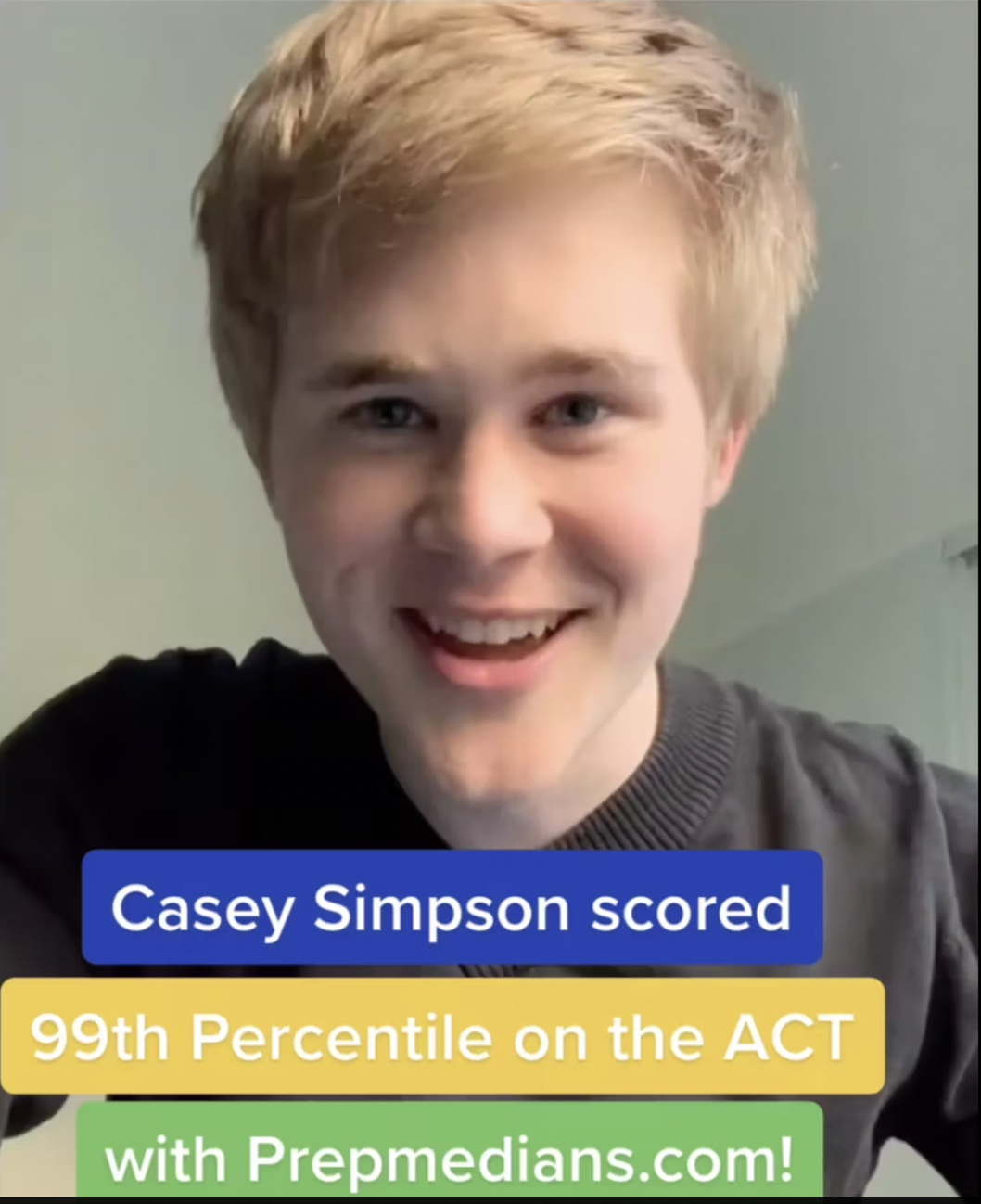
    Casey Simpson (increased 25 percentile points on the ACT, scored 34 on the ACT, 36 on ACT Reading)
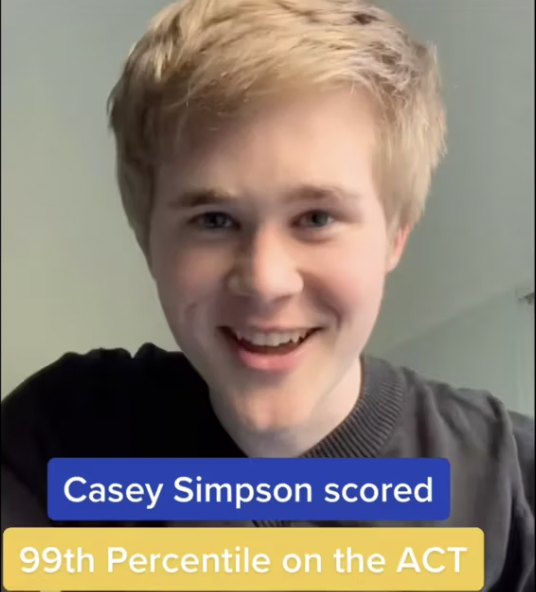
    Screen Shot 2024-03-04 at 4.32.03 PM   “Prepmedians helped me so much prepare for the ACT and eventually get a 34 on it. Reading was my worst section originally. But after practice, it became the section I got a 36 on. Thank you, Prepmedians!”    
    5 stars        

    Note: Although you may recognize Casey as a famous actor from Nickelodeon’s Nicky, Ricky, Dicky & Dawn, he is NOT acting here! He truly used Prepmedians to CRUSH his ACT, and now he is enrolled at Duke University. He enthusiastically volunteered to make this video review for us and was not paid for doing so.

    Watch Video Review!

    Casey’s Prepmedians Review:

    “What do you call a kid who goes from a 74th-percentile ACT score to a 99th-percentile ACT score? A Prepster!

    Prepmedians helped me so much prepare for the ACT and eventually get a 34 on it. Reading was my worst section originally. But after practice, it became the section I got a 36 on. Thank you, Prepmedians!

    If you want to prepare for the ACT or SAT, want to crush the test, and want to watch some funny videos too, then Prepmedians is a great, great resource for you to use.

    And that is a Fire Fact.”


    Emma (increased 5 points on the ACT, scored 34)

    emma   “Luckily on test day, my score, which was stuck at a 29, was able to improve to a 34, and that was thanks to Prepmedians.”    
    5 stars        

    Watch Video Review!

    Emma’s Prepmedians Review:

    “When I started studying for the ACT, my score was staying stuck at a 29. I tried book after book, and nothing was helping to improve my score.

    However, I found Prepmedians on TikTok, and I decided to give it a shot. I found that their videos were fun and enjoyable to watch, and studying became so much easier because I enjoyed doing it.

    Luckily on test day, my score, which was stuck at a 29, was able to improve to a 34, and that was thanks to Prepmedians.”


    Twainia (increased 10 points on the ACT English)
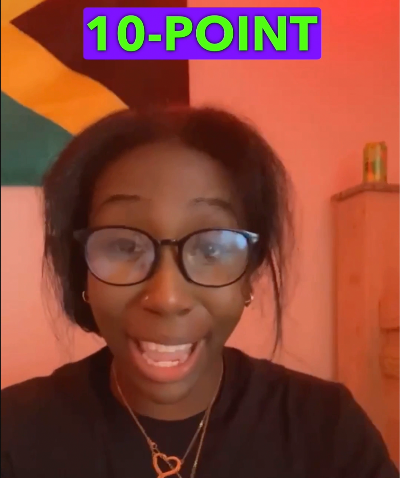
    twainia   “Prepmedians truly helped me improve my ACT English score by 10 points from a 16 to a 26!”    
    5 stars        

    Watch Video Review!

    Twainia’s Prepmedians Review:

    “Prepmedians truly helped me improve my ACT English score by 10 points from a 16 to a 26!

    I used Prepmedians to finally understand content that I did not understand before. There were many grammar rules that they went over that I never really understood in school, especially as an immigrant, but now I finally understand.

    While watching the videos, unlike school, I was actually willing to watch without feeling tired because they have truly hilarious and great videos. I really felt warm watching the videos too because I truly felt like there were people who supported me through a screen. One more thing: “Believe in yourself because I certainly do.”


    Connor (increased 3 points on the ACT, scored 35)

    Connor 35   “I 100% recommend Prepmedians. My ACT score has increased from a 32 to a 35 in fewer than 4 weeks through the skill-building videos and practice questions!”    
    5 stars        

    Watch Video Review!

    Connor’s Prepmedians Review:

    “I 100% recommend Prepmedians. My ACT score has increased from a 32 to a 35 in fewer than 4 weeks through the skill-building videos and practice questions!

    Prepmedians has made learning fun and extremely effective.”


    Ruchita (increased 9 points on the ACT English, scored 33)

    ruchita   “Prepmedians is simply the best test preparation company! They’ve helped me increase my score by 9 points on the ACT English section!”    
    5 stars        

    Watch Video Review!

    Ruchita’s Prepmedians Review:

    “Prepmedians is simply the best test preparation company! They’ve helped me increase my score by 9 points on the ACT English section!

    My score went from a 24 to a 33 after two weeks of using Prepmedians daily! I was beyond excited to see a huge amount of growth all because of the awesome Prepmedians.com’s brilliant platform.

    I’m more than grateful to have them as a part of my high school journey. They will always hold a special place in my heart. Prepmedians are my superheroes!”


    Other ACT Prepsters!
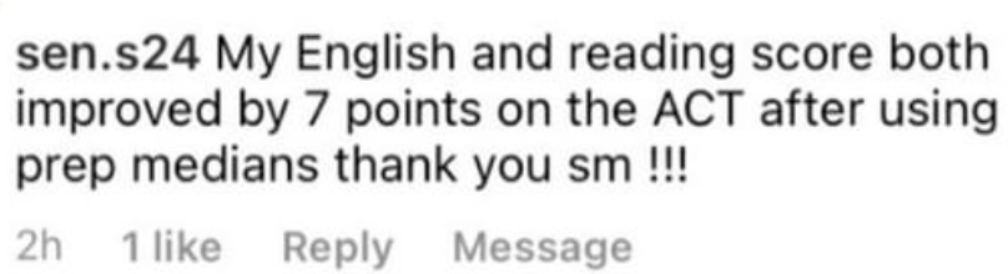
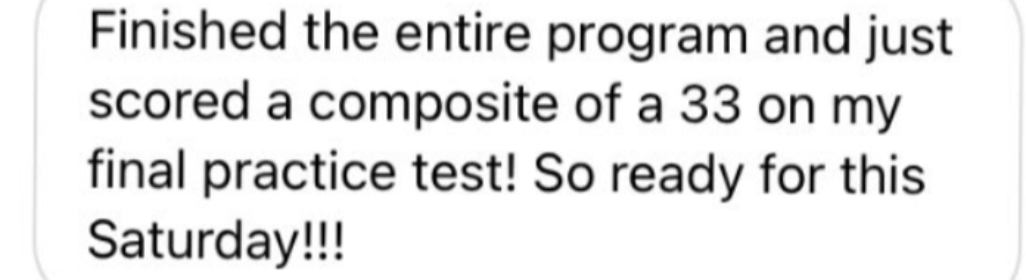
    act 7 points act lizzie 35 act composite 33
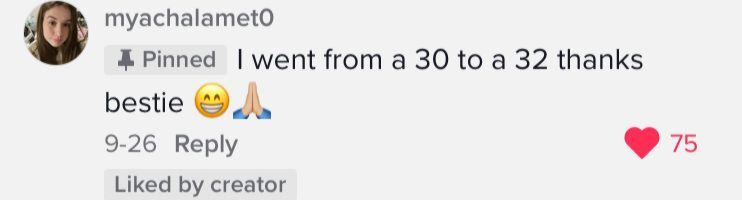
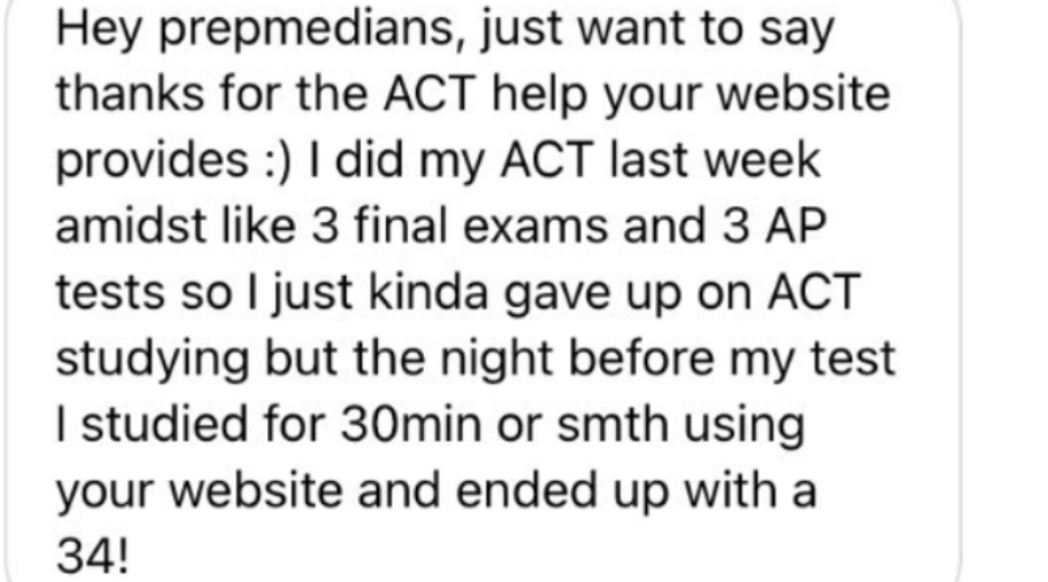
    act vaishnavi act 30 to 32 act night before

    Prepmedians SAT Reviews

    Sarah (scored a 1580)

    sarah   “I scored a 1580 on the SAT because I used Prepmedians!”    
    5 stars        

    Watch Video Review!

    Sarah’s Prepmedians Review:

    “I scored a 1580 on the SAT because I used Prepmedians!

    My Prepmedians lesson plan showed me exactly what I had to accomplish each week, so I could focus my mental energy on learning and building test-taking confidence.

    The videos are not only fun to watch but they’re also educational!

    Plus, the customer service is so fast and helpful.

    I’ve got nothing but the warmest of feelings towards Prepmedians given all that they’ve done for me.

    Thank you, thank you, thank you.


    Alyssa (increased 350 points on the SAT, scored a 1450)

    alyssa   “My SAT score went up 350 points! It went from an 1100 to a 1450, which is insane to me!”    
    5 stars        

    Watch Video Review!

    Alyssa’s Prepmedians Review:

    “My SAT score went up 350 points! It went from an 1100 to a 1450, which is insane to me!

    Prepmedians has saved my SAT score.

    They present the information in such a logical and clear way. It really makes sense in my brain.

    Plus it’s entertaining.

    I am eternally grateful. They are incredible!”


    Abrahim (increased 220 points on the SAT, scored 1490)

    Abrahim   “Using Prepmedians for a single month, I saw an increase of more than 200 points on my SAT score, and I scored a 1490 on the August 27th SAT exam.”    
    5 stars        

    Watch Video Review!

    Abrahim’s Prepmedians Review:

    “Using Prepmedians for a single month, I saw an increase of more than 200 points on my SAT score, and I scored a 1490 on the August 27th SAT exam.

    Over the past year or so, I’ve gone through SAT practice books, and I’ve answered hundreds of SAT practice questions, but none of these materials helped me get the really difficult concepts to really stick.

    One day I came across Prepmedians on my ForYouPage, and I decided to check it out. Prepmedians not only presents all the difficult topics that I couldn’t understand but they also have a comedic aspect in their videos and in their explanations that helps me make connections during the test like, for example, an acronym or a joke.

    I think getting Prepmedians was probably one of the best decisions I’ve ever made.”


    John (increased 250 points on the SAT)

    john   “Prepmedians covers 100% of what’s on the SAT, which helped me boost my SAT score by 250 points”    
    5 stars        

    Watch Video Review!

    John’s Prepmedians Review:

    “Who needs to cheat on the SAT when there’s Prepmedians? Prepmedians covers 100% of what’s on the SAT, which helped me boost my SAT score by 250 points! It helped a lot, especially with grammar. Prepmedians “


    Kevin (increased 110 points on the SAT, scored a 1460)

    Kevin   “Prepmedians’ tips and strategies not only helped my score a lot but also gave me the confidence I needed to score a 1460.”    
    5 stars        

    Watch Video Review!

    Kevin’s Prepmedians Review:

    “Going into the SAT, I wasn’t sure how it would go. But as soon as I got to the Reading and Writing section, I felt more confident because of Prepmedians.

    Prepmedians’ tips and strategies not only helped my score a lot but also gave me the confidence I needed to score a 1460.

    What sets them apart from other organizations is the fact that you actually enjoy your time studying for the SAT with them.”


    Other SAT Prepsters!
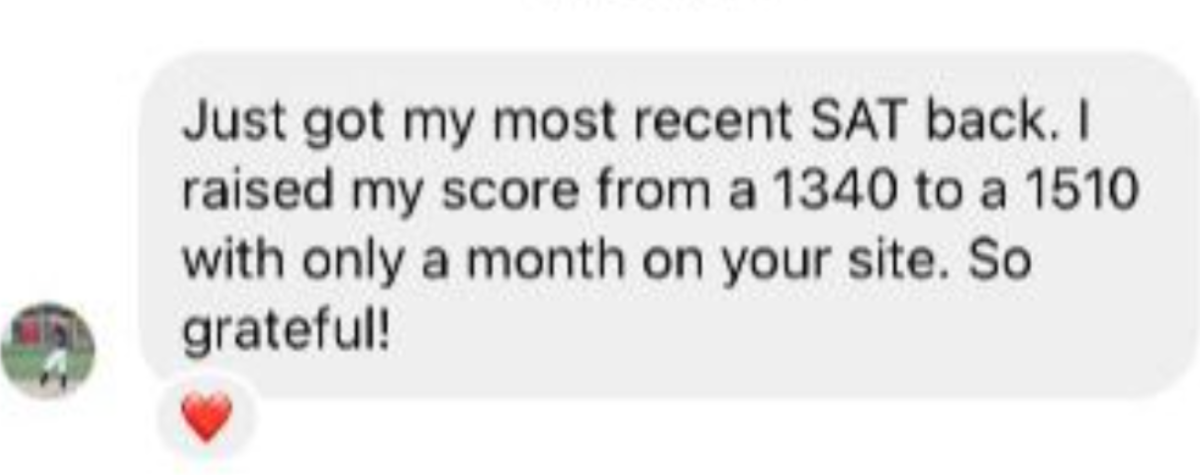
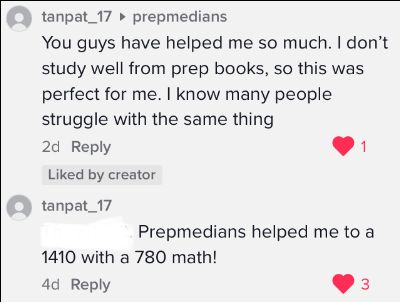
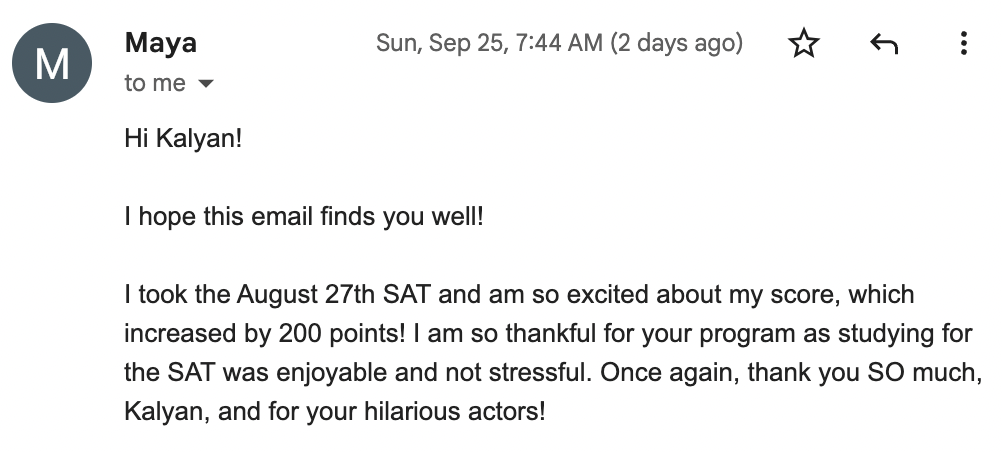
    sat logan sat kate sat 1500 josh
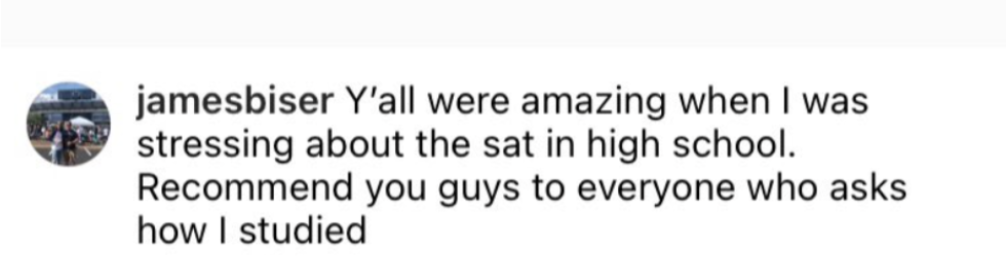
    sat james biser sat tanish patel sat maya

    More Kind Words

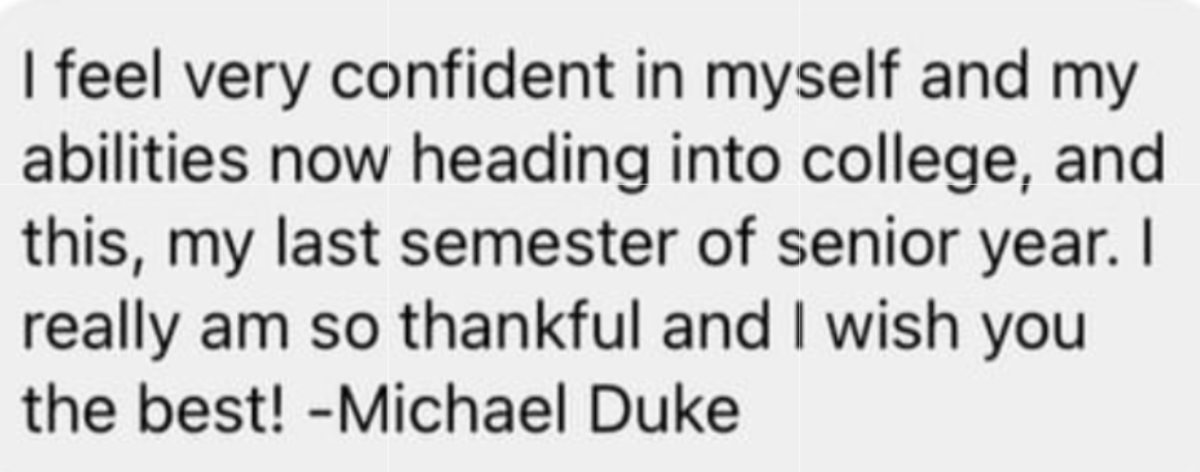
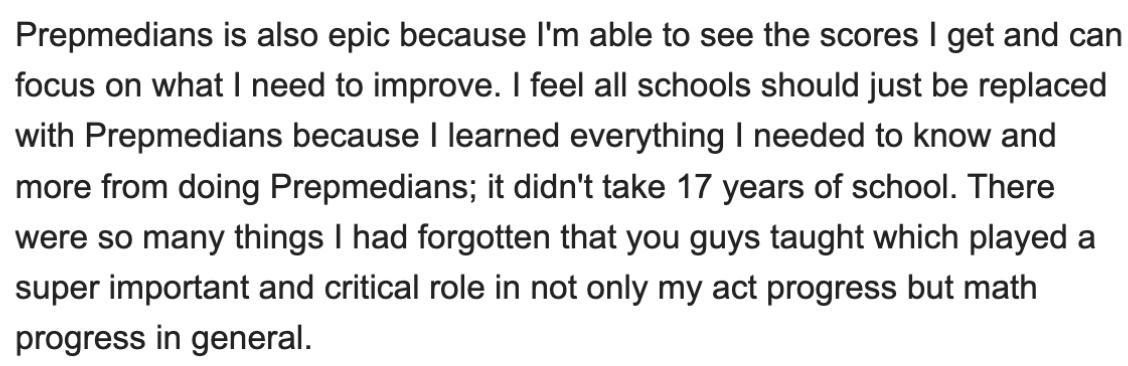
    sat michael duke thank you incredible platform 17 years school

    Check out MANY more Prepmedians reviews here!

  • Does Your College Major Matter for College Admissions?

    Does Your College Major Matter for College Admissions?

    What Admissions Officers Look For

    First things first—admissions officers want to see that you have invested time in exploring your interests and developing your skillset while in high school. They look for students who have taken the initiative to deepen their knowledge in an area they are passionate about. This can come in the form of specialized coursework or extracurricular activities related to the field of study.

    For example, if you are passionate about engineering, admissions officers will be impressed if you’ve taken advanced classes in math and science as well as participated in robotics clubs or built robotic projects independently. This signals that you are both dedicated and knowledgeable about the field and could be successful in a related college program. And don’t worry if your grades aren’t perfect—admissions officers take into account any obstacles you may have faced during your high school career, such as financial hardships or personal struggles.

    Diversity Matters

    Second, admissions officers value diversity within their applicant pool. A diverse student body enriches a campus community with different backgrounds and experiences which leads to greater learning opportunities for all students involved. So if you are applying for a certain major that has been saturated with other applicants (think finance or business), having a unique skill set or perspective can help push your application over the edge! For instance, if you want to pursue business but also have experience playing chess competitively or working with AI-driven technologies, that could set your application apart from others who may not have those same experiences.

    Conclusion:

    Ultimately, there is no “one size fits all” answer when it comes to selecting a college major—but with dedication and research, finding the right fit can be easy! As we at Prepmedians say – yes AND no – because while there is no guarantee that choosing one major over another will increase your chances of being accepted into a university, diversifying yourself through relevant coursework and extracurricular activities can go a long way towards making sure that your application stands out from the rest! So don’t be afraid to explore different options before making this big decision! Good luck!

  • Juniors: How Soon Is Too Soon to Be Done with Testing?

    Juniors: How Soon Is Too Soon to Be Done with Testing?

    You Juniors Out There…

    Prepping for the SAT or the ACT over the summer has become a rite of passage of sorts for risings juniors. Once school starts again, however, the timeline can get a little unclear. What if you did pretty well on the first set of exams from September or October? Are you done? Or should you try and get a better score with all the time you have left?

    It’s pretty common to think along the lines of, “I just grinded so much over the summer… And I am pretty busy now that school is starting… I don’t want to have to think about testing anymore, can’t I be done?”. While this is a common question, the answer really depends on what your circumstances are. Obviously, we all want to be done with standardized testing as soon as possible. However, prepping early does not necessarily translate into being done early.

    For Seniors

    You want to be done with standardized testing by October. Period. Otherwise you are going to have to simultaneously deal with getting good grades, writing applications, and preparing for the tests. You’re going to burn out very quickly this way and stretching yourself so thin will inevitably lead to lower quality across the board. I don’t mean to be this harsh to the seniors out there, but you really should try and get it done before it’s too late.

    And Back to Juniors

    The situation for juniors is actually almost the exact opposite. Instead of worrying about finishing testing early, you should put thought into whether or not you would be short-changing yourself out of a higher score.

    I get it – test prep sucks and is super frustrating. You are juggling AP classes, sports practices, rehearsals, club meetings, etc. Having to think about test prep on top of all that is the last thing we all want to do. If you manage to hit a 1500/34+ early in your junior year, it’s probably worth it to step away and focus on everything else on your plate.

    In fact, if you’re scoring 1550/35+, please for your own sake be happy and move on. It’s honestly not worth it to neglect other areas for that perfect score, there really isn’t that much of a difference. If you’re taking economics, you’ll be familiar with the term “diminishing returns”. In this context, at the range of a 1550/35+ score, the benefit gained from getting a perfect score is less than the effort you put in – basically it’s not worth it.

    But if you’re like most people, your scores are probably not as good as what you can get after another few months of prep. In addition, junior year is a big step up intellectually from sophomore year, you’ll learn and grow and naturally be able to perform better on the SAT or ACT. Many students will do decently or mediocre in the early testing junior year stage, and then at the beginning improve quite significantly.

    Wrapping it up

    It’s up to you and the colleges you apply to. If your scores are within range of what they are asking for and you’re satisfied with your performance, you’re probably all set. If not, you have plenty of time throughout the year as well as the summer.

    And finally, let me recommend what I believe is the most effective, most efficient test prep resource out there – Prepmedians. Prepmedians teaches SAT and ACT test prep through sketch comedy, music, rap, and more. Check us out today!

    And lastly, we have an article on “Should I Retake the ACT/SAT?”, so check that out too!

  • Stress: How to Deal with It

    Stress: How to Deal with It

    Stress Management

    Whether you’re a genius or you’re in your senior year and already have a job lined up, you will feel stressed at some point in your college career. Honestly speaking, you probably will feel stressed multiple times throughout your college career. But feeling stressed isn’t a bad thing. Diamonds are formed under pressure, but to be that diamond, you can’t crack under the pressure: you need to manage your stress effectively. These are some stress-management tips to help manage your stress effectively.

    #1. Don’t Study Too Much

    For all my fellow Econ majors out there, you’ll know something called diminishing marginal returns. For those that don’t know, think of these two options:

    • You can pull an all-nighter the night before the test and study for an additional 8 hours.
    • You can split those 8 additional hours into 4 two-hour time blocks that you’ll study sometime during the weekend.

    Which one would you choose? I know the second option is brutal because many students reserve their weekend for having fun and clearing their mind, but the second option is superior to the first option in terms of productivity. Think about it, do you really think that 7th hour in your study session will be all that productive? Your brain can only handle so much, and at a certain point, the quality of your studying/work will decline. This is diminishing marginal returns: at a certain point, your marginal productivity will start to decrease. When encountered with a lot of work, you should still put in the time to study and do work, but it’s important to make a good schedule that includes regular breaks.

    #2. Get Enough Sleep

    Say you do write yourself a good schedule, and you’ve already studied a lot. It’s approaching midnight, but you still want to study more because you’re not confident. Is it worth it to stay up and study? Most of the times, no, it isn’t. Trust me, I’ve had weeks where I have two consecutive days of exams, and I only sleep 5-6 hours. If you don’t get enough sleep, your body will only run on energy boosters, and it isn’t sustainable. Not to mention, you’ll reach a certain point where those energy boosters aren’t effective anymore, and you start falling asleep while you study.

    Shortening the amount you sleep can increase your stress level in addition to not being able to fully focus because you’re so sleepy. In addition, insufficient sleep can put you at risk for serious illnesses like diabetes, obesity, and depression. It’s important to have a stable sleep schedule in college, regardless of whether it is a crunch week or not.

    #3. Avoid Energy Boosters as Much as Possible

    To be honest, many college students will use energy boosters, and it’s so ingrained in college life, that it’s almost impossible to not rely on it at one point or another. The key is to ration your use. You don’t want to get to the point where you are reliant on energy boosters. I have a friend who drinks at least 5-6 cups of coffee a day, and not only does it kill his bank account, but he also relies on coffee to get any work done.

    Something that I have done is to only drink coffee, Redbull, Monster, or whatever energy booster if I’m low on energy during a crunch week. There have been times where I have gone overboard on relying on energy boosters as mentioned previously, and I felt really jittery, stressed, and ended up rushing through all my work/studying. 1 or 2 drinks every now and then won’t kill you but relying on it excessively will only increase stress.

    #4. Don’t Skip Meals and Eat Well

    The most popular form in college of skipping meals is skipping breakfast. Skipping breakfast comes in all shapes and sizes. You want that extra studying time in the morning so you skip breakfast. You want more sleep since you were studying late last night so you skip breakfast. You think that apple that you have in your room is good enough so you skip breakfast. Skipping meals is a popular strategy employed by college students, but it only leads to you being de-energized, leading to a lower threshold for stress.

    Note: A Dominoes delivery or whatever snack you can find in the vending machine isn’t going to be an effective meal. Unfortunately, even in college, you have to eat your vegetables. You should follow a diet rich in vegetables, fruits, and whole grains.

    #5. Take Time to Enjoy Yourself

    Don’t give up your passions. Exercise. Relax with friends. You get through crunch weeks through those times of enjoyment and relaxation. Going out to eat, going for a walk, or watching a movie during a crunch week with some friends may seem silly, but it’s important to relieve your stress. I like to deal with crunch weeks by having something to look forward to at the end. At the end of this study session, I’ll go get some ice cream, or at the end of this crunch week, I’ll have a barbecue. It doesn’t matter what you do or when you have these pastimes: taking these pastimes will relieve stress and make crunch weeks much more bearable.

    Note: Many college students relieve stress through partying or drinking. This seems like a good way to relieve stress but drinking actually increases feelings of stress and anxiety. That’s not to say that you should ignore going out and having fun but make sure you aren’t drinking excessively and relying on drinking as a way to relieve stress.

    Next Steps

    Crunch week and stress can get the better of many students, but it’s important to realize that just because a crunch week is approaching, you don’t have to make sacrifices in your life and daily routine. Applying the right strategies will help you reduce stress and make those four years fly by!

    Are you in high school and feeling stressed about the college application process? One reason for that stress is the SATs or ACTs. Check out Prepmedians. We teach SAT/ACT test prep through sketch comedy and music so even in such a stressful time like the college application process, you’ll be able to laugh. We also divide our lessons into 15-20 minute blocks so it’s easier to schedule test prep time.

  • Test Prep During Holidays

    Test Prep During Holidays

    You know what they say – it’s the most wonderful time of the year!

    Whether you’re full of holiday cheer or feeling a bit Grinchy, there’s no denying that November and December are always busy. There’s family, travel, shopping, feasting, and festivities all competing for a finite amount of focus and attention. It is in these moments that it can be easy for you to take their eyes off the ball when it comes to keeping pace with test prep goals.

    Sure, distractions will abound this holiday season (just like any other year). That said, by planning, setting realistic expectations, and making smart choices you can ensure that you still work towards improved scores this winter and spring.

    Schedule

    The schedule is one of the most important test prep tools there is. No matter the time of year, test day looms large as the ultimate target for the entire test prep experience. Regardless of the season, it is less stressful to plan for conflicts ahead of time than scramble to make up for lost time.
    While the holiday times are meant to be with family and enjoy the time, it is also a really great time to prepare for the SAT or ACT. It is the time with no school homework or stress. So make a schedule to separate your test prep and family time to make the best out of your free time. A planned schedule would allow you to be ready for the upcoming test while also giving you the time to spend some quality time with family.

    Plan Ahead

    If you know you are usually visiting families or on vacation during the holidays, plan out what your game plan is for your test. It is not necessary that you have to study even if you are travelling. But planning out how you are going to make up for the time lost would save you a ton of stress later on. Prepmedians.com is a useful website that would help you through the test prep process without requiring you to be present for tutoring or carry a ton of prep books. You can access these lessons from anywhere, allowing you to be entertained and ready for the upcoming test without any commitment!

    Be Realistic

    It is not necessary that you have to cram everything you need to know for the test. Few weeks of break is not the only time for you to prep for the test. Don’t stress yourself into studying for the test by taking away your time with your family or a vacation. Keep in mind, you can prepare for tests without sacrificing time with your family if you just plan ahead.

  • Need to Know Math Formulas for ACT

    Need to Know Math Formulas for ACT

    Pre-Algebra / Elementary Algebra

    1. Average = Sum of values / Number of values

    Used to calculate the mean value of a given set of numbers.
    For example: (10 + 12 + 14 + 16) / 4 = 13

    2. Probability = Target outcomes / Total outcomes

    Used to calculate the chances of something occurring from a set of possible outcomes.
    For example: A jar contains five blue marbles, five red marbles, and ten white marbles. What is the probability of picking a red marble at random?
    5 / 20 = .25 or 25%

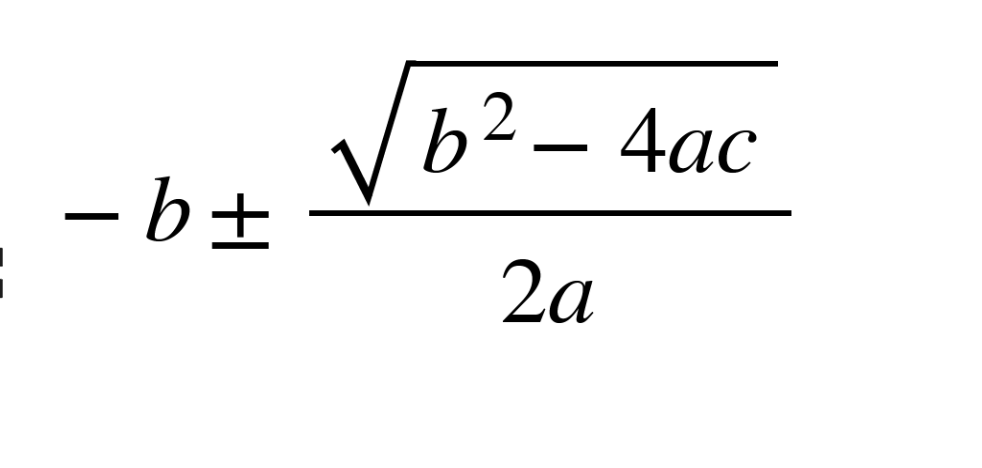
    3. Quadratic Formula:

    Screen Shot 2019-08-23 at 3.49.12 PM

    Used for determining the x-intercepts of a quadratic (parabolic) equation.

    Intermediate Algebra / Coordinate Geometry

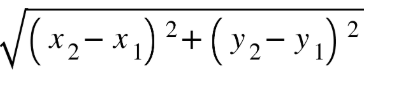
    4. Distance Formula:

    Screen Shot 2019-08-23 at 3.55.27 PM

    Used to calculate the distance between two points on a coordinate plane.
    For example: Find the distance between points (6, 6) and (2, 3)
    d=√(6 – 2)² + (6 – 3)²
    d=√(4)² + (3)²
    d=√16 + 3
    d=√25
    d = 5

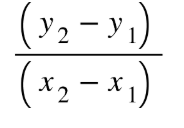
    5. Slope Formula: Slope =

    Screen Shot 2019-08-23 at 3.56.17 PM

    Used to calculate the slope (angle) of a line that connects two points on a plane.
    For example: Coordinates = (-2, -1) (4, 3)
    s = 3 – (-1) / 4 – (-2)
    s = 4 / 6
    s = 2 / 3

    6. Slope Intercept: y=mx+b

    Formula that defines a line on a plane, given a known slope and y-intercept.
    For example: Slope = 2, Intercept point (0,3)
    y = 2x+3

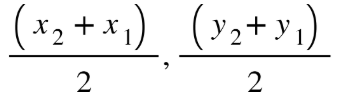
    7. Midpoint Formula:

    Screen Shot 2019-08-23 at 3.56.49 PM

    Used to calculate the midpoint between two points on a plane.
    For example: Find the midpoint between (-1, 2) and (3, -6)
    (-1 + 3) / 2, (2 + -6) / 2
    2 / 2, -4 / 2
    Midpoint (1, -2)

    Plane Geometry

    8. Area of Triangle: area = (1/2) (base) (height)

    Used to calculate the total area within a triangle based on the lengths of the sides.
    For example: Base = 5, Height = 8
    a = 1/2 (5)(8)
    a = 1/2 (40)
    a = 20

    9. Pythagorean Theorem: a²+b²=c²

    Used to calculate the length of an unknown side of a right triangle, given two sides are known.
    For example: a = 3, b = 4
    c² = 3² + 4²
    c² = 9 + 16
    c² = 25
    c = √25
    c = 5

    10. Area of Rectangle: area = length x width

    Used to calculate the total area within a rectangle shape.
    For example: length = 5, width = 2
    a = 5 x 2
    a = 10

    11. Area of Parallelogram: area = base x height

    Used to calculate the total area within a parallelogram.
    For example: base = 6, height = 12
    a = 6 x 12
    a = 72

    12. Area of Circle: π * r²

    Used to calculate the total area within a circle.
    For example: radius = 4
    a = π x 4²
    a = π x 16
    a = 50.24

    13. Circumference of Circle: circumference = 2π * r

    Used to calculate the length of the outline of a circle.
    For example: radius = 7
    c = 2π x 7
    c = 43.98

    Trigonometry

    14. Sine (SOH): Sine = opposite / hypotenuse

    For example: opposite = 2.8, hypotenuse = 4.9
    s = 2.8 / 4.9
    s = 0.57

    15. Cosine (CAH): Cosine = adjacent / hypotenuse

    For example: adjacent = 11, hypotenuse = 13
    c = 11 / 13
    c = 0.85

    16. Tangent (TOA): Tangent = opposite / adjacent

    For example: opposite = 15, adjacent = 8
    t = 15 / 8
    t = 1.87

  • Sleep Deprivation in College

    Sleep Deprivation in College

    Causes of Sleep Deprivation

    Roommates

    Your college roommate can either become your best friend for life or your worst nightmare, and one determinant is your sleeping schedule compatibility with your college roommate. Some people are early birds, and others are night owls. You might find that your roommate snores too loudly, plays loud music, keeps the lights on, or invites friends over late at night. Even if you think you can handle your college roommate’s sleeping habits because y’all are friends, living with others is often not conducive to sleeping.

    Busy Schedules

    Some college students deal with 6 a.m. lifts/practices and meetings throughout the day. Others deal with part-time jobs. And even those that don’t do either, the normal college course load is plenty enough to keep college students busy. It’s common knowledge that many college students pull off all-nighters or late night study sessions to catch up on their work, and this is one determinant in sleep deprivation.

    Social Life

    Fear of Missing Out (FOMO) is real. Maybe you hear there’s a party going on. Or maybe your friends are hanging out and watching a movie in another friend’s room. Or maybe something happens as small as you overhear a conversation going on in the hallway. You don’t want to be the one to miss out on something fun and only see what happened the next morning on someone’s Snapchat or Instagram story. College is a place to learn, but it’s also a place to make lasting friendships. Unfortunately, too much socializing can get in the way of someone’s sleep.

    Alcohol

    Many people think alcohol is good for sleep. Even though alcohol does help you fall asleep more quickly, the resulting sleep will be restless and less effective than the sleep you would have gotten.

    No Curfew or Bedtime

    For students who are living on their own for the first time, the freedom of college often leads to staying up just because you can. Even if you don’t have anything pressing to do, you might end up staying up just to browse your social media, or you might start your 3rd rerun of your favorite sitcom. Although you might have thought you could live on our own when you were with your parents, poor self-care and daily schedules of college students often result in sleep deprivation.

    Consequences of Sleep Deprivation

    ### Sleep Deprivation Affects your Grades
    That one all-nighter before your midterm won’t largely impact your grades, but if sleep deprivation is a consistent thing in your college life, your grades will be affected. If you’re tired every day, you’re not going to retain information as effectively or write notes as well. You also might get to the point where you start falling asleep in classes or skipping classes to sleep.

    Sleep Deprivation Affects You Physically

    Sleep deprivation could negatively impact your immune system, resulting in making you more susceptible to common colds or the flu. And in turn, this results in you becoming even more sleep deprived since you will have a harder time falling asleep.

    Additionally, if you are a student-athlete, sleep deprivation can affect your athletic performance. There’s a children’s animated movie called Meet the Robinsons where (spoiler alert) the whole conflict is a result of an orphan’s roommate keeping him up late at night, so during the following day when he has a baseball game, he is unable to make the game-winning catch because he falls asleep from his sleep deprivation.

    Sleep Deprivation Affects Your Mood

    Not getting enough sleep will increase stress. A sleepless night can result in a greater risk at developing mental disorders like depression or anxiety. One may also feel irritable after a sleepless night. Just think of the annoyance you feel when your alarm rings in the morning but extend that annoyance through the day. Sleep deprivation can negatively impact your mood.

    Suggestions to Improve Sleep in College

    ### Free Up More Time for Yourself
    I know FOMO is real, and you want to do everything readily available in college, but if your social interactions start interrupting your sleeping schedule, it’s time to start considering prioritizing things. You don’t have to hang out in your friend’s room every night. Something that I do is no matter what, if I have class the next day, I go to my room by 11 p.m. and go to sleep by midnight.

    In addition, it’s important to realize how much free time you have on weekends and whether it’s worth allocating some time to study during the weekends.

    Compromise with Your Roommates

    Some of us are blessed to have compatible roommates, while others have to deal with that roommate who has 10 alarms in the morning. Perhaps you could set an alarm and wake your roommate up (not the most enticing compromise) or perhaps your roommate can start sleeping earlier so they won’t need 10 alarms in the morning. You won’t find the perfect solution immediately, but generally college roommates are willing to work together to make the living situation as comfortable for both parties as possible.

    Deal with Your Neighbors

    There are multiple ways to deal with your dorm. Perhaps listening to white noise while you sleep or wearing an eye mask may help you deal with your loud neighbors. You could also talk with your resident adviser or landlord, if living in an apartment, about how to best deal with the situation.

    The best way to deal with your neighbors is to talk to them directly. If it’s during quiet hours or late at night, if you politely ask your neighbors to “turn it down,” chances are that they’ll be understanding and compliant. You don’t want to contact security, authority, or any person in a position of power without first talking with your neighbors.

    Fix Your Sleeping Habits

    If you leave plenty of time to sleep during the night but can’t fall asleep, it might be time to look at your sleeping habits. Do you work or watch TV shows/movies in your bed? Do you consume caffeine, sugar, or spicy food at night? Are you distracted by your phone while attempting to sleep?

    I like to completely finish my studying for the day before I go back to my room at night. In addition, I like to put my phone under my pillow so I’m unable to see, feel, or hear the vibrations whenever I get a notification. Small lifestyle changes like these can make a huge impact on your sleep quality.

    Next Steps

    Ultimately, no matter what your schedule is, it is important and possible to sleep well in college. It may take some time and dedication, but you can achieve good sleep in college without sacrificing your grades or social life. You have to take charge and keep yourself accountable of your daily life and sleep schedule.

    Are you in high school and not getting enough sleep during the college application process? Check out Prepmedians. We teach SAT/ACT test prep through sketch comedy and music so even in such a busy and stressful time like the college application process, you’ll be able to laugh. We also divide our lessons into 15-20 minute blocks so it’s easier to schedule test prep time.

  • Building Social Skills

    Building Social Skills

    Social Skills to Build Up

    As an incoming freshman, you’ll face a number of challenges including managing your schedule and living far from home. For some, meeting new people is exciting and a walk in the park, but, for others, social anxiety proves its existence. Below you will find the skills needed to succeed in college and the working world:

    Face-to-Face Communication

    Sure, modern technology has made the discovery of multi-functional devices possible, but it has also prioritized itself as a necessary means of communication. Most of our generation’s interactions take place on our smartphones and computers, so we struggle to exercise face-to-face communication. Some college courses will have hundreds of students in a lecture hall, so your grade isn’t dependent upon vocal participation. However, other courses that are seminars or discussions rely on prompted, active discussion between students. Take these opportunities to practice talking and listening in-person; try to focus all your attention on the speaker and avoid distractions from your phone or laptop.

    Say Your Piece

    Active-listening is huge when engaging with others, but a smart conversationalist also knows when and how to be assertive. Successful conversationalists…

    • Express their views in class discussions (Check out Chris’ article How to Choose Your College Courses if you need help doing so)
    • Defend their viewpoints and ideas
    • Avoid succumbing to negative peer pressure

    These skills will find themselves helpful once you enter the workforce after college and you need to go through interviews, negotiate salary and pay raises, or share thoughts in meetings.

    Ask for Help

    Asking for help is honestly something that I still struggle with. If you’re anything like me, you try to do everything in your own strength just to prove that you are capable. Well, you are more than capable. Continuing your education in college means experiencing situations that can be overwhelming. Similar to using Prepmedians to help ace your standardized tests in high school, don’t be afraid to ask the help of others more experienced than you. Put yourself out there by demonstrating your need for understanding in the classroom, library, or dining hall table.

    How To Improve Social Skills

    You need more than the knowledge of the skills above to succeed in having some shot at a social life in college. Put these words into action by finding ways to master these skills.
    ## Team Activities
    Start a conversation with others that are like-minded or enjoy the same activities as you. This way you feel more comfortable doing something you enjoy. You will find yourself developing meaningful relationships and connections with your fellow peers because of the commonality you all share. You know what this means? Less pressure to come up with a conversation. Hallelujah! Now, you can actually enjoy the activity without worrying about the perfect thing to say.

    If you’re a risk-seeking or risk-taking person, get comfortable with moving outside your comfort zone. Maybe that’s joining the debate team or trying out for the school play. Either way, stepping outside of your comfort zone is a great way to overcome your fear.
    ## Writing
    Writing is a great pre-exercise for a conversation; it helps you work through your thoughts and ideas before venturing off. Blog or journal your thoughts so that you have decided your stance on a certain issue before talking with others. Think of it as processing the activity beforehand and express yourself without the stress of an audience.
    ## That One Friend…
    We all have that one outgoing friend. Maybe it’s you, but if that were the case, you probably would not be reading this article. Try tagging along with that friend a couple times to feel more comfortable in social settings. And who knows, maybe one day you’ll be surprised that over time you became that one outgoing friend for someone else!

    Remember…

    You’re not the only student suffering from a little bit of social anxiety. However, with these tips, you’ll conquer that anxiety and find a group of friends you can rely on. If you need to, tell yourself: “You got this!” as motivation. Always believe in yourself because we at Prepmedians certainly do!

  • How to Revise an Essay

    How to Revise an Essay

    Food for Thought

    I remember my freshman English class vividly. It was called “Food for Thought,” and the texts we read for the class were about food. But what really stood out to me about the class was the system we had in place: we divided the class into groups of 4, and for each essay, we would have a rough draft we would present to our group, create another rough draft from the feedback of our group to present to our teacher, and then a final essay created from the feedback of our teacher. Obviously, not every class will have this built-in structure, but I found that this structure is the most conducive during the revision process.

    Here are some not-so-obvious aspects of this structure that will help during the revision process:
    # Read and Consider all Feedback
    For my scenario, I would almost always get better feedback from my teacher than from my peers. I mean, chances are, my peers are as bad in writing as I am so what’s the point of considering their feedback? But you might find that your peers may be able to give you constructive feedback that your teacher wouldn’t have given you because they have a different perspective. When revising, getting as many different perspectives to look over your text and provide you feedback will give you a lot to work off of.

    Another useful tip is reading other people’s essays and giving feedback. In my writing groups, I would often use some of the feedback I gave to my peers in my own essay. For instance, if I found my peer’s essay to not be cohesive and connect the ideas together, I would look to see if my essay had any of the same problems I saw in my peers’ essays.

    Feedback Guides, not Directs

    For one of my essays, the only feedback I got back from my teacher was to fix a few grammar mistakes. I fixed the mistakes, handed my essay in, and got back an A-. Just because you follow your teacher’s feedback or your peers’ feedback does not mean you are guaranteed an A on your paper. Feedback is supposed to guide you in potential improvements to your essay. You may find that you might not apply any of the feedback at all. You should look to see why your teacher or peer gave you feedback and how that feedback improves your essay. Obviously, you want to consider their feedback during the revision process, but you should also think of other potential changes based on the improvements of your essay.

    Next Steps

    Feeling stressed about upcoming essay due dates or exams? Check out our guide on how to deal with stress.

    Struggling with prepping for the SAT or ACT? Check out Prepmedians. We teach SAT/ACT test prep through sketch comedy and music so even during an arduous process like the SAT or ACT, you’ll be able to laugh. We also divide our lessons into 15-20 minute blocks so it’s easier to schedule test prep time.

  • GPA… What Does It Mean?

    GPA… What Does It Mean?

    Your grade point average, GPA, is essentially a measurement of your academic performance. Your unweighted GPA is an average of your earned grades regardless of course rigor. On the other hand, your weighted GPA accounts for such rigor (honors or AP designations) and grants you more credit for taking those challenging courses

    GPA Scales

    I’m sure you know this by now, but let’s get into it anyways. A 4.0 scale is the most commonly used GPA scale. An overall 4.0 is a perfect GPA, where a 4.0 represents an A or A+. Each of the following letter grades are a full point lower: B=3.0, C=2.0, D=1.0.

    Unweighted GPA Conversion Chart

    Letter Grade Percent Grade 4.0 Scale GPA
    A+ 97-100 4.0
    A 93-96 4.0
    A- 90-92 3.7
    B+ 87-89 3.3
    B 83-86 3.0
    B- 80-82 2.7
    C+ 77-79 2.3
    C 73-76 2.0
    C- 70-72 1.7
    D+ 67-69 1.3
    D 65-66 1.0
    F Below 65 0.0

    Weighted GPA Conversion Chart

    Letter Grade Percent Grade Honors GPA AP/IB GPA
    A+ 97-100 4.5 5.0
    A 93-96 4.5 5.0
    A- 90-92 4.2 4.7
    B+ 87-89 3.8 4.3
    B 83-86 3.5 4.0
    B- 80-82 3.2 3.7
    C+ 77-79 2.8 3.3
    C 73-76 2.5 3.0
    C- 70-72 2.2 2.7
    D+ 67-69 1.8 2.3
    D 65-66 1.5 2.0
    F Below 65 0.0 0.0

    As you can see, this scale differs from the unweighted GPA scale in that it differentiates between courses with various degrees of difficulty by adding 0.5 to Honors and 1.0 to AP/IB grades.

    What do Colleges Look at?

    Don’t be fooled, colleges look at and consider both your unweighted and weighted GPAs even though they gain more information from weighted GPAs. Admissions officers are well aware of these two different GPA calculation systems. Therefore, they will review your course curriculum to see how well you performed in the types of classes you took. Also, admissions officers will evaluate your class rank relative to the number of seniors in your graduating class. If you feel like you have a low GPA, show admissions officers your academic abilities and intellectual aptitude by scoring in the 99th percentile on the ACT/SAT. Make the journey easier and more enjoyable by joining Prepmedians!

    When you’re in college, your GPA is calculated on an unweighted, 4.0 scale. If you’re interested in going to graduate school, it’s in your best interest to get the highest GPA you possibly can, especially in your major field of study. However, don’t put too much pressure on yourself by studying 24/7. Learn how to study efficiently and effectively by reading Chris’ article “6 Ways to Improve Studying.”