Blog

  • Tips and Tricks for Each SAT Section

    Tips and Tricks for Each SAT Section

    SAT Reading Tips

    Tip 1: Pay Attention to Connotation and Context

    Look for words that indicate positive or negative connotation in the part of the passage that the question refers to. This will help you to eliminate at least a couple of choices even if you are not sure about the remaining answer choices.
    Context is also very important! Don’t just analyze the referred sentence in the question — look at the sentences above and below it too. Watch out for the contrast words! You should also pay attention to strong adjectives that might help you to determine connotation.

    Tip 2: Use Find the Evidence Questions to Your Advantage

    These new questions can help you tremendously in identifying mistakes and clearing up ambiguities. For example, say you’ve picked out two answers that you think could be correct for a reading question. If the next question asks you to identify the best evidence for your answer, you can read through all the options the find-the-evidence question and see which choice most directly connects to one of your two potential responses for the previous question. That is, looking at both the questions combined will help you get the right answer for both the questions.

    SAT Math Tips

    Tip 3: Underline Key Parts of the Question

    Underline what you need to find in the question so you don’t get confused during the calculation process.
    Many students accidentally pick the trick answer choice because they lose track of the value that they were originally supposed to find. You can avoid this by underlining relevant parts of the question to maintain your focus.

    Tip 4: Memorize Formulas

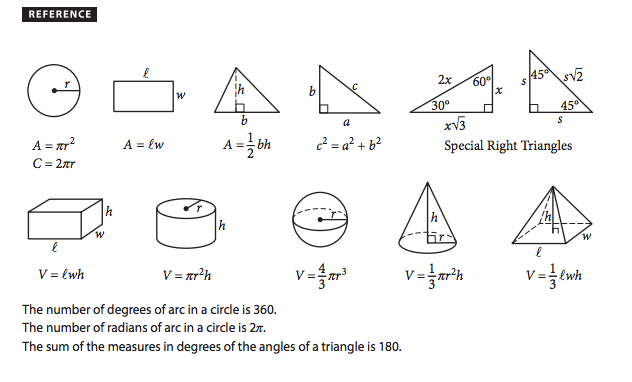
    Although the SAT math section does provide you with a list of formulas, you’ll lose time and flow by constantly turning back to reference them. It’s best to have all the formulas memorized beforehand. This is a good reference from Khan Academy for some of the important formulas covered on the SAT.!9d6f82b33f4e0a6e192e74224a40976c332ddfbb

    SAT Writing and Language Tips

    Tip 5: Memorize Grammar Rules

    The SAT Writing section has a specific standardized approach to grammar so it’s useful to memorize the rules to reduce confusion. It’s always safer to know the exact rules than to just go by what “looks right” or “sounds right” to you. If you’re not used to some of the more archaic grammar rules tested on the SAT, you should memorize them. This will prevent you from accidentally choosing NO CHANGE for questions where the grammar is actually incorrect. At prepmedians.com, we have a Need-to-Knows list of grammar rules with all of the grammar content you need to know to ace the section!

    Tip 6: Skim the Paragraph Before Answering Rhetorical Questions

    Rhetoric questions ask you to examine entire paragraphs or the passage as a whole to find the right answer.
    The SAT mostly sticks to asking Writing questions chronologically, so you’ll likely find yourself answering several grammar questions about specific sentences, followed by a couple of rhetoric questions that relate to the paragraph as a whole.
    Don’t be lulled into complacency and think you can answer rhetoric questions just by reading through the specific sentence the question asks about and using vague memories of the content of the other sentences you just answered grammar questions on. Instead, skim through the paragraph as a whole and then attempt the rhetoric question. Since you went through the paragraph as you answered grammar questions, you would not be wasting time by skimming through it again for the rhetoric questions.

    These tips are just to get your feet wet, but there are many more strategies that you can find at prepmedians.com where all the content and strategies are baked into our HD entertaining videos featuring Broadway singer-actors and sketch comedians.

  • The Top 20 Most Selective Colleges

    The Top 20 Most Selective Colleges

    Knowing a school’s acceptance rate is important. It’s a good tell on whether you have a chance to be admitted. If a school’s acceptance rate is 20%, that means only 2 out of 10 students that apply get admitted. And those 10 people applying aren’t just your average person, they’re people who think they have a chance at actually getting in. Do you think you’ll be that 2 out of 10?

    This isn’t to scare you, but it’s important to be strategic and realistic with the colleges that you choose to apply to. Most students divy up the colleges they apply to into “safeties,” “possibles,” and “reaches,” and generally, colleges with high acceptance fall into “safeties,” colleges with low acceptance rates fall into “reaches,” and everything in between falls into “possibles.”

    Note: Schools like the University of Michigan (23.5% acceptance rate) and University of North Carolina at Chapel Hill (21.9% acceptance rate) have “high” acceptance rates compared to some other schools but that acceptance rate isn’t necessarily the acceptance rate for you. What I mean is a lot of state schools have “inflated” acceptance rates because they must accept a certain number of in-state residents. If you are from out of state, you will be in a different applicant pool so your acceptance rate will be considerably lower (UNC Chapel Hill has an in-state acceptance rate of 41% and an out-of-state acceptance rate of 13% while UMichigan has an in-state acceptance rate of 41.1% and an out-of-state rate of 19.4%).

    Why Are Some College’s Acceptance Rates So Low?

    As mentioned above, a college’s acceptance rate can be attributed to multiple factors, but generally, the main factors for a college’s acceptance rate are their high academic standards and their popularity. At highly competitive schools, you’ll see an average SAT score of around 1500 and an average ACT score of around 33. That means that the average admitted student scored in the 99th percentile or close to the 99th percentile on the SAT or ACT. Popularity means that schools like the Ivy League schools get large applicant pools every year, but they only have a certain number of students that they can admit so they reject the majority of applicants.

    Note: Even if you meet all the academic standards of a certain college, that doesn’t mean that you’re guaranteed admission into that college. Since elite colleges have such high academic standards and such huge popularity, many other applicants will meet the academic standards too. You have to have a complete and well-rounded application. That means your application needs to show extra-curricular activities, a strong personal character, and an ability to contribute to your community among others. You can’t just start developing these traits right before you send in your applications and expect colleges to believe that you’re actually passionate about what you do. Colleges are interested in getting to know you, so as long as you demonstrate your passion, you’ll be a strong applicant. These are some things that Harvard looks for when reviewing applicants.

    Some colleges are popular for reasons outside of academics. Schools like West Point and the US Naval Academy have low acceptance rates because applicants must pass physical fitness tests and need a nomination from a US Representative, Senator, or the Vice President. Schools like Juilliard and the Curtis Institute of Music have low acceptance rates because they are looking for talented student musicians, and in Juilliard’s case, you have to audition in front of a faculty member. And there are schools like the Curtis Institute of Music that promise full-tuition scholarship or to meet financial need. That’s not to say that when applying to these schools you can have a low GPA or low standardized test scores, but these are examples of colleges with low acceptance rates out there that may consider other aspects of your application even more strongly than they consider academics.

    If you’re applying to a Military School and you can’t do cardio for your life, you should probably reconsider. If you’re applying to a music school and you haven’t touched an instrument until your senior year, unless you’re the next coming of Beethoven, you’re probably not good enough to be admitted. Like non-specialized colleges, specialized colleges require you to have implicitly built your application from an early age, whether that be through academic excellence or pursuing your passions.

    The Top 20 Most Selective Colleges

    This is a list compiled by US News. I’m only going to list the top 20 most selective colleges since it just so happens that the top 20 have an acceptance rate of 10% or lower.

    It’s important to note that these colleges and any college with an acceptance rate below 15% are reaches for all students. Just because you are a strong applicant does not mean you are guaranteed admission to any of these schools.

    School Name # Accepted # of Applicants Acceptance Rate
    Minevra Schools at Keck Graduate Institute 306 16,000 1.9%
    Curtis Institute of Music 18 428 4.2%
    Harvard University 2,024 42,749 4.7%
    Stanford University 2,114 43,997 4.8%
    Columbia University 2,214 40,203 5.5%
    Princeton University 1,941 35,370 5.5%
    Julliard School 157 2,545 6.2%
    Yale University 2,224 35,308 6.3%
    California Institute of Technology (Cal Tech) 542 8,208 6.6%
    Massachusetts Institute of Technology (MIT) 1,427 21,312 6.7%
    University of Chicago 2,348 32,283 7.3%
    Pomona College 779 10,245 7.6%
    Brown University 2,718 35,437 7.7%
    Northwestern University 3,396 40,426 8.4%
    University of Pennslyvania 3,740 44,491 8.4%
    United State Naval Academy 1,373 16,086 8.5%
    Dartmouth College 1,925 22,033 8.7%
    Duke College 3,219 37,330 8.6%
    Claremont McKenna College 584 6,272 9.3%
    United States Military Academy (West Point) 1,210 12,294 9.8%

    Note: Since Minevra Schools at KGI is a new school, there isn’t a lot of information about them so I pulled information from their 2016 incoming freshman class. The rest of the information was pulled from either collegefactual.com or the respective college’s most recent incoming freshman profile (students who applied in 2018-19 and will graduate in 2023).

    What’s Next?

    Getting into schools with low acceptance rates is hard and ultimately requires a lot of work and dedication. There’s no telltale way to be accepted into these schools. As Harvard puts it, “there’s no typical Harvard student.” Are you a quarterback? Well you better be better than Uncle Rico and be able to throw it over the mountains. Are you a musician? You better have a hit single before applying.

    You don’t actually have to accomplish these nearly impossible feats, but you do have to show dedication to your crafts and interests, especially when applying to specialized schools like Juilliard or the Curtis Institute of Music. If you’re applying to non-specialized schools, you’ll have to have a high GPA and strong standardized test scores. Even if you’re getting recruited to play a sport, highly selective colleges still require certain GPA and standardized test scores (albeit lower than the average student). The college application process is a stressful time, but once you’re finished and admitted into a list of colleges, you’ll have some of the best 4 years of your life to look forward to!

    Are you intimidated by the SAT or ACT? Come check out Prepmedians. Prepmedians alleviates the pressure and painful boredom of preparing for standardized tests since we teach SAT/ACT material through sketch comedy and music. We make test prep more enjoyable and something to look forward to rather than an obligation. Yes, students genuinely say they actually look forward to learning their SAT/ACT test prep through our platform. Believe it or not, test prep can really be fun.

  • The Waiting Game Part II

    The Waiting Game Part II

    How Long?

    Any real Star Wars fan knows that Yoda never says “Patience you must have, my young padawan” (don’t at me on this because I know I’m right), but the quote nonetheless applies to the dreadful wait for your SAT results. The SAT score results are viewable starting at at least 13 days after taking the exam or 15 days if you took the exam with the essay portion. They have often been released on the second Friday after your Saturday morning exam at around 2 am (PCT) or some time later in the day.

    And what if they aren’t? Well, you probably took the summer test in June which takes around five weeks or you took the SAT on a school day which takes anywhere from 21-28 days after the exam date.

    2019-2020 SAT Score Release Date Estimates

    Below are some estimates of the score release dates of the upcoming year, courtesy of @PrepScholar.

    SAT Test Date Multiple-Choice Scores Release Date Essay Score Release Date Colleges Receive Scores By
    Aug 24, 2019 Sept 6, 2019 Sept 9, 2019 Sept 21, 2019
    Oct 5, 2019 Oct 18, 2019 Oct 21, 2019 Nov 2, 2019
    Nov 2, 2019 Nov 15, 2019 Nov 18, 2019 Nov 30, 2019
    Dec 7, 2019 Dec 20, 2019 Dec 23, 2019 Jan 4, 2020
    March 14, 2020 March 27, 2020 March 30, 2020 April 11, 2020
    May 2, 2020 May 15, 2020 May 18, 2020 May 30, 2020
    June 6, 2020 July 15, 2020 July 15, 2020 July 27, 2020
    SAT School Day Test Date Multiple-Choice Scores Release Date Essay Score Release Date Colleges Receive Scores By
    Oct 16, 2019 Nov 8, 2019 Nov 11-13, 2019 Nov 23, 2019
    Oct 30, 2019 Nov 20, 2019 Nov 25-27, 2019 Dec 7, 2019
    March 4, 2020 March 26, 2020 March 30-April 1, 2020 April 11, 2020
    March 25, 2020 April 16, 2020 April 20-22, 2020 May 2, 2020
    April 14, 2020 May 6, 2020 May 8-12, 2020 May 22, 2020
    April 28, 2020 May 20, 2020 May 22-26, 2020 June 5, 2020

    When Do Colleges Receive Score Reports?

    If you decided to take the SAT with the essay portion, colleges will most likely get your score within 10 days of accessing your essay score (assuming you put down said colleges as one of your four free score reports recipients); otherwise, additional score reports you order more than nine days after the SAT can take up to two weeks to process before being sent off to schools. If you took the SAT without the essay, then expect colleges to receive your results a couple days earlier than the full 10.

    Remember…

    Keep track of your College Board login information, so you can be up-to-date on the latest news regarding the exam and so you can easily login on score release day. If you’re that concerned about getting your scores to schools in time, try rush reporting which takes only 2-4 business days to process and is delivered three times a week to schools. However, I am leaning towards not recommending this as an option because I don’t think it’s worth it since the College Board can’t send your SAT score to schools unless the test has been scored. At the earliest, this will occur on the first score release date for your test date.

    As I’ve said in my other article, it’s not the end of the world if you’re not satisfied with your score the first, second, or maybe even third time around. Check out my most recent article here to help you determine if you should retake the test. #ShamelessPlug

    Anyways, if this is the case for you, use Prepmedians to figure out the areas you need to focus on for your next attempt! And don’t stress yourself out too much, you got this!

    “Patience is a virtue, and I’m learning patience. It’s a tough lesson.” – Elon Musk

  • Extracurricular Activities and College Admissions Part 2

    Extracurricular Activities and College Admissions Part 2

    Welcome to Extracurricular Activities and Colleges Part 2

    As you might remember from our last post (and if you don’t check it out HERE), grades and SAT scores are only one aspect of your college application. Another big part is what you do outside of the classroom, what you do in your free time – your extracurriculars. So, let’s jump right into it and start part 2 of this!

    Large, Competitive Public Universities

    Big state flagship schools like UC Berkeley, University of Virginia, or University of Michigan receive tens of thousands of applications each cycle. Due to their great reputations, applicants are not only from local areas, but from all across the country and even the world. The sheer number of people applying means that these schools must make their selection processes much more selective.

    To give an example, the University of Florida (which would count as a “large, non-competitive public university” from part one) receives nearly 30,000 applications annually, and they accept around 50%. However, nearly 200,000 students applied to UC Berkeley and only 17.5% were admitted. With so many high quality applicants vying for such a small number of spots, competitive public universities must evaluate qualitative criteria like extracirruclar activities with greater depth.

    In order to gain acceptance into these internationally-renowned public university like UMich or UNC, you’re going to need nice grades and test scores as well as significant extracurricular involvement. I know it sounds tough, and it is, but think of how many other people are applying! Typically, students admitted to these schools are involved in a number of extracurriculars and tend to hold some sort of leadership role in them.

    However, while extracurriculars have more weight for large, competitive public schools, they still do not weigh it as much as their smaller private school counterparts. These big guys (I’m referring to these large, competitive public schools – I just wanted to switch it up a bit) have literally hundreds of thousands of applications to sift through, and so it’s necessary that admissions committees use some sort of process to determine if an applicant is even worth looking deeper into. And this often takes the form of standardized test scores and grades. So while extracurricular activities certainly matter, you’re going to need to pass a basic benchmark first.

    If you’re looking to improve your ACT or SAT scores, come check out Prepmedians! We teach ACT and SAT test prep through sketch comedy, music, rap, and more. With 5 star entertainment scores, you’ll have fun while gearing up for the next test!

    Large, Competitive Schools Admissions at a Glance:

    • Generally more holistic than large, less-competitive schools
    • Tend to consider factors beyond grades and standardized test scores, but still rely on these measures to sort through applicants in order to determine who to look into further
    • Sometimes do not accept as many letters of recommendation and other supplemental materials compared to private colleges
  • Extracurricular Activities and College Admissions Part 1

    Extracurricular Activities and College Admissions Part 1

    Along with grades and SAT scores, colleges also put heavy consideration into extracurricular activities. Basically, they want to know you have a life outside of classes, school, and all that boring stuff (I’m kidding; all of that is pretty important). Students are often pressured to volunteer at the local animal shelter, become president of a club, play a varsity sport, and do anything else to demonstrate that glowing leadership quality that colleges look for in applicants.

    But how much do extracurriculars matter? Do they play the same role in every student’s application? Read on to learn more about how much extracurricular activities actually matter in a college application.

    It Depends on the School

    To be honest it really depends on the kind of school you apply to. Obviously, extracurricular activities are super important in your application, but the extent to how much they can impact your profile will rely on differences in admissions requirements, class sizes, and student populations. These factors can cause admissions committees to place differing amounts of weight on extracurriculars.

    Large and Less-Competitive Public Universities

    Unfortunately at larger public universities, extracurricular activities typically won’t have significant weight on your application (but this is good if you’re worried about not having enough extracurriculars!). Schools like this, especially state flagship schools, receive tens of thousands of applicants each year, but have extremely limited resources available to evaluate them. I can’t imagine what it would be like sitting in that office reading through piles of applications…

    Schools like this aren’t able to dedicate the time and attention to a single applicant.

    As a result, these schools tend to rely more heavily on the quantitative side of your application (think SAT or ACT scores and GPA). It’s quick and easy to evaluate numbers, and it doesn’t take as much time and energy to pore through essays and recommendations. According to CollegeVine, some schools even use computer algorithms to quickly sort applicants by GPA and test scores… Ouch right? That’s how it is sometimes, and it’s why we apply to multiple schools!

    Where Extracurriculars Actually Have Impact

    One way extracurriculars have significant impact at large public universities is actually in the merit scholarship selection process. The selection process is quite a bit more competitive and rigorous than general freshman admissions, and so these programs put greater consideration into extracurriculars. Additionally, these programs might even require supplemental application materials that ask applicants to discuss their interests and accomplishments in greater detail than they did on the Common App or freshman application.

    To Summarize:

    Admissions at Large, Non-competitive Universities

    • Grades and test scores are considered first, typically admit or reject applicants on this basis
    • Not holistic, as you can see from above (sad face)
    • Evaluates extracurriculars for merit scholarships
    • Merit scholarships are likely more intensive and holistic than general freshman admission
  • Should I Retake the ACT/SAT?

    Should I Retake the ACT/SAT?

    The time has finally come and your results are in. You’re scrolling through the page until BAM! there it is: your score bolded in large font. But the score you’re seeing isn’t the one you had hoped for. Now, you’re forced to make a decision and even though most students see that their scores improve substantially after their first test, retaking the test is a huge commitment in itself. And I hope that by the end of this article you will be able to determine what is best for you, and if that is retaking the exam then so be it.

    In order to answer this question of retaking the exam, you must also determine the factors beyond the opportunity cost of time and the monetary cost of the registration fee that you should weigh and the questions you should ask yourself. Let’s begin!

    Target Score?

    Figuring out your target score should be decided by the time you take the exam the first time around. Everyone’s target score will differ because it depends on the schools you’d like to apply to, your performance on practice tests, and honestly, how good you are at taking standardized tests. Determine if your current score is a fair representation of your ability and capability then move from there.

    Consider your target score, and the proximity of it to your current score when deciding to retake the exam. Ask yourself: “Do I have wiggle room? Can I surpass my current score?” For example, if your SAT score is hundreds of points away from your target score and you still intend on sending your score to the same schools, you should probably retake the exam. If it is less than fifty, reconsider how precise your target score is. Look at the average scores of the admitted students of the schools you are applying to and consider other external application factors.

    Will I Actually Improve?

    This is the question most of you want answered and is probably the reason as you decided to read this article. And I hate to tell you this, but it depends. However, I can tell you that simply retaking the exam does not guarantee improvement in your score. Consider these factors:

    Underperformance

    Just because you didn’t achieve the score you had aimed for, does not automatically equate to underperformance. One way to know if you truly underperformed on the SAT, for example, is if your score is over 100 points below your average practice test score.

    Underperformance is often synonymous with test anxiety or errors like filling in the wrong answer or reading directions incorrectly. The good thing is that these issues can be easily addressed and fixed, and in doing so, you’ll see a return to a value near your average range. To help with test anxiety, we at Prepmedians have put together a visualization exercise available for free that you can listen to so that you become more desensitized to the stress of test taking!

    Preparation

    If you didn’t study at all or as much as you should have, but you finally decide to apply yourself you will see a much larger improvement between test administrations. Therefore, if you decided to apply yourself using a service like Prepmedians the second time around, you will see large improvements in your scores. Between my first and second attempt, my parents and I decided to invest in proper preparation for the exam and that was when my best composite score came.

    Attempts

    How many times have you taken the test so far? We all know the saying “first is the worst, second is the best…” and generally speaking, this applies to standardized tests as well. The average student’s greatest score increase happens the second time they take the exam. However, this is not to say that your score won’t keep increasing after a second attempt. Most students continue to experience score improvement, but the gains are far less significant compared to that of the second exam. If you read my last article, you probably remember that I said I took the ACT five times. Well, my score didn’t keep improving after each time I took it. At some points, I dropped lower than my initial score and at others I remained stagnant. Out of all the times I did take the ACT, my best composite score was from both my second and fourth test. Just let that sink in for a moment.

    What’s the Verdict?

    I suggest that you definitely consider retaking the exam at least one more time considering the factors that I’ve stated above. Why? Because essentially you are taking advantage of capitalizing off the score improvement that is associated with a second exam attempt. That’s just my opinion, but ultimately, it’s up to you to decide what is best for your situation. Whatever your decision may be, just remember to believe in yourself because we at Prepmedians certainly do!

  • Liberal Arts Colleges: What Are They and Should I Apply to Them?

    Liberal Arts Colleges: What Are They and Should I Apply to Them?

    What is a Liberal Arts College?

    The term “liberal arts” is defined as academic subjects such as literature, philosophy, mathematics, and social and physical sciences as distinct from professional and technical subjects. Cool, so what does that mean? Liberal arts colleges have nothing to do with political stance or a specific area of study, but rather liberal arts colleges are schools that fundamentally are about having a well-rounded approach to education rather than a vocational education. A common phrase at many liberal arts colleges is that they’re helping you “learn to learn.”

    Liberal arts colleges aren’t necessarily training you for a specific job (though that can happen), but they’re more about teaching you soft skills, making you a critical thinker, challenging your beliefs, and setting you up to become global citizens. It’s a holistic approach to education.
    # Differences Between Liberal Arts Colleges and 4-Year Universities

    Liberal Arts College 4-Year University
    Focus on a well-rounded education (lots of requirements to graduate in different areas of subject) Focus on research
    Typically small enrollment size and smaller classroom size (more classroom discussion) Typically large enrollment size and classroom size
    Emphasis on undergraduate education Graduate, Ph.D., and professional education offered
    Use of teaching assistants but not that extensively Heavy use of teaching assistants
    Faculty more accessible Bigger focus on athletics
    Admitted to the college itself Admitted to a specific school within the university
    Offer broader areas of study More specific areas of study

    One thing that may dissuade students from applying to liberal arts colleges is that generally liberal arts colleges have bad sports teams/no sense of school pride. While liberal arts colleges aren’t going to touch Bama in college football or Duke in college basketball, sports and school pride are still there – look at Davidson’s NCAA run with Steph Curry. However, generally sports and Greek life have smaller scenes at liberal arts colleges than 4-year universities.

    Another thing that might dissuade students from applying to liberal arts colleges
    is that the small enrollment size creates a high school-like environment. Small enrollment size can be a blessing and a curse. On one hand, a small enrollment size allows you to become acquainted with more people and arguably develop stronger relationships; on the other hand, a small enrollment size forfeits your anonymity on campus.

    I can personally attest that for me the pros outweigh the cons. A common belief is that you’ll make all or 90% of your college friends in your freshman year, and I found that because of small class sizes and a stronger sense of community, that belief didn’t apply to me. I was able to keep meeting and making new friends whom I got to know in my classes over sophomore year as well. And while losing your anonymity is somewhat true, you have as much privacy in college as you want there to be.

    Why Choose a Liberal Arts College?

    One primary reason many people choose liberal arts colleges is that they don’t know what they want to do after college. As noted in the differences section, one common aspect of 4-year universities is that you apply to certain schools within the university. That’s not to say you can’t switch between schools, but people who attend these universities are often pigeonholed into a certain career path while people who attend liberal arts colleges have more freedom in which career path they want to pursue.

    Another reason is for the holistic approach to education. At liberal arts colleges, you’re learning more about life skills rather than work skills, and these life skills will translate into your future career path.

    There are a lot of factors that help decide whether a school is the right fit for you. Ultimately, it comes down to which school best fits you. Even if you know you don’t want to go to a liberal arts college or you do want to go, visit the campuses and sit in on classes to get a feel for the vibe and culture of the school. You can’t dismiss a school solely on the type of school it is. And once you’re able to experience campus life, trust your gut when it comes to choosing which college you’ll attend and enjoy some of the best 4 years of your life!

  • 5 Tips for Preparing for Standardized Tests

    5 Tips for Preparing for Standardized Tests

    Tip #1: Start Preparing Early

    How many times have you said “I’ll do it later” or “I can do it tomorrow?” How many times have you waited the night before to complete an assignment or study for a test? Procrastination is one of the deadliest detriments to our society, and it is something that plagues everyone, but when it comes to the SAT/ACT, it’s something that should be stamped out.

    Unfortunately, preparing for the SAT/ACT is painfully boring, unless you’re using an entertaining platform to prepare for the SAT/ACT like Prepmedians, but what sounds worse? Studying for 7 hours a week for 3 to 4 months (an hour a day) or cramming 40-50 hours the week before the test (around 6 hours a day)? If you’re anything like me, yo uwould rather only have to do 1 hour of prep a day. And say you do like cramming, do you really think you’re going to accomplish much on that 6th hour of doing practice problems? Starting early makes your studying time more efficient and makes the experience much more bearable.

    Tip #2: Plan Your Time

    Starting early is important, but it isn’t that effective without a plan. Why do you think schools often give out planners or centralize all due dates on an online platform? It’s easier to accomplish your goals when you are more organized and plan a schedule for yourself.

    Setting aside dedicated time blocks to studying prevents procrastination and forces you to accomplish the task written in that time block. This is even more helpful when you tell a parent, sibling, or friend about these time blocks because they can hold you accountable to following through with your plan. Organizing your time also allows you to have a focused attack on preparing for the SAT/ACT rather than just blindly studying or doing practice problems. For example, you should dedicate one week to studying math, one week to studying grammar, etc.

    Note: It’s important to organize your time in a flexible manner. If you’re strong in math, then it makes more sense to focus on studying the Reading section and vice versa. If you feel like you know the material well enough, then it makes more sense to focus on simulating the test and doing practice tests rather than doing practice problems. Prepmedians creates 20 minute modules (5 minuts of questions before a video, 5-10 minutes of video, and 5 minutes of questions after a video) so that you can plan what you want to do in a much easier way. For example, if you want to spend an houra day working on test prep, just complete 3 modules a day! Also, you can retry question sets as many times as you want and each time the order of the questions will be randomized.

    Tip #3: Take Practice Tests Under Test-like Conditions

    This may seem silly, but test day is stressful and puts you in a different mindset than just doing the test in the comfort of your house. Think of take-home tests: something every student loves and anxiously awaits. Obviously, they’re easier than regular tests because you can just look up the answers without any repercussions, but you’re also not under the pressure of a time clock or in the mindset that you have to know the answer to the question.

    When doing practice tests, you should sit in an actual desk, simulate breaks, turn your phone on silent and use a timer for each section. The more similar and realistic you can make your practice test environment to the actual test-taking environment, the better. This way you’ll be less thrown off at the actual pace of the test and be more confident when taking the test. You can access free SAT practice tests at khanacademy.com and you can access free ACT practice tests at act.org.

    Tip #4: Learn Your Strengths and Weaknesses

    Not everyone’s good at math. Not everyone’s good at Reading. Everyone has areas they struggle in, whether that be generally like math or specifically like grammar rules, but what separates the top scorers from the rest is how they approach their weaknesses. As mentioned earlier, dedicating more time on studying your weaknesses is important when preparing for the SAT/ACT, but it’s helpful during the test too. A common mistake while taking the SAT/ACT is that students spend too much time on certain questions and miss other questions they could have answered. Knowing your weaknesses eliminates this possibility since you’ll know to skip a question and come back to it later just by seeing what concept the question is testing. Prepmedians lets you track your progress on your own profile so that you can see which skills you need to improve upon by test day!

    Tip #5: Find a Test Prep for You

    There are thousands of test prep books available, plenty of online tutoring available and plenty of in-person tutoring available. Each has their pros and cons. Our recommendation is Prepmedians because it alleviates the pressure and painful boredom of preparing for standardized tests since we teach SAT/ACT material through sketch comedy and music. We make test prep more enjoyable and something to look forward to rather than an obligation. Yes, students ACTUALLY say they look forward to learning their SAT/ACT test prep with our platform! Believe it or not, test prep really can be fun.

    If you don’t feel prepared come test day, don’t panic! It’s not the end of the world. Remember, you can always retake the SAT/ACT, and there’s always superscoring for those who did well on one section but not on the whole test. Ignore the pressure. Look forward to how rewarding all your work and effort will be once the college process is done and how much fun the next 4 years at your dream school will be!

  • The Waiting Game

    The Waiting Game

    How Long?

    As every TV commercial claims for every consumer product, the results may vary. The ACT score release dates differs for students across a range of weeks, but most tend to see their results at the ten day mark, after taking the exam. They have often been released on either a Tuesday or Thursday ten days after your Saturday morning exam at around 10 pm (PCT).

    And what if they aren’t?

    Well, check on a weekly basis because that’s how ACT scores are released. No matter the circumstances, the ACT results should be released within eight weeks of the exam date. However, those of you who took the exam with writing, the wait is not over for you, unfortunately. You will have to wait up to another two weeks after the multiple choice scores are released. But don’t worry, colleges have to wait until all scores are finalized in order to receive your results.

    Delayed Score Release

    First, let’s point out the obvious reason for a delayed score release. Way more people than you and your sweaty, anxious peers sitting in the classroom take this exam at the same time, and there are simply too many tests to process and grade. Understandably, ACT Inc. might be running behind.

    Other reasons include:
    – Late delivery of documents to testing headquarters
    – Test date was rescheduled
    – Personal information doesn’t match the information provided during registration
    – ACT, Inc. randomly audited your test to check for accuracy in scoring
    – Overdue registration fees
    – ACT, Inc. detected an irregularity with your test scores or someone else’s test scores at your testing center

    This last one essentially means that ACT Inc. suspects you of cheating if they see that you have improved substantially between test administrations. If this happens to you, make sure you have evidence of your studying and preparation for the test. Also, make sure you show your work on the test so they know how you arrived at the answer.

    2019-2020 ACT Score Release Date Estimates

    Below are some estimates of the score release dates of the upcoming year.

    ACT Test Date Multiple-Choice Scores Release Complete Scores (w/ Essay) Release
    July 13, 2019 July 23, 2019 Aug 6, 2019
    Sept 14, 2019 Sept 24, 2019 Oct 8, 2019
    Oct 26, 2019 Nov 5, 2019 Nov 19, 2019
    Dec 14, 2019 Dec 24, 2019 Jan 7, 2020
    Feb 8, 2020 Feb 18, 2020 Mar 3, 2020
    Apr 4, 2020 Apr 14, 2020 Apr 28, 2020
    June 13, 2020 June 23, 2020 July 7, 2020
    Juy 18, 2020 July 28, 2020 Aug 11, 2020

    Remember…

    Keep track of your ACT login information, so you can be up-to-date on the latest news regarding the exam and so you can easily login on score release day. Or, you can be like me and just wait until people at school start to talk about their results to check yours. Don’t be afraid or hesitant to contact ACT, Inc. if you feel uneasy about there being a delay in your score release.

    It’s not the end of the world if you’re not satisfied with your score the first, second, or maybe even third time around. If it makes you feel better, I took the ACT a whopping 5 times. Yeah, I know… that’s A LOT mentally, physically, and emotionally. Anyways, if this is the case for you, make a plan to figure out the areas you need to focus on for your next attempt, and we at Prepmedians hope that includes us!

  • How to Look at Your ACT and SAT Score?

    How to Look at Your ACT and SAT Score?

    How are the SAT and ACT Scored?

    Before trying to interpret the scores, you need to understand how the scoring systems are for ACT and SAT. The SAT has two sections (Evidence-Based Reading and Writing, and Math), each of which is worth up to 800 points, so you would get a total score out of 1600.

    The ACT has four sections (English, Math, Reading, and Science), each section being scored out of raw scores of 36. Those scores are then averaged to get a final score out of 36.

    What is a Perfect Score?

    Don’t beat yourself up if you didn’t get a perfect score! Only about ~0.03% get a perfect score of 1600 on the SAT and about ~0.01% get a perfect score of 36 on the ACT. Our founder Kalyan Ray-Mazumder who wrote the curriculum for Prepmedians is one of the few people I know who got a perfect score on the test.

    The top tier American colleges like the Ivy-League schools are looking for scores above the 90th percentile. For the SAT, the 90th percentile score is approximately 1350 and for the ACT, the 90th percentile score is approximately 28.

    While a less than perfect score doesn’t dictate your chances with the top colleges and universities, a perfect score doesn’t determine your odds of getting in. There have been a lot of cases where students who have scored perfect scores, even multiple times, still were not able to get into some of the top tier schools. So, if the score you expected was not the score you got, don’t be disappointed.

    High SAT or ACT Score

    When interpreting SAT scores, realize that the average score of all SAT test-takers in 2018 was ~1050. Broken down into sections, that works out to 520 in math, 530 in reading and writing. Realize that getting a score above 1050 itself puts you above the 50th percentile. The average for ACT score falls between 21 and 22. Scoring above a 22 would mean that you have scored above the 50th percentile.

    While there is no one ideal score, you want to interpret the scores based on how selective the colleges in your list are. A 1200 or higher, along with other excellent application factors, should gain you admittance into many highly regarded American colleges. Depending on all the other factors of your application, an average score won’t keep you out of a good school.

    What’s the Worst Score?

    The low end for the SAT is a 400, and the lowest possible ACT score is 1.

    You have to work pretty hard to get a score that bad. Even if you don’t answer a single question, the companies that administer the tests are more likely to throw out your test, assuming an error was made, than to actually send it to any colleges.

    The question has been asked many times whether merely entering your name gets you the minimum SAT and ACT scores, and there seems to be no definitive answer.